What actually causes shrinkage?
Shrinkage is a change in a garment’s dimensions, not simply a matter of a dryer being too hot. During manufacturing, yarns and fabrics may be held under tension. Washing can let them relax, making the finished garment shorter or narrower. Fibres also react differently to water, heat and movement. That is why two shirts washed together may come out with noticeably different fits.
A garment can change shape without shrinking evenly. A T-shirt might lose length, a collar might tighten, or a sweater might become shorter and wider. The fabric, its knit or weave, and the way the garment was made all play a part. Washing cannot eliminate every risk, but gentler handling often helps preserve the fit you bought.
Know which fabrics need the most attention
Cotton can shrink as the fabric relaxes, particularly during its first few washes. A cotton T-shirt or casual shirt may still change size even if it feels sturdy. Linen can also change dimensions, while its tendency to wrinkle may make the change seem more dramatic. A label that says “pre-shrunk” suggests the fabric has been treated to limit shrinkage, not that its fit is guaranteed to stay identical.
Wool needs a different kind of caution. Moisture, heat and agitation together can cause wool fibres to lock more closely, a change often called felting. A felted sweater may become dense and difficult to restore. Viscose and rayon can be vulnerable to distortion when wet, so they deserve careful handling too. Blends vary: a synthetic fibre in the mix does not automatically make a garment safe for a hot wash or tumble dryer.
Make the care label your starting point
Before washing a new item, read its care label rather than relying on how the fabric feels. The label gives instructions for the whole garment, including details such as linings, trims or construction that may need gentler treatment than the main fabric. If it calls for hand washing, a delicate cycle or no tumble drying, treat that as a limit rather than a suggestion to test.
Sorting also helps. Separate delicate knits and lightweight shirts from heavy jeans or towels, which can increase rubbing and tangling. Wash items with similar care needs together. If a garment is especially important to your wardrobe—a sweater you wear often, for example—take a moment to note how it fits before its first wash. That makes it easier to spot changes and adjust your routine.
Use a gentler wash when the label allows
When the care label permits machine washing, a cool setting is often a sensible choice for clothes you want to protect from shrinkage. Choose a gentle cycle for more delicate pieces and avoid overloading the drum. Clothes need room to move and rinse without becoming tightly twisted together. Turning suitable garments inside out and placing delicate items in a mesh bag can help reduce friction, though neither step makes an unsuitable wash setting safe.
Use an appropriate amount of detergent rather than adding extra in the hope of getting a better clean. For a lightly worn shirt, a shorter or gentler wash may be enough; a heavily soiled item may need a different approach within the label’s instructions. The aim is to use no more heat or agitation than the garment needs.
Dry with the final fit in mind
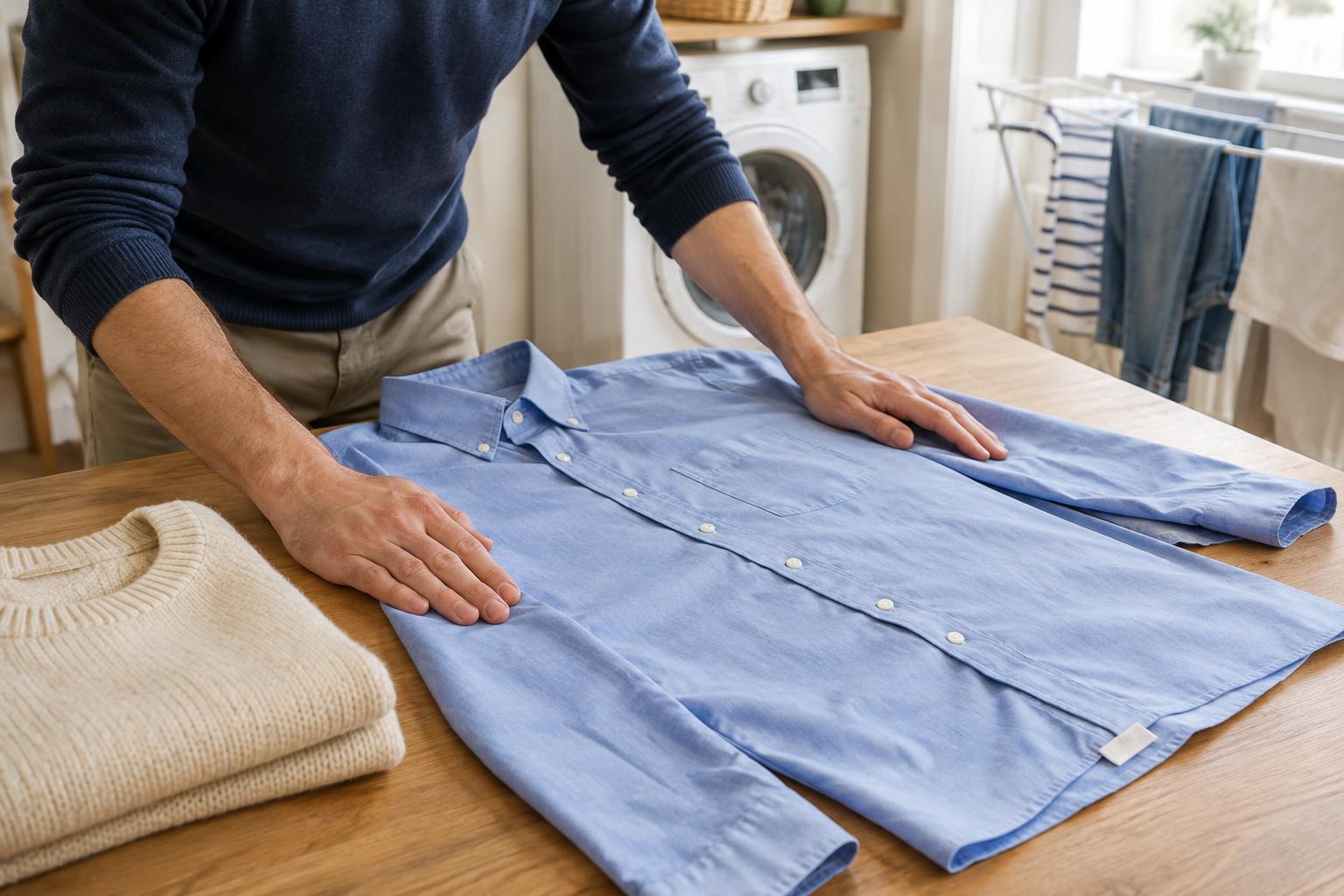
Drying is where an otherwise careful wash can go wrong. If the label allows tumble drying, a lower heat setting may reduce risk compared with high heat, but some garments are better air-dried. Remove clothes promptly so they do not sit crumpled. While they are still damp, gently smooth seams, hems and collars back into shape without pulling hard enough to distort them.
Lay sweaters and other heavy knits flat so their own weight does not stretch them on a hanger. Hang or lay other garments as their labels and fabric allow, leaving space for air to circulate. If something has already shrunk, dampening and gently reshaping it may improve a minor change, but it will not reliably reverse felting or severe shrinkage. The most useful habit is simple: check the label, start gently, and pay as much attention to drying as you do to washing.