Start with the role it needs to fill
A polo shirt is useful when a T-shirt feels too casual but a button-down feels like more than the occasion calls for. Before buying one, picture the outfits it would join. If you mainly wear jeans and casual sneakers, a soft, relaxed polo may feel natural. If you want something to wear with chinos and a lightweight jacket, look for a neater collar, a smoother finish, and a hem that sits cleanly at the waist.
Choose your first polo for a real gap in your wardrobe rather than for an imagined occasion. Think of two pairs of trousers and one pair of shoes you already own that would work with it. If those combinations are hard to picture, a different color or fabric may be a better purchase.
Check the fit while moving, not just standing still
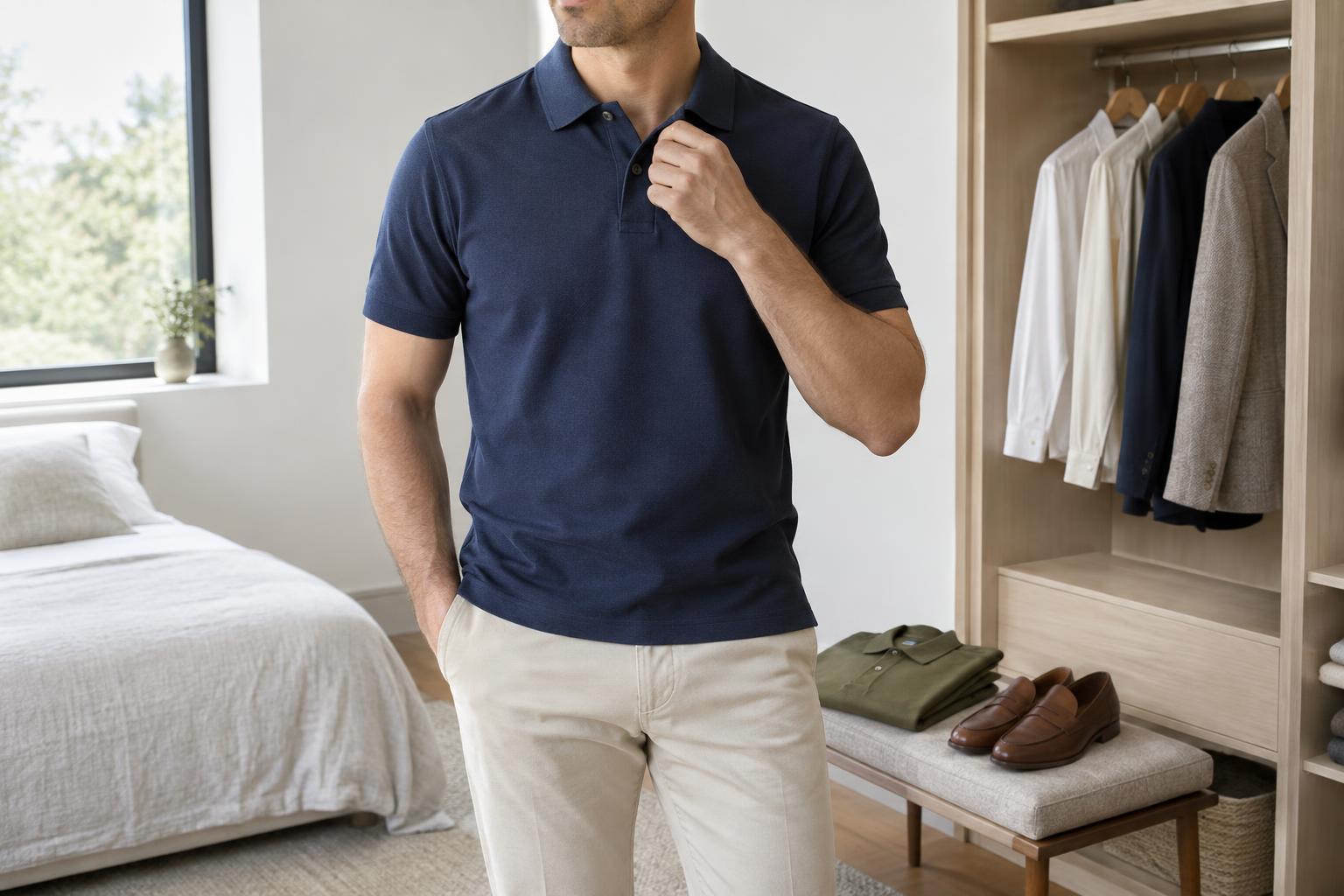
The shoulder seam should sit close to the edge of your shoulder without pulling toward your neck or dropping far down your arm. The body should skim your chest and waist without stretching between the buttons. Sit down, reach forward, and raise your arms: a polo that looks tidy only when you stand perfectly still may not be comfortable enough to wear regularly.
Sleeves commonly look balanced when they end around the middle of the upper arm, but the exact length depends on your proportions and preference. Check the sleeve opening as well. It should not dig into your arm or flare so widely that it looks detached from the body. For an untucked polo, the hem should generally cover the waistband without extending so far that it bunches at the hips. If you expect to tuck it in, check that it stays put when you move.
Match the fabric and details to your routine
Cotton piqué, with its textured surface, gives a polo a familiar casual look and can feel substantial without looking heavy. Jersey feels smoother and more like a T-shirt; it often works well in relaxed outfits. Other knits can drape differently or feel lighter, so judge the garment in your hands rather than relying on the fabric name alone. Consider the weather you dress for, how easily the shirt will fit under a layer, and whether you like a structured or softer feel.
Pay attention to the collar. It should lie reasonably flat when the top button is open and return to shape after you handle it. A collar that curls or collapses in the fitting room is unlikely to become easier to manage at home. Look at the button placket, too: it should sit flat rather than pulling apart across your chest. Contrast trim, large logos, and bold patterns can be enjoyable, but a quiet design is often easier to combine with several outfits.
Choose a color, then build a few repeatable outfits
For a first polo, choose a color that works with trousers you wear frequently. Navy, charcoal, off-white, and muted green can be straightforward options, depending on the rest of your wardrobe. Darker colors may feel less stark with light chinos or shorts; lighter colors can add contrast to dark denim. There is no need to collect several similar polos before you know which one you actually enjoy wearing.
For an easy casual outfit, try a polo with straight or relaxed jeans and clean, simple shoes. With chinos, you can leave a suitably short hem untucked for a relaxed look or tuck the shirt in for a tidier one. A lightweight overshirt or unstructured jacket can add a layer without hiding the collar entirely. If the outfit feels too busy, simplify one element: a plain polo can balance patterned trousers, while a more distinctive polo often works best with quiet basics.
Keep its shape between wears
Follow the care label, especially if the polo contains fibers or finishes you are unfamiliar with. Washing with similar colors and avoiding more heat than the garment calls for may help preserve its appearance. Reshape the collar and placket while the shirt is damp, then let it dry as directed. If you hang it, use a hanger that supports the shoulders; folding is an easy alternative for knits that stretch on hangers.
After several wears and washes, notice what has changed. Does the collar still sit well? Does the hem twist, or does the body still feel comfortable? Those observations are more useful than a size tag when choosing your next polo. A shirt that fits your routine and holds up to your normal care is the one most likely to earn its space in your wardrobe.