Start with the occasion, not a fixed dress code
There is no single outfit that fits every theater visit. A neighborhood production on a weekend afternoon may feel relaxed, while an opening night at a grand venue may invite a more dressed-up look. If the invitation or venue specifies a dress code, use it as your starting point. Otherwise, aim for clothes that look intentional and allow you to sit comfortably for the length of the performance. You do not need a suit simply because the event is indoors, but an outfit assembled with a little care will rarely feel out of place.
A useful middle ground is a collared shirt, well-fitting trousers, and clean leather shoes or understated sneakers, depending on the setting. Add a jacket if you want more polish. Before leaving, try sitting down in the full outfit: a waistband that pinches, a shirt that pulls, or a jacket that bunches can become distracting once you are in your seat. Comfort here is part of dressing well, not a reason to give up on it.
Build an outfit for a matinee or casual performance
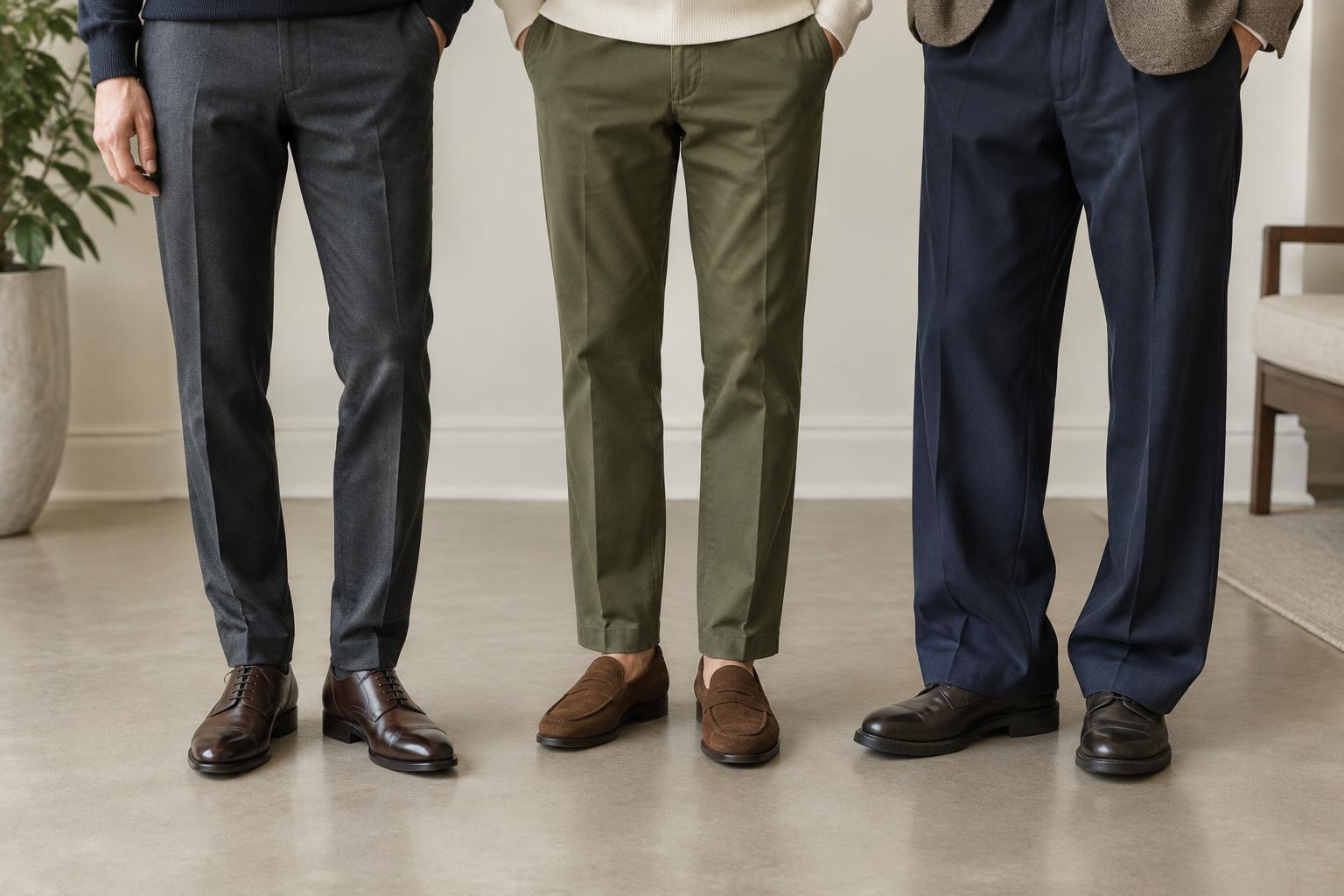
For a daytime show, start with dark, neat jeans or chinos and a shirt that holds its shape. An Oxford shirt, fine-knit sweater, or simple polo can each work. Choose one point of polish rather than trying to make every piece formal: a tucked-in shirt with a belt, a textured overshirt, or a pair of loafers can give an otherwise easy outfit some definition. If you prefer sneakers, pick a clean, low-profile pair that complements the trousers rather than competing with them.
Think about what you are doing before and after the performance, too. A matinee followed by a casual meal calls for a different outfit than one followed by a celebration. A navy or charcoal unstructured jacket is a flexible addition: it dresses up chinos and can be taken off if you feel overdressed. Keep the colors fairly coordinated so the jacket looks like part of the outfit, not an extra layer you grabbed at the door.
Dress up an evening or opening-night look
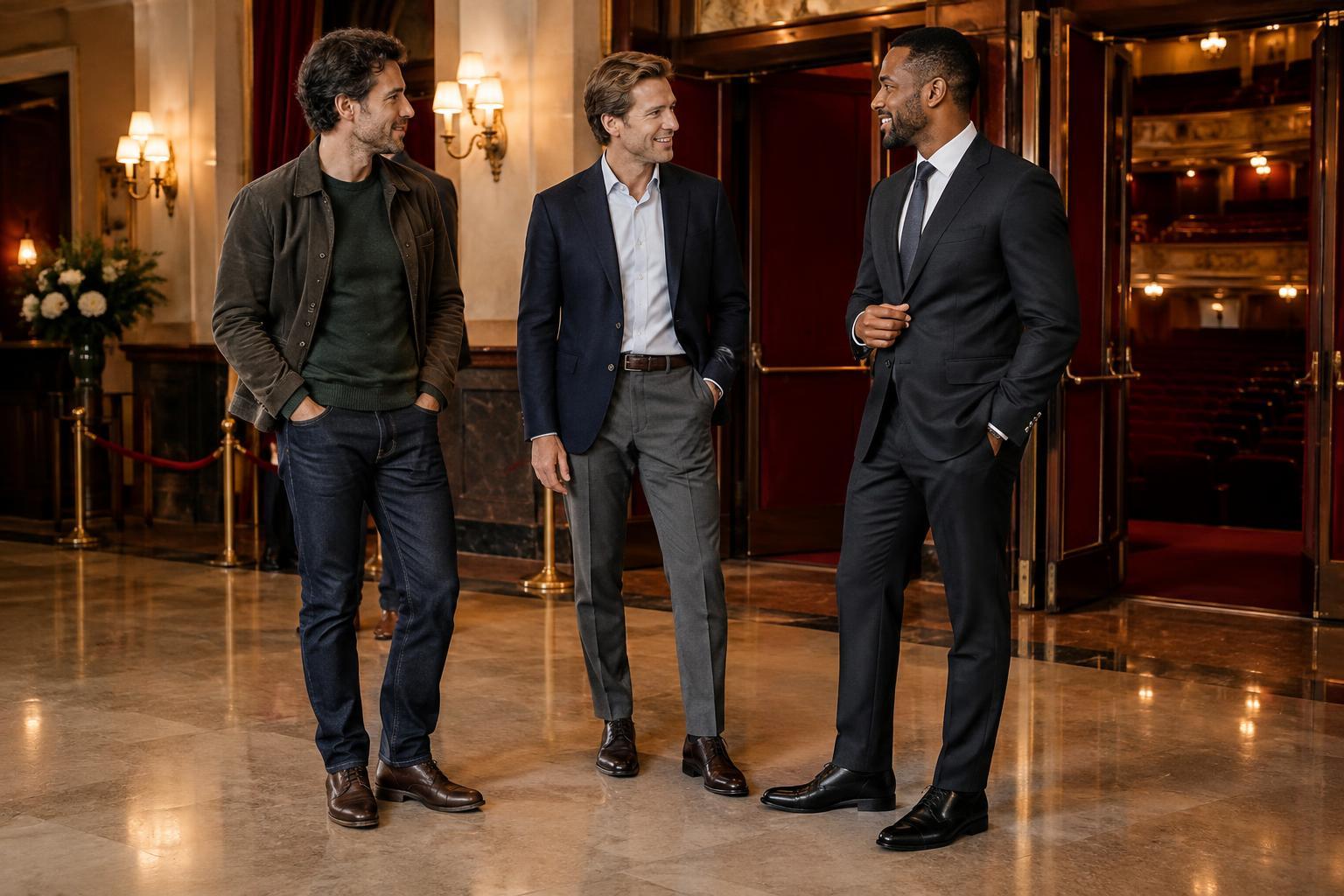
An evening performance is a good opportunity to wear tailored pieces without automatically reaching for a full suit. Try wool trousers with a button-down shirt and a blazer, or a fine-gauge knit under a tailored jacket. Darker colors often make these combinations feel appropriate for the evening, but they are not a rule. The important distinction is condition and fit: pressed trousers and a jacket that sits cleanly at the shoulders do more for the outfit than an expensive item that looks rumpled.
For an opening night, benefit, or other event with a celebratory invitation, a suit may be the simplest choice. A dark or mid-tone suit with a plain shirt and leather shoes is easy to adjust: wear a tie if the invitation suggests a formal atmosphere, or leave it off when the event sounds less structured. Unless a specific dress code calls for it, there is no need to assume black tie. If you are uncertain, a restrained suit gives you room to look polished without relying on dramatic details.
Plan for the seat, the temperature, and the walk home
Theater dressing has practical constraints that are easy to overlook. You may walk or take public transport, stand in a queue, and then sit close to other people in a room that feels warmer or cooler than expected. Wear shoes you can comfortably walk in, and choose a layer you can remove without disrupting the outfit. A lightweight sweater or jacket is often easier to manage than a bulky outer layer. In colder weather, make sure your coat works over your jacket without squeezing the shoulders.
Keep accessories simple and considerate of the space. A compact bag or coat pockets are easier to manage than something that crowds the seat beside you. Go light on fragrance, since people nearby cannot move away from a strong scent. Finally, check the small details before you leave: clean shoes, tidy hems, and a shirt that stays put when you sit. Those checks matter more than finding a special item you may never wear again.