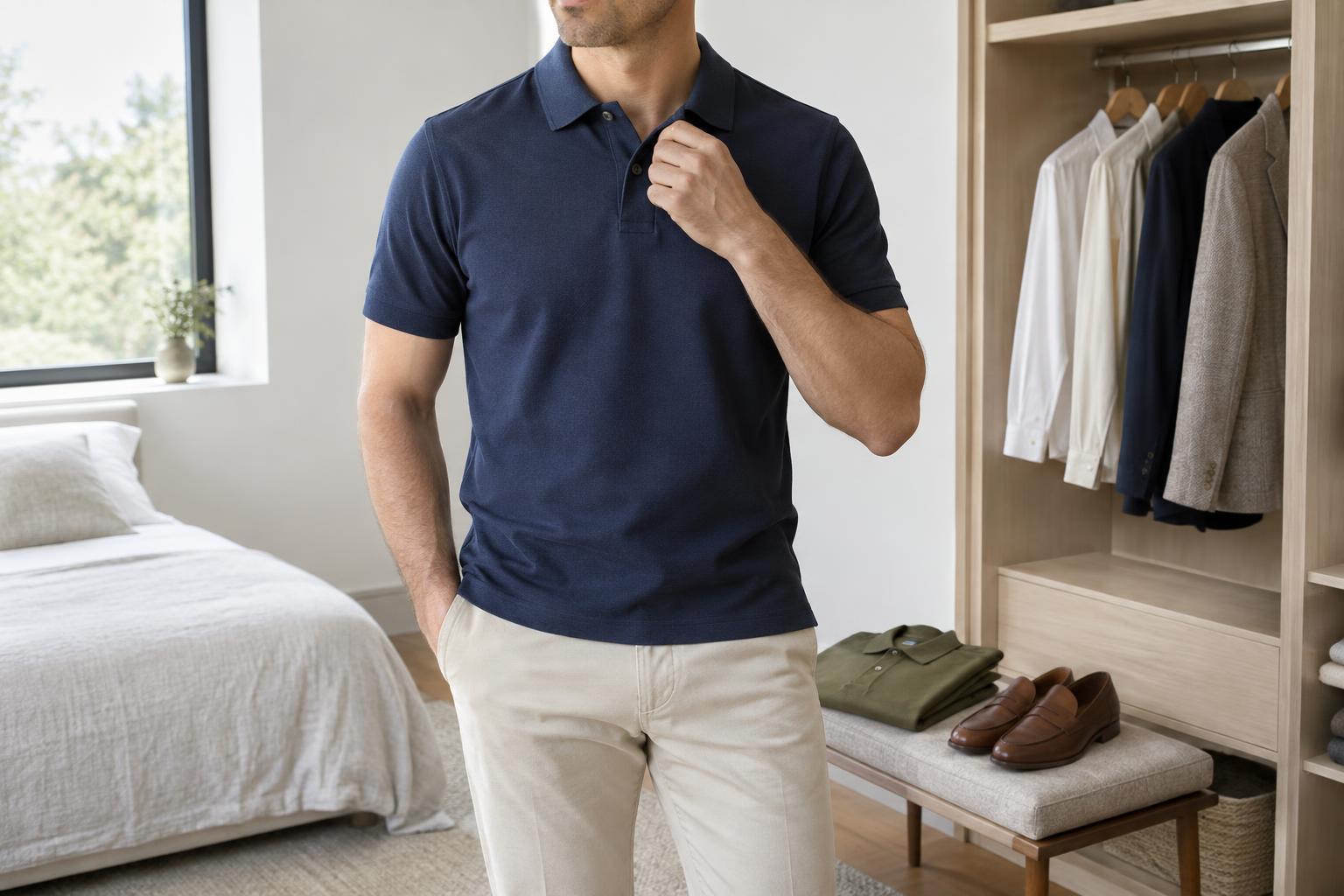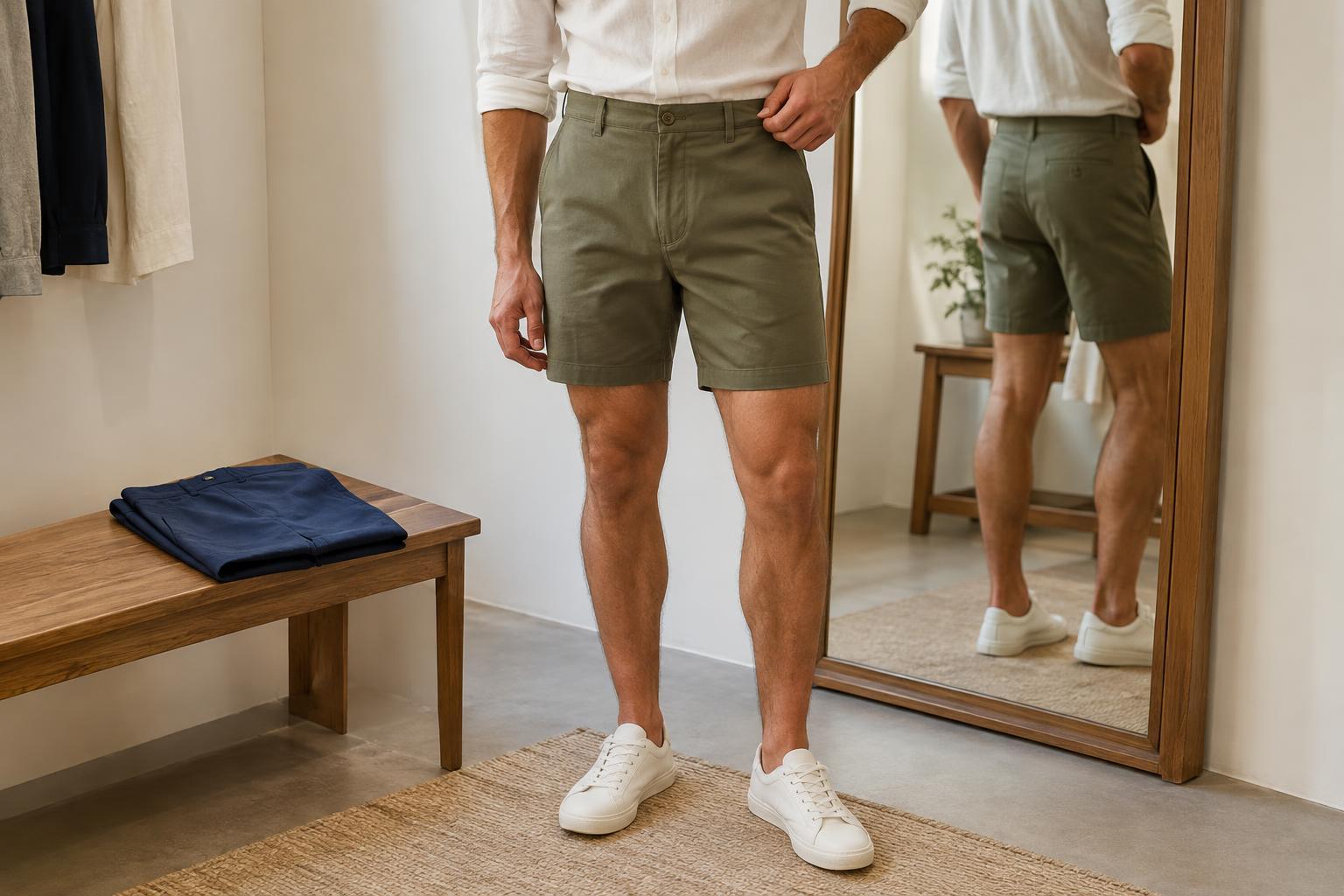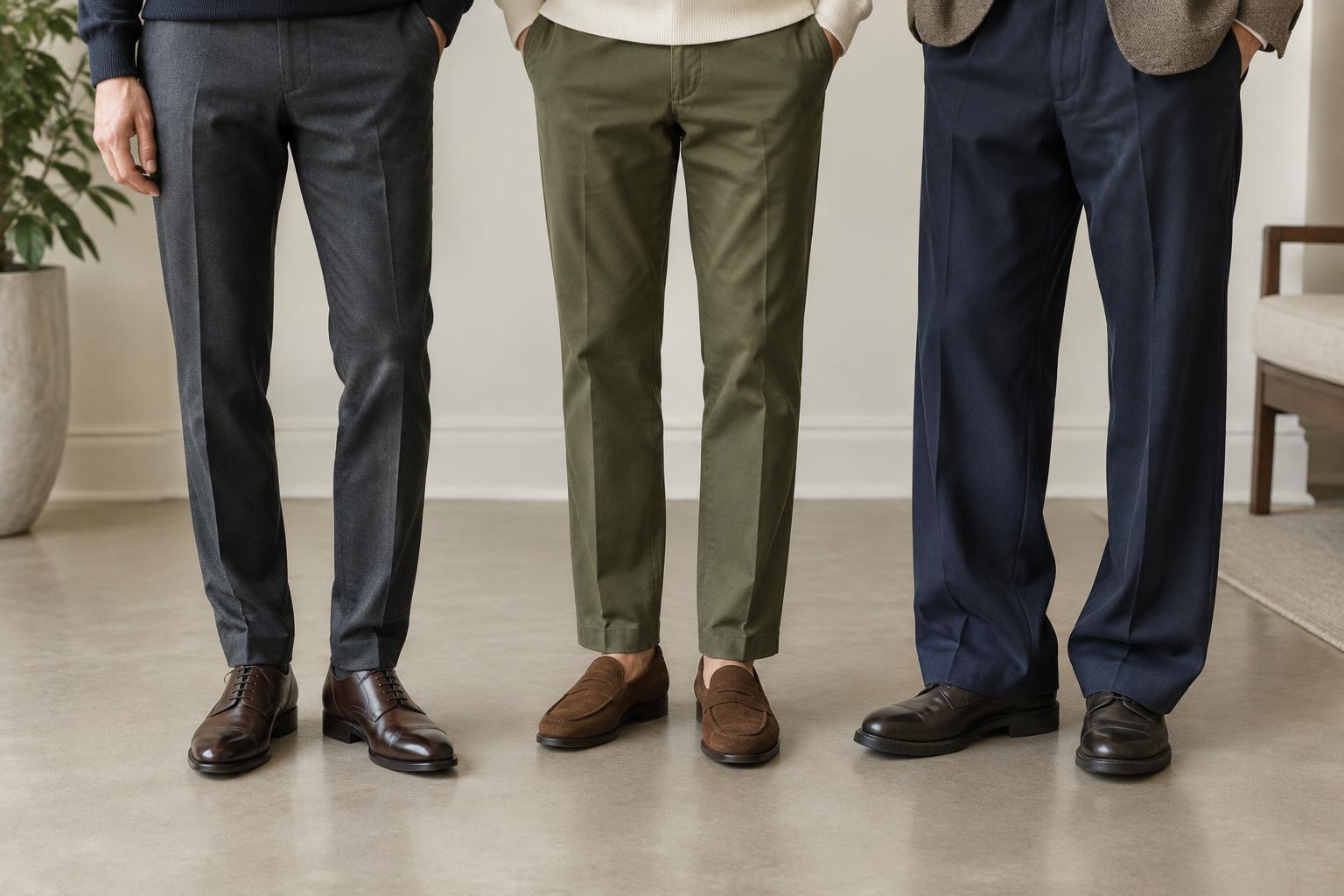
Start with the shape of the whole outfit
A shoe can fit well and still look out of place beneath a particular pair of trousers. The difference is often proportion. A narrow trouser opening draws attention to the shoe’s toe and sole, while a wider opening covers more of the upper and can make a small shoe seem to disappear. Before deciding that two items do not work together, try them on and look at the full outfit from the front and side.
Notice the visual weight of each piece. A substantial boot or chunky sneaker generally has enough presence under a relaxed trouser leg. A slim loafer or low-profile sneaker often sits more naturally beneath a straighter or gently tapered leg. These are starting points, not rules: color, fabric, and the way the hem falls can change the result.
Match trouser width to shoe volume
With slim or tapered trousers, check that the hem can pass over the shoe without catching awkwardly at the heel or bunching around the tongue. Sleek lace-ups, loafers, and streamlined sneakers tend to leave a clear line from knee to toe. If you prefer a bulkier shoe, a slightly roomier hem may balance it better than an especially narrow one.
Straight-leg trousers offer more flexibility. They can sit over many boots and sneakers without hiding the shoe entirely, and they can work with dress shoes when the trouser fabric and occasion call for them. Wider trousers often benefit from shoes with enough structure to remain visible, but that does not mean every wide leg needs a heavy sole. Try several pairs and judge how much of the shoe you can see while standing and walking.
Set the hem for the shoes you actually wear
Hem length affects a pairing as much as leg width does. A longer hem may form a fold, often called a break, where the trouser rests on the shoe. A shorter hem shows more of the shoe and, sometimes, the sock or ankle. Neither choice is automatically better. The useful question is whether the fabric falls cleanly rather than pooling, twisting, or riding up more than you want.
When you assess a hem, wear the shoes you plan to use most often with those trousers. A pair hemmed over a low loafer may sit differently over a taller boot. Walk a few steps and sit down, too: a length that looks balanced while standing may feel too short once your knees bend. If you regularly wear shoes with very different profiles, one hem length may not be ideal for both.
Cuffs are another way to adjust the visible length of casual trousers. A neat roll can keep a hem clear of a sneaker or boot, but a thick stack of fabric may add more bulk than you intended. For trousers you wear with dress shoes, a permanent alteration may give you a cleaner, more consistent result.
Use color and occasion to finish the pairing
Once the proportions work, consider how much contrast you want at the bottom of the outfit. Shoes close in color to the trousers create a quieter transition. A contrasting shoe becomes more noticeable, particularly when the hem is short. Neither approach requires an exact color match; it helps simply to decide whether the footwear should blend in or stand out.
The occasion matters alongside the silhouette. A relaxed trouser-and-sneaker combination may suit an informal day, while a similar trouser cut in a dressier fabric can look more appropriate with loafers or lace-ups. Make the choice by looking at the outfit as a whole rather than treating the shoe as a separate finishing touch.
Clothing can also change how a person is perceived in a story. If that aspect of style interests you, browse Screenwriting · Frame and Motion for screenwriting topics. For a broader detour into visual storytelling, explore Frame and Motion.