Start with how the shorts sit on your body
Shorts can look simple on a hanger, but three measurements shape how they wear: length, rise, and leg opening. Length determines where the hem falls on your leg. Rise affects where the waistband sits and how much room you have through the seat. Leg opening determines whether the shorts follow your leg, flare away from it, or grip your thigh. Getting these in balance matters more than choosing a particular inseam number.
Try shorts on with the kind of shirt and shoes you expect to wear with them. Stand naturally, then walk, sit, and bend to pick something up. A pair that looks neat while standing may pull across the seat when seated or creep up as you walk. The goal is a shape that stays comfortable without needing frequent adjustments.
Choose a length by looking at the hem, not just the label
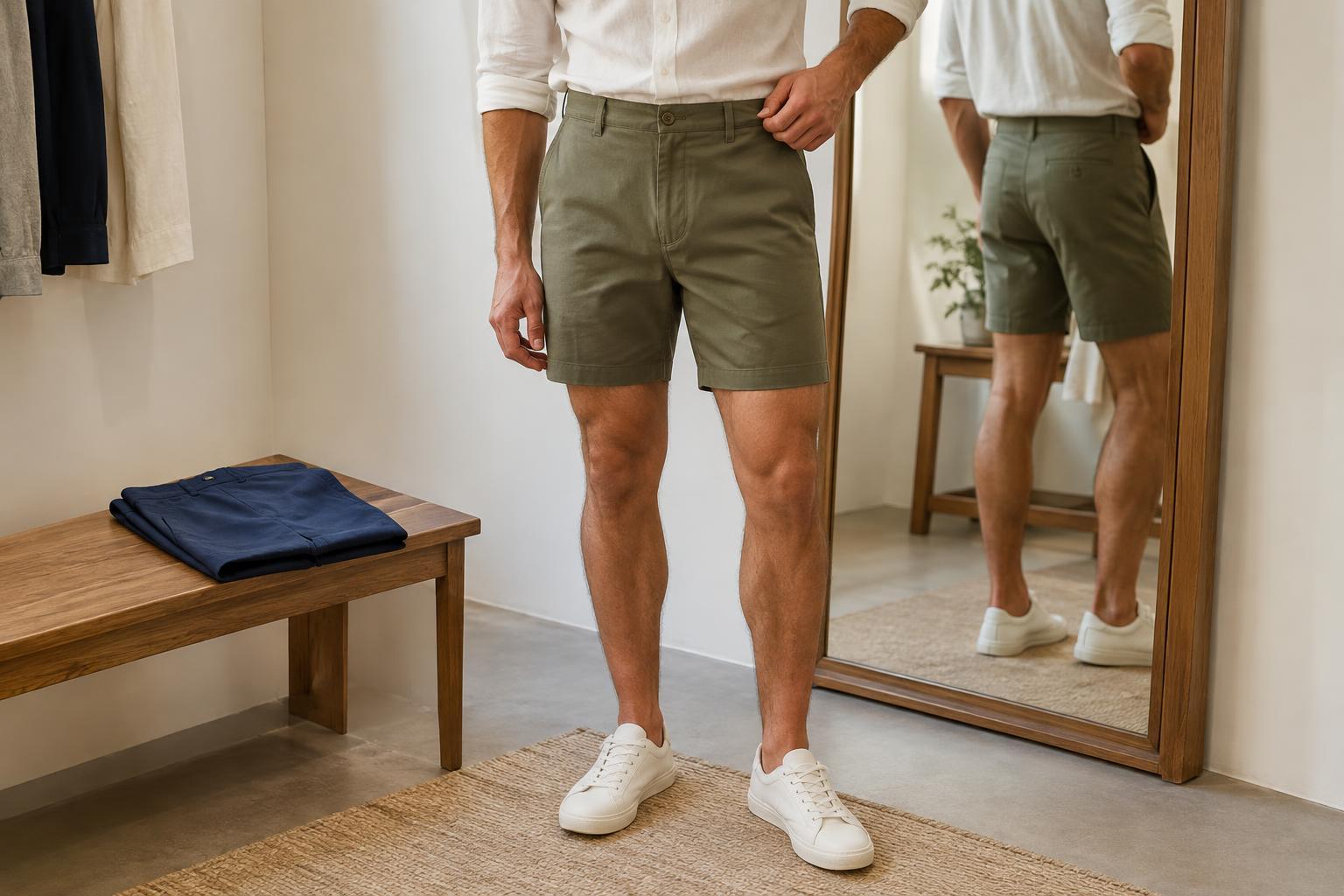
Inseam measurements are useful for narrowing your search, but the same inseam can land differently depending on your height, rise, and the shape of the shorts. Look at where the hem falls while the waistband sits at its intended position. For a versatile everyday pair, a hem somewhere above the knee is often easier to style than one that covers it. It leaves a clear break between shorts and leg without making the garment look like cropped trousers.
If you prefer more coverage, try a pair that finishes close to, but not well below, the knee. Check whether the extra fabric bunches when you sit. If you like a shorter cut, make sure it still feels comfortable when walking and sitting, especially if the fabric is lightweight or the leg is narrow. Personal preference and the setting matter: casual weekend shorts can be shorter than a pair you plan to wear to a relaxed office or daytime gathering.
Find a rise that stays put
Rise is the distance from the crotch seam to the waistband. A lower rise sits nearer the hips; a higher rise sits closer to the natural waist. Neither is automatically better. What matters is whether the waistband stays in place and whether there is enough room from front to back. If you have to pull the shorts up repeatedly, the rise or waist fit may be wrong. If the waistband sits comfortably but the shorts pull at the crotch when you sit, try a different rise or cut rather than simply sizing up.
The rise also affects your outfit’s proportions. Shorts worn higher can make the legs appear longer, particularly with a tucked-in shirt. Shorts worn lower can look relaxed, but a long shirt over a low waistband may make the torso appear longer and the legs shorter. Test the pair with a shirt worn both tucked and untucked. Choose the position that feels natural rather than forcing the waistband to sit somewhere the shorts were not designed to sit.
Check the leg opening from every angle
A useful leg opening leaves space around the thigh without standing away from it like a bell. Look in the mirror from the front and side. If the fabric pulls into horizontal lines across the thigh or the hem catches when you move, the opening may be too narrow. If the hems flare widely, the shorts may look larger than they are, even when the waist fits.
Your thighs and the fabric both affect this judgment. A straight cut may give athletic thighs more room than a slim cut, while a gently tapered cut can keep a fuller pair from looking baggy near the hem. Stiff cotton tends to hold its shape; softer fabrics may drape closer to the leg. Walk a few steps and sit down before deciding. There should be room to move without the hems twisting or climbing noticeably.
Make the final choice for your wardrobe
If you are buying one pair to wear often, start with a simple design in a color that works with your existing shirts and shoes. Cotton twill or a similar sturdy fabric can offer a tidy casual look, while linen and linen blends tend to feel airier and appear more relaxed. Pockets should lie reasonably flat when empty. Avoid judging fit with a phone or wallet stuffed into them, since heavy items can pull even well-fitting shorts out of shape.
Before removing the tags, repeat a quick fit check at home with two or three outfits. Can you sit comfortably? Does the waistband stay put? Does the hem fall where you want it without rolling or bunching? If the waist fits but the length needs a small adjustment, hemming may be an option. If the rise pinches or the leg opening feels wrong, a different cut is usually the better choice. Well-chosen shorts should make getting dressed easier, not give you another garment to work around.