Start with what the tailor cannot easily change
Alterations work best when a garment already fits well in its hardest-to-change areas. For a jacket or coat, check the shoulders and upper chest first. For trousers, check the rise and the way the seat fits. For a shirt, pay attention to the collar and shoulders. If those areas are uncomfortable or visibly strained, a simple adjustment elsewhere is unlikely to rescue the garment.
This is especially useful when shopping. A pair of trousers that fits through the seat but runs long is a reasonable alteration candidate. A jacket with a clean shoulder line but slightly long sleeves may be, too. Buying a poor fit because you expect a tailor to rebuild it can turn an appealing purchase into an expensive compromise. Try the garment on, move around, and judge its overall shape before considering the details.
The reliable wins: hems, modest shaping, and simple length changes
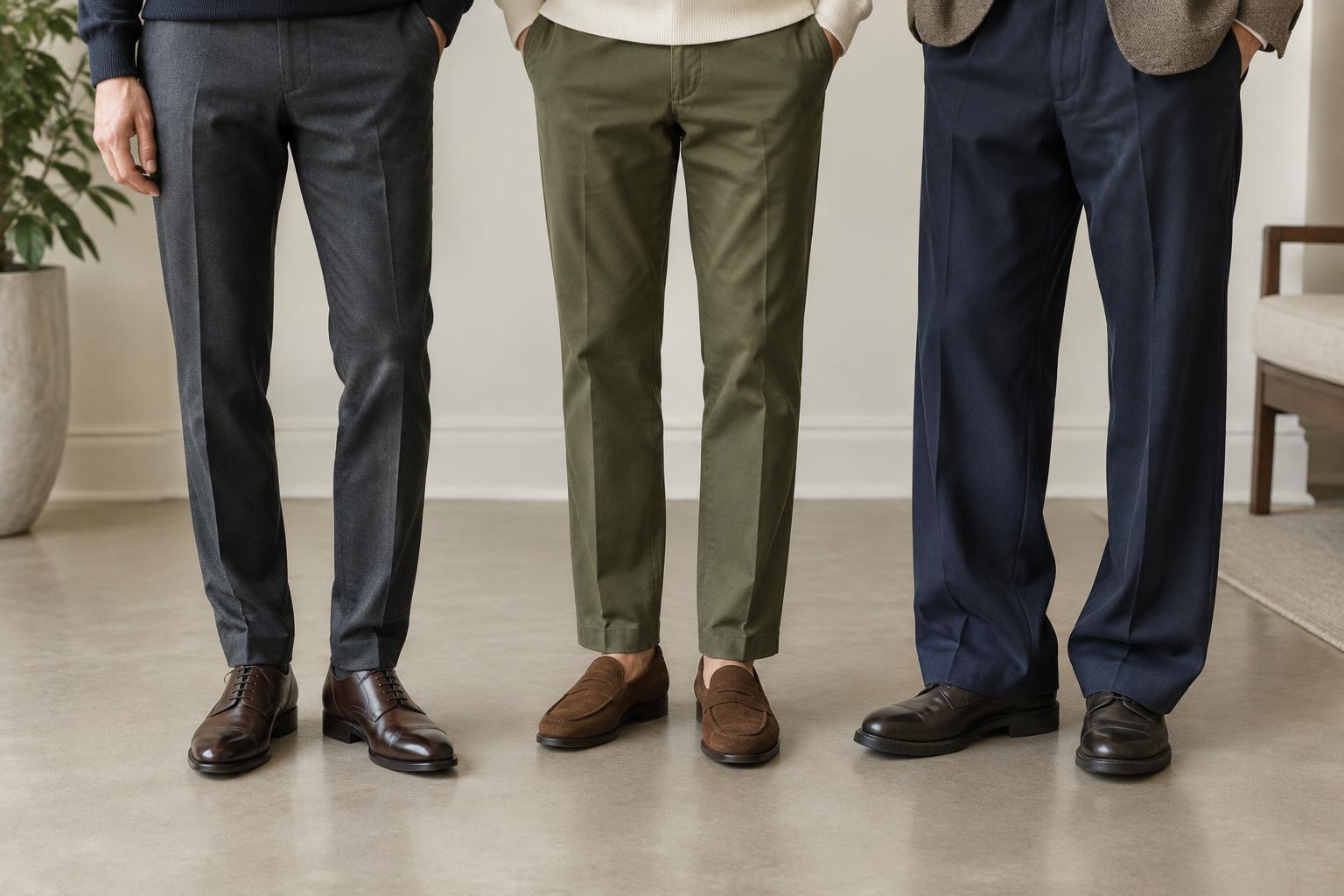
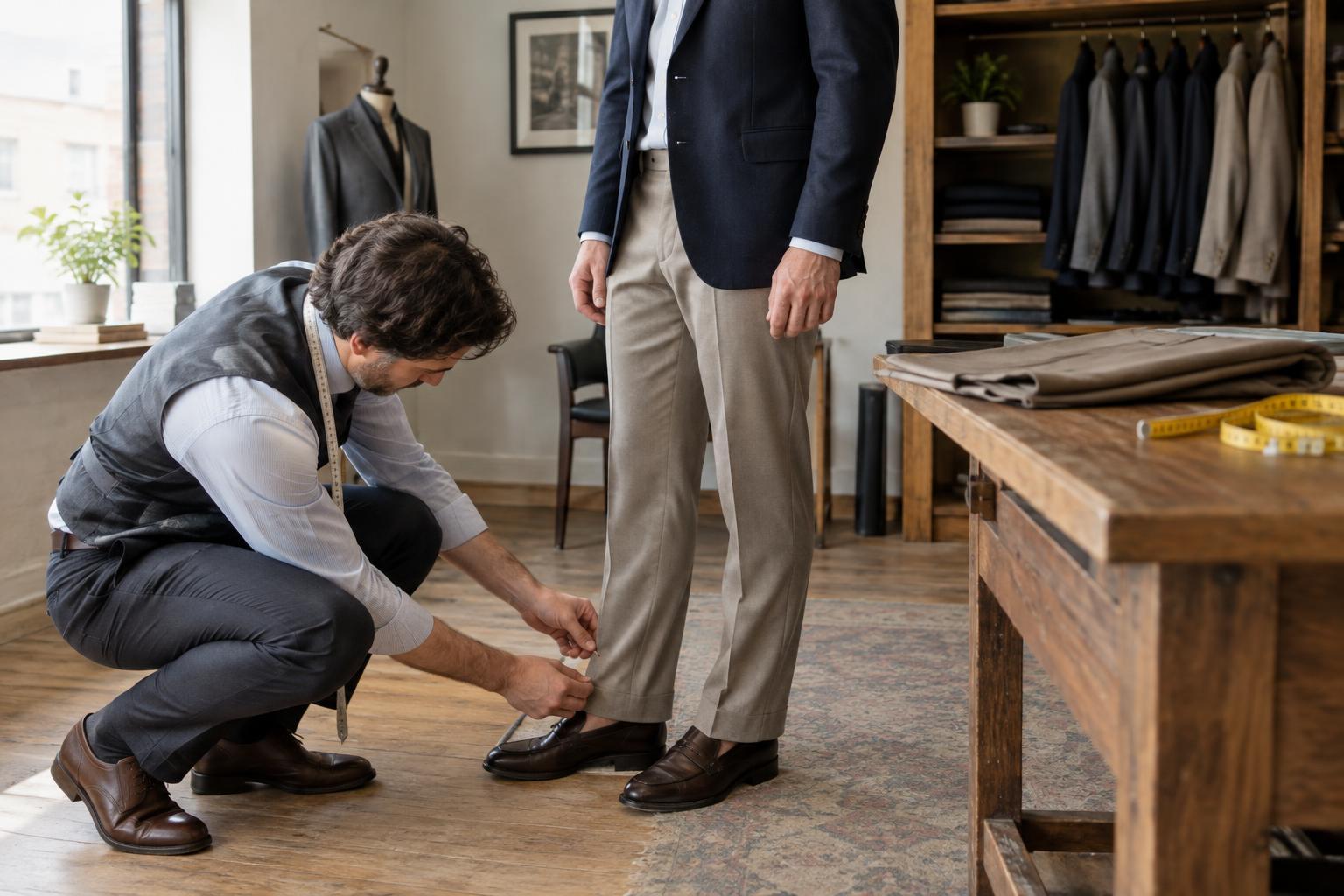
Trouser hemming is one of the most useful alterations. The right length depends on the trousers, the shoes you wear with them, and whether you prefer a clean break or a little fabric resting on the shoe. Bring the shoes you expect to wear most often when the hem is pinned. With jeans, ask whether you want a standard new hem or to preserve the existing one; the finished appearance may differ.
Taking in a trouser waistband can also be worthwhile when the seat and thighs fit well and the waist is only a little loose. A tailor may be able to adjust the seat or taper the leg, but those changes deserve more care: pockets, seams, and the garment’s intended silhouette can limit the result. If substantial changes are needed in several places, try another size or cut first.
Simple shirt adjustments can make a noticeable difference. Taking in the sides or adding back darts may tidy a roomy torso without changing how the shirt fits at the shoulders. Shortening sleeves can help when the cuffs fall over your hands, though the construction of the cuff affects what is possible. Aim for comfortable movement, not the tightest outline a tailor can create.
Jackets and coats: worthwhile when the foundation is right
A jacket with well-fitting shoulders, a comfortable chest, and a balanced length may benefit from modest waist shaping. The goal is to remove excess fabric while keeping the front smooth when buttoned. Shortening plain sleeves is another common option, provided the cuffs leave enough room for the work. Existing buttonholes or other cuff details can make sleeve changes more involved, so ask what the finished cuffs will look like.
Major jacket alterations are less predictable. Changing the shoulders, substantially shortening the body, or trying to fix a collar that sits badly can affect the proportions and construction throughout the garment. A tailor can assess an individual piece, but these are not safe assumptions to build into a purchase. If a jacket needs several major changes before you would wear it, look for a better-fitting jacket instead.
Alterations that may not justify the effort
Not every fit problem has a neat solution. A shirt that pulls across the chest cannot always be improved simply by taking in the waist. Trousers that feel restrictive in the rise may not have enough fabric to change comfortably. Moving pockets, changing lapels, or trying to turn a very wide cut into a slim one can leave visible clues or distort the design.
Fabric matters, too. Heavily worn cloth may show the old seam line when it is let out. Patterns such as checks and stripes can be difficult to match after a change. Stretch fabrics, delicate materials, and knitwear may call for different equipment or specialist skills. None of these features makes an alteration impossible, but they make it more important to discuss the result before committing.
Think beyond whether a change can be done. Ask whether you will like the garment afterward and wear it often enough to make the alteration worthwhile to you. A modest fix to a favorite, durable piece may be more satisfying than extensive work on a garment you were unsure about from the start.
How to get a result you will actually wear
Wear the garment as you normally would to the fitting: with your usual belt, appropriate shoes, and the layers you expect to put underneath a jacket. If an item is likely to shrink when washed, care for it according to its label before having its length set. Explain what feels wrong, then let the tailor pin a proposed change so you can see how it affects your movement and the garment’s shape.
Before leaving the item, confirm what will be altered, what cannot be changed, and how the finished area is likely to look. For a larger job, ask about the total cost before deciding. The best alteration is not the most dramatic one; it is a considered adjustment that lets an already promising garment fit comfortably and work with the rest of your wardrobe.