Start with the setting, not the suit
Before choosing an outfit, check the invitation or school guidance for a dress code, gown requirements and venue details. A formal indoor ceremony may call for a suit, while a smaller outdoor event may allow a blazer and tailored trousers. If the guidance is vague, aim for polished clothes you would feel comfortable wearing to a smart daytime celebration. It is easier to remove a tie or jacket than to make an overly casual outfit look formal on arrival.
Think through the full day: travel, waiting, the ceremony, photographs and any meal afterward. You may spend time standing or walking on grass, stairs or crowded corridors. Check the forecast close to the event and plan for temperature changes rather than dressing only for the ceremony room. A lightweight layer or compact umbrella can be more useful than an elaborate outfit that works in only one setting.
For graduates: build an outfit that works under the gown
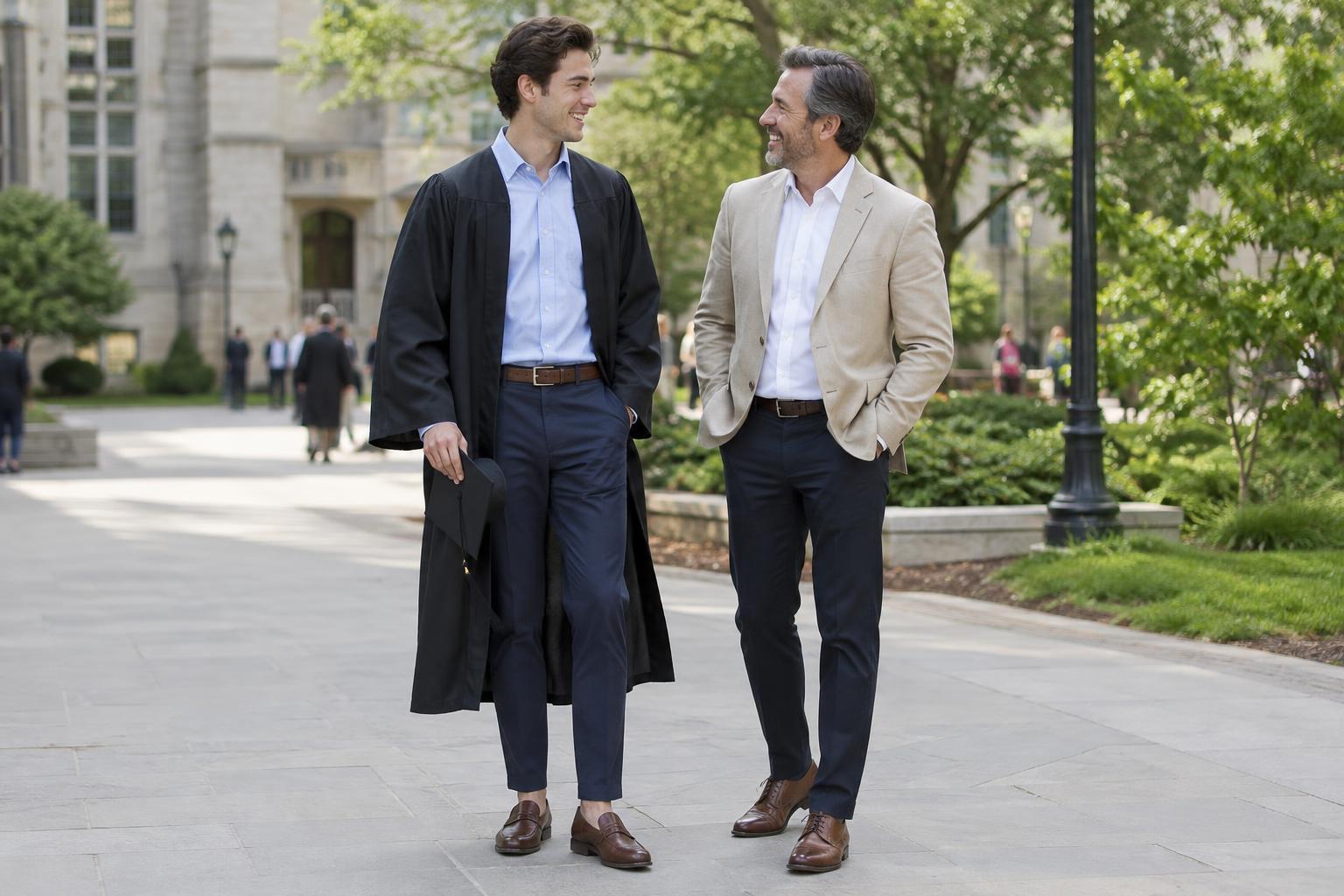
A dark or mid-blue suit with a light shirt is a versatile choice for many graduates. Charcoal or grey works well too, especially if you already own the suit and it fits properly. The jacket should sit comfortably on your shoulders, and the trousers should allow you to sit and walk without pulling. Under a gown, avoid bulky layers that bunch around the neck or sleeves. If you prefer not to wear a full suit, tailored trousers, a collared shirt and a neat jacket can make a practical alternative where the dress code permits it.
A tie adds definition at the neckline, one of the few parts of the outfit likely to remain visible while the gown is on. A plain tie or restrained pattern is easy to pair with a gown whose color you may not have chosen. Fasten your shirt comfortably at the collar and check how the gown sits before leaving home, if possible. For photos without the gown, a pressed shirt and well-fitting jacket will do more work than an eye-catching accessory.
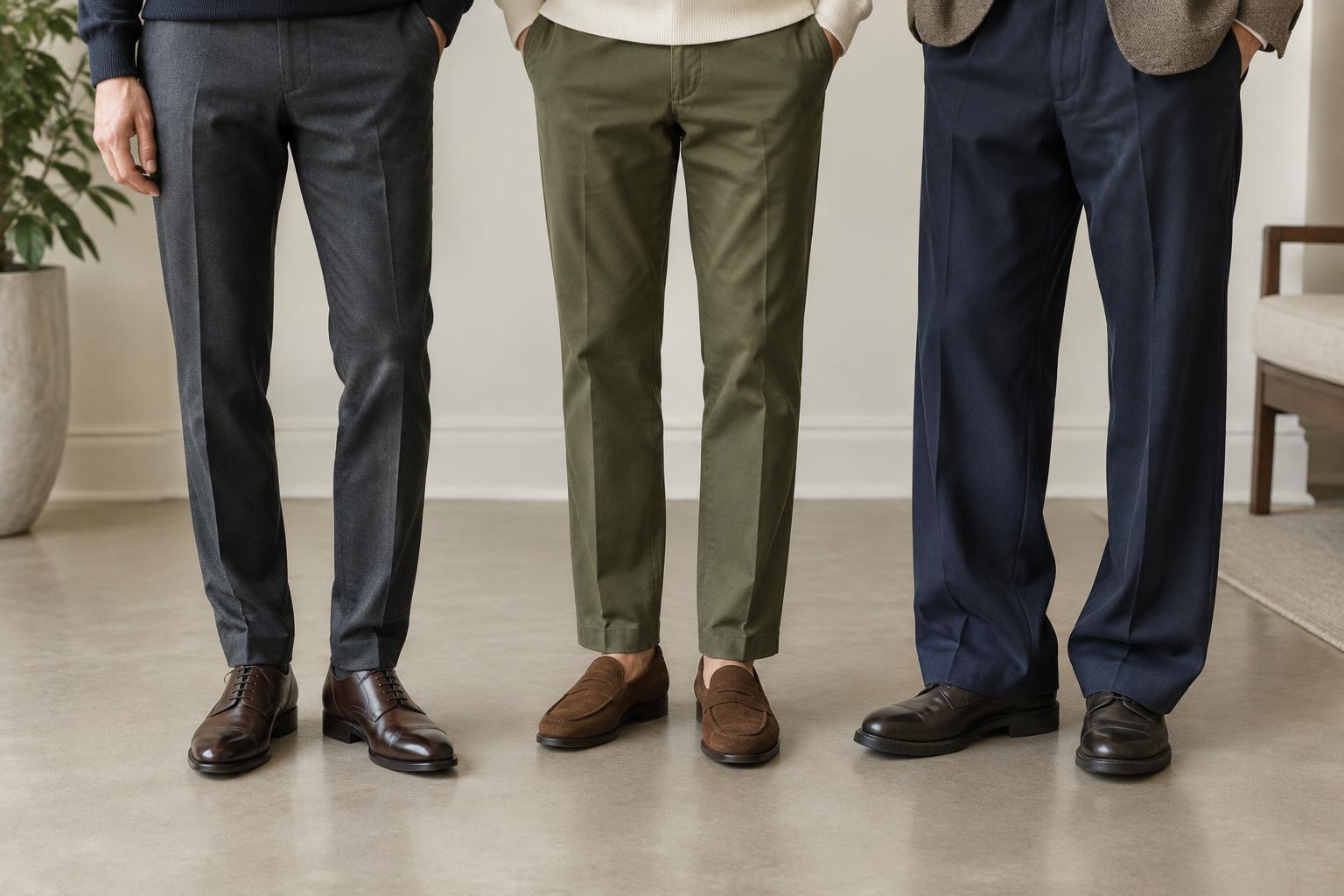
Choose shoes you can wear for several hours. Clean leather dress shoes or understated loafers suit most tailored outfits; make sure they are already comfortable rather than saving a new pair for the day. Match a simple belt to the general tone of the shoes if your trousers need one. Keep pockets light so the gown hangs neatly, and put essentials in a small bag if one is allowed.
For guests: look celebratory without competing for attention
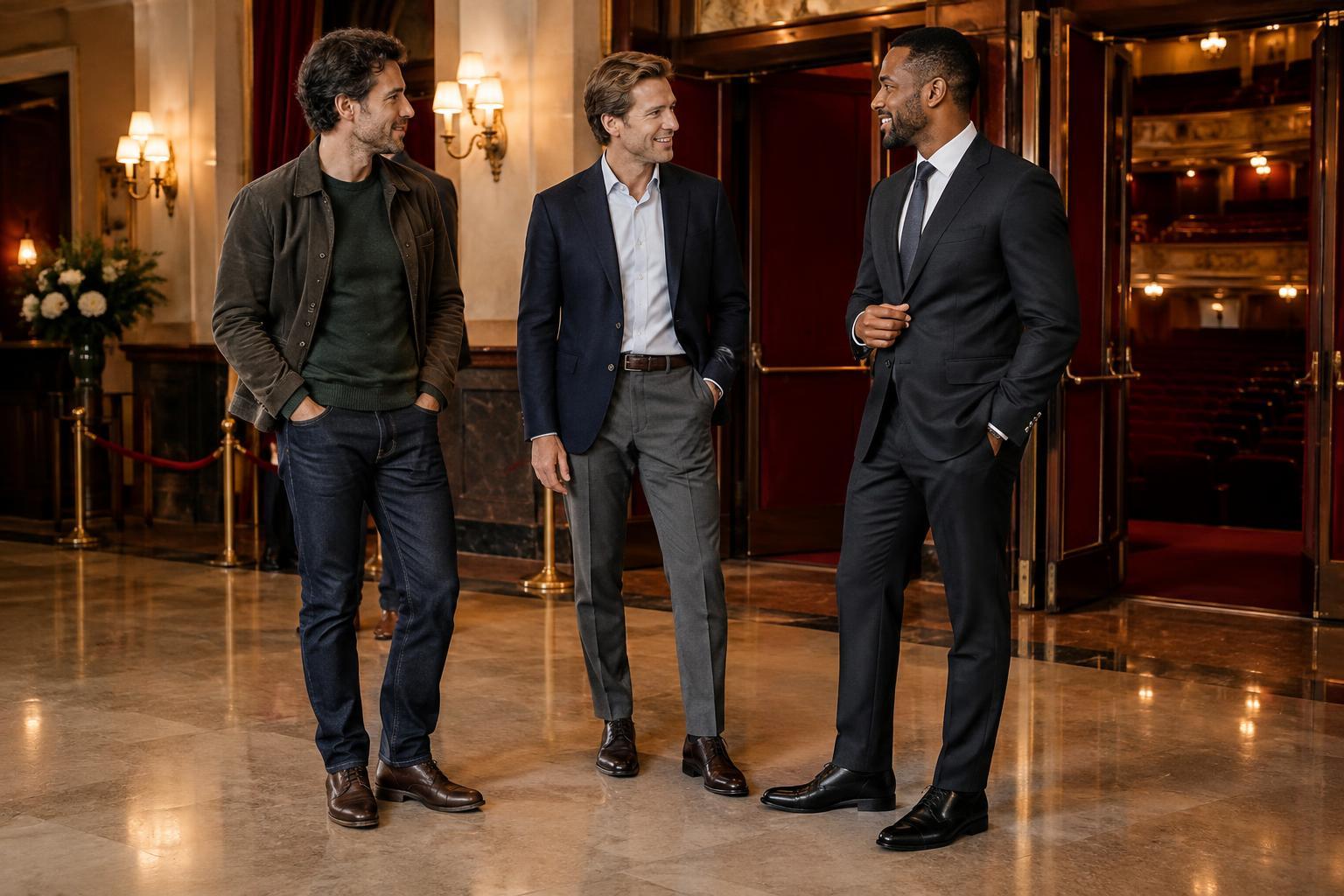
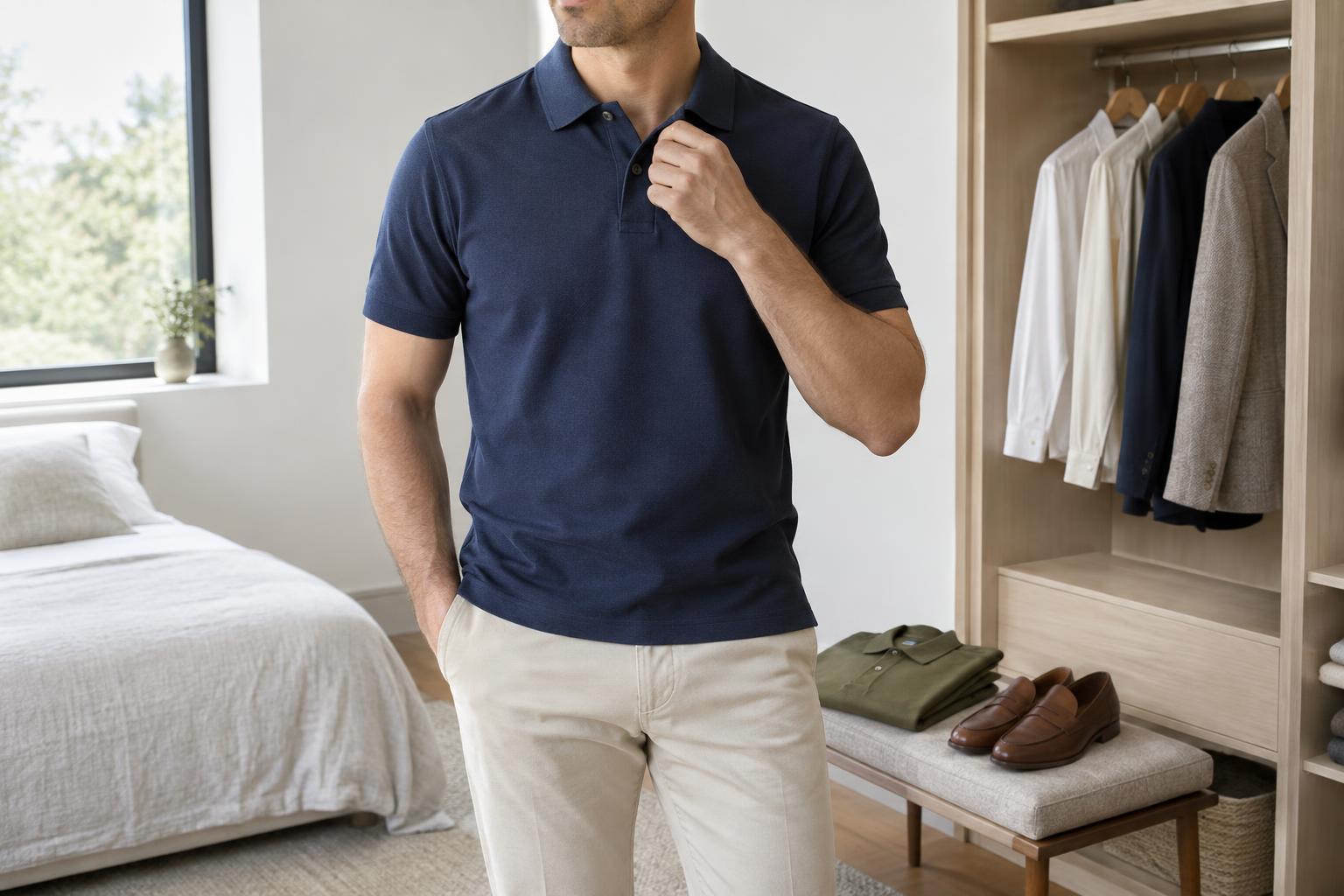
Guests can usually dress a step more flexibly than graduates, but the ceremony still deserves a considered outfit. A navy blazer, open-collar shirt, tailored trousers and loafers is a dependable combination when no formal dress code is given. For a dressier invitation, add a tie or wear a suit. For a relaxed outdoor ceremony, a breathable shirt and smart chinos may be enough, provided they are clean, pressed and consistent with the venue’s guidance.
Color can make a simple outfit feel appropriate for a celebration. Light blue, cream, soft pink or muted green shirts pair easily with navy, grey or beige tailoring. Avoid relying on loud prints to make the outfit interesting; a good fit and a little contrast are usually more effective in group photos. If you are unsure how formal other guests will be, a blazer gives you an easy adjustment: wear it for the ceremony and photos, then take it off later.
Dress for the weather and the photographs
Warm-weather graduations favor breathable fabrics and room to move. An unstructured jacket or lighter-weight trousers may feel better than heavy, closely fitted tailoring. In cooler weather, wear a thin knit or coat that fits over your outfit without distorting the gown. If rain is possible, darker shoes and trousers tend to be less fussy than pale suede or very light fabrics. Whatever the forecast, avoid making the day your first test of an unfamiliar fabric or fit.
Photos are a useful final check, not a reason to dress unlike yourself. Try the complete outfit on a few days ahead and look at it while standing and sitting. Check trouser length, shirt collar, jacket closure and whether your shoes look cared for. Steam or press clothes according to their care labels, remove visible lint and give footwear a quick clean. These small steps help an outfit look intentional without requiring a new wardrobe.
Make the outfit useful after graduation
If you need to buy something, start with the gap that affects the outfit most. Altering trousers or replacing worn shoes may be more valuable than buying a new tie. A simple suit can later serve for interviews, weddings or formal dinners; a blazer and tailored trousers can be worn separately for work and other occasions. Choose colors you can combine with what you already own, and allow enough time for any alterations before the event.
Graduation style is less about following one formula than matching the occasion while staying comfortable. Graduates need an outfit that sits neatly beneath a gown and still holds up in photos. Guests need to respect the celebration without overshadowing it. With a clear dress-code check, reliable footwear and a little preparation, either outfit can feel ready for the day.