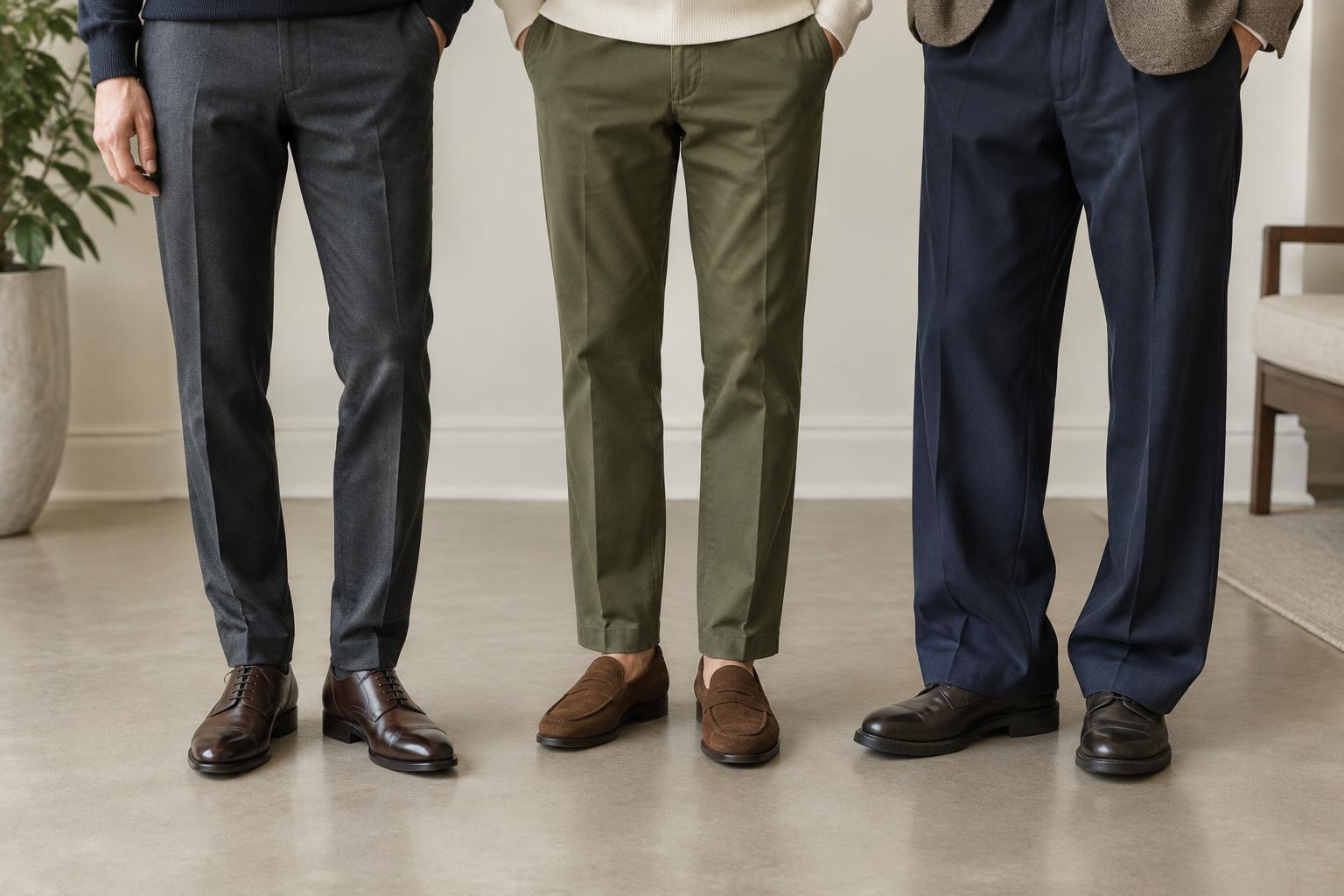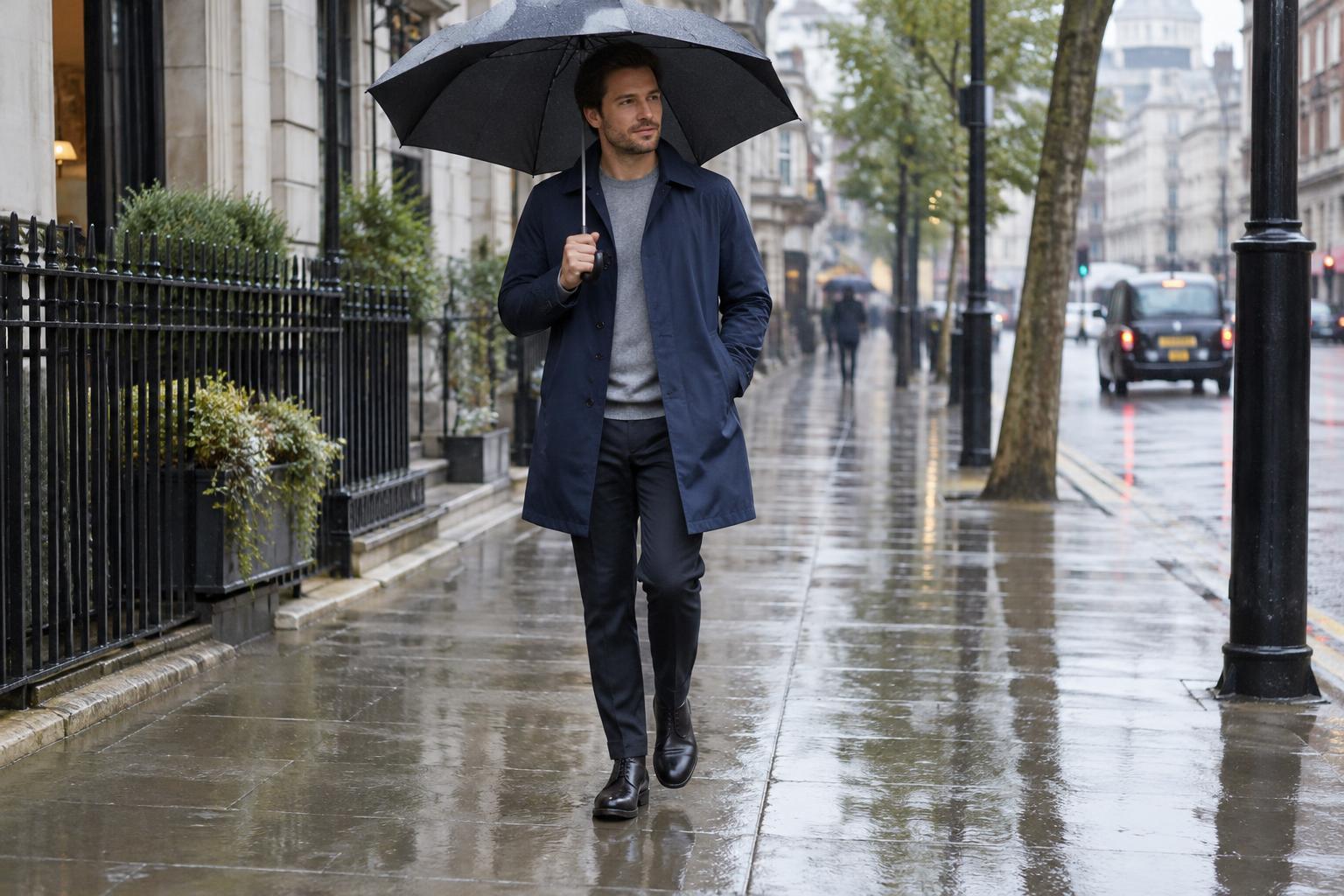
Start with the weather and your destination
A rainy commute, a short walk to dinner and an afternoon outdoors call for different outfits. Before getting dressed, consider how long you will be outside, whether you can change shoes when you arrive and how formal you need to look. The goal is not to make every garment waterproof. It is to keep the clothes that need to look neat protected for most of the journey.
For a typical day moving between streets and buildings, build the outfit around a dependable outer layer, shoes with reasonable grip and trousers that will not drag through puddles. Keep the colors and silhouettes close to what you would normally wear. A navy raincoat over a collared shirt and dark trousers can feel like an intentional outfit rather than a set of emergency additions.
Choose an outer layer that covers the outfit
A coat does most of the work in wet weather. Look for one long enough to cover the hem of your jacket or the upper part of your trousers, with a closure that stays comfortable when fastened. A hood helps when you need your hands free; a simple umbrella can keep your face and collar drier on calmer days. Neither is perfect in wind, so choose based on the conditions you actually face.
For casual outfits, a clean-lined rain jacket works well over a sweater or overshirt. For work or a smarter occasion, a plain raincoat or trench-style coat can sit naturally over tailoring. Try it on with the layers you expect to wear underneath: a coat that pulls across the shoulders or bunches at the sleeves will look awkward even if it keeps out rain.
A garment described as water-resistant may cope with light rain but become overwhelmed in a sustained downpour. Check its care label and construction, and do not assume a stylish coat is suitable for hours outside. If you regularly walk through heavy rain, keeping a more protective shell for the journey may be more useful than asking one coat to do everything.
Keep the layers underneath simple
Rain often comes with changing temperatures: cool outside, warm on transit and warmer still indoors. A shirt with a fine-knit sweater, or a T-shirt under an overshirt, gives you options without adding much bulk. Avoid stacking thick layers beneath a close-fitting coat, where they can restrict movement and leave the outfit creased.
Dark or mid-tone trousers tend to make stray splashes less noticeable than very pale ones. A straight or gently tapered hem that clears the ground is more practical than a long, pooling cut. If you are dressing for an office, chinos or wool-blend trousers can look tidy, provided you give damp fabric room to dry later. For a casual day, dark denim is easy to coordinate, though heavy denim may take a while to dry if soaked.
Texture can make a restrained outfit feel considered. A knit, an Oxford shirt or a sturdy overshirt adds interest without relying on bright rain gear. If your coat is the most technical-looking piece, simple clothes underneath help it blend into the outfit.
Wear shoes you can walk in, not just stand in
Wet pavement makes smooth, worn soles an inconvenient choice. Select shoes with sound soles and enough grip for your route, then check that the uppers are in good condition. Leather boots or sturdy leather shoes can suit a smart outfit, while understated weather-suitable sneakers can work for a casual one. No everyday shoe is immune to deep puddles, so plan a route around them when you can.
If a formal event requires delicate shoes, consider carrying them and changing on arrival. A small shoe bag keeps damp travel footwear away from the rest of your belongings. For any pair you wear in the rain, let it dry gradually afterward rather than putting it next to direct heat, which may damage some materials. Clean off surface dirt when the shoes are dry and follow the care guidance appropriate to their material.
Use small finishing touches, then dry everything properly
An umbrella in a neutral color, a bag that closes securely and socks that stay comfortable if your shoes get damp are modest details that improve the day. A compact umbrella is convenient for short trips; a sturdier one may be easier to manage on a longer walk. Keep anything you cannot afford to get wet inside the bag rather than in an exposed coat pocket.
When you arrive, shake excess water from your coat where appropriate and hang it with space around it. Let wet shoes air out before storing them, and dry a damp umbrella open in a suitable spot before folding it away. These habits help clothes recover their shape and keep a presentable rainy-day outfit ready for next time. The simplest formula is also the most reliable: protective outerwear, manageable layers, secure footwear and enough time for everything to dry.