Start with the plan, then dress like yourself
The best first-date outfit is not a costume for making an impression. It is a version of what you already like to wear, adjusted for the place and activity. A coffee date usually calls for relaxed, tidy clothes; dinner may invite a sharper look; a walk or another casual activity calls for comfort and freedom of movement. If the venue has a dress code, use it as your starting point.
Build around clothes that fit well when you sit, stand, and move. A shirt that pulls at the buttons or trousers you keep adjusting can become a distraction. Clean, cared-for pieces matter more than an entirely new outfit. Choose one item you feel especially good in, then keep the rest straightforward. A simple color palette also makes layering easier if the weather or venue is uncertain.
For coffee: relaxed and put together
For a café, try a plain T-shirt or casual button-down with dark jeans or chinos. Add an overshirt, lightweight knit, or unstructured jacket if you need a layer. This combination looks considered without feeling formal for a short, low-key meeting. An Oxford shirt with the sleeves comfortably rolled can work especially well if you prefer a collar.
Clean leather sneakers, suede shoes, or casual loafers can all fit the setting. Match the shoes to the rest of your outfit rather than treating them as a separate statement: sneakers lean relaxed, while loafers make the same chinos and shirt look a little smarter. If you are walking to the café or sitting outside, bring a practical layer instead of relying on a jacket that looks good only indoors.
For dinner: take one step up
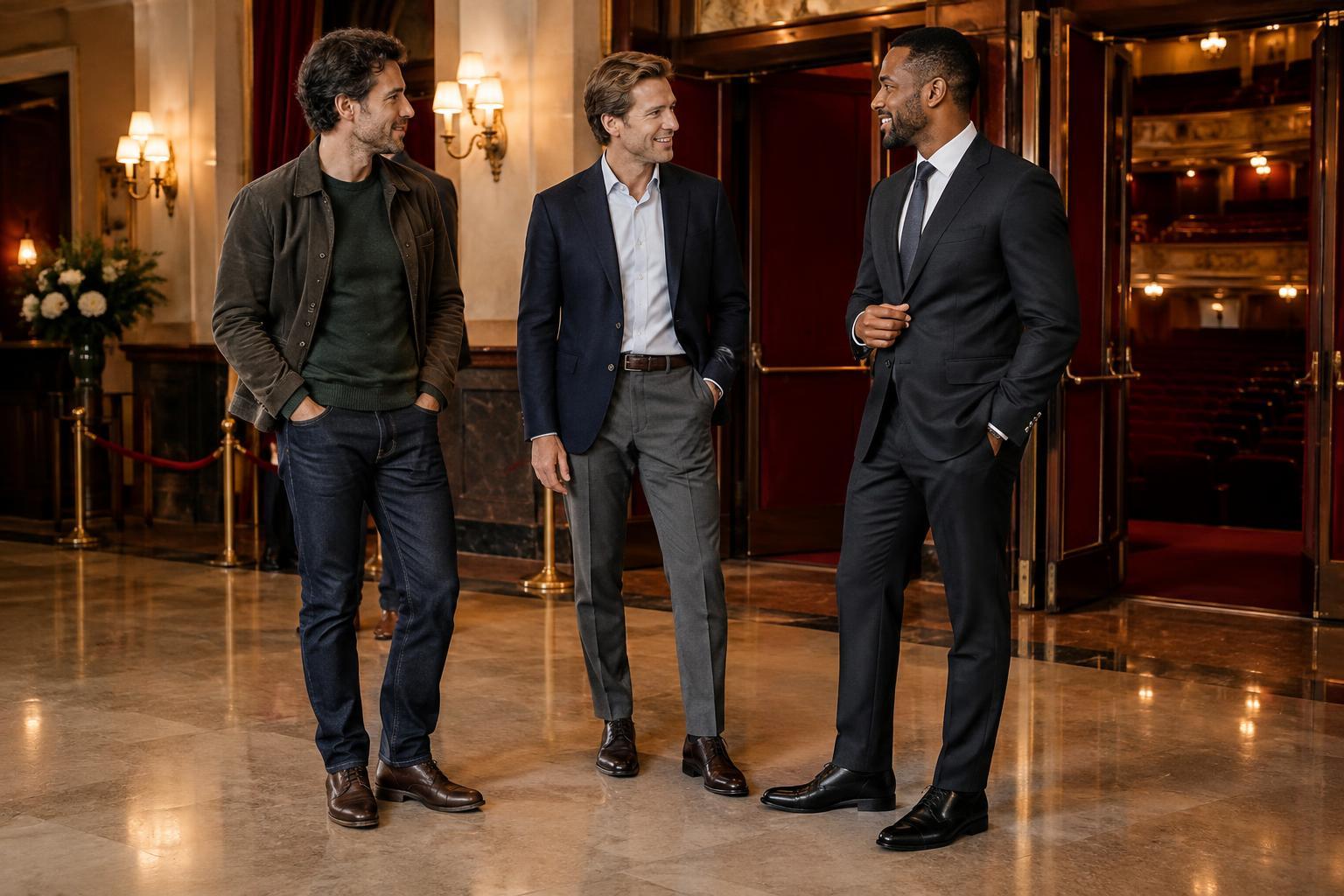
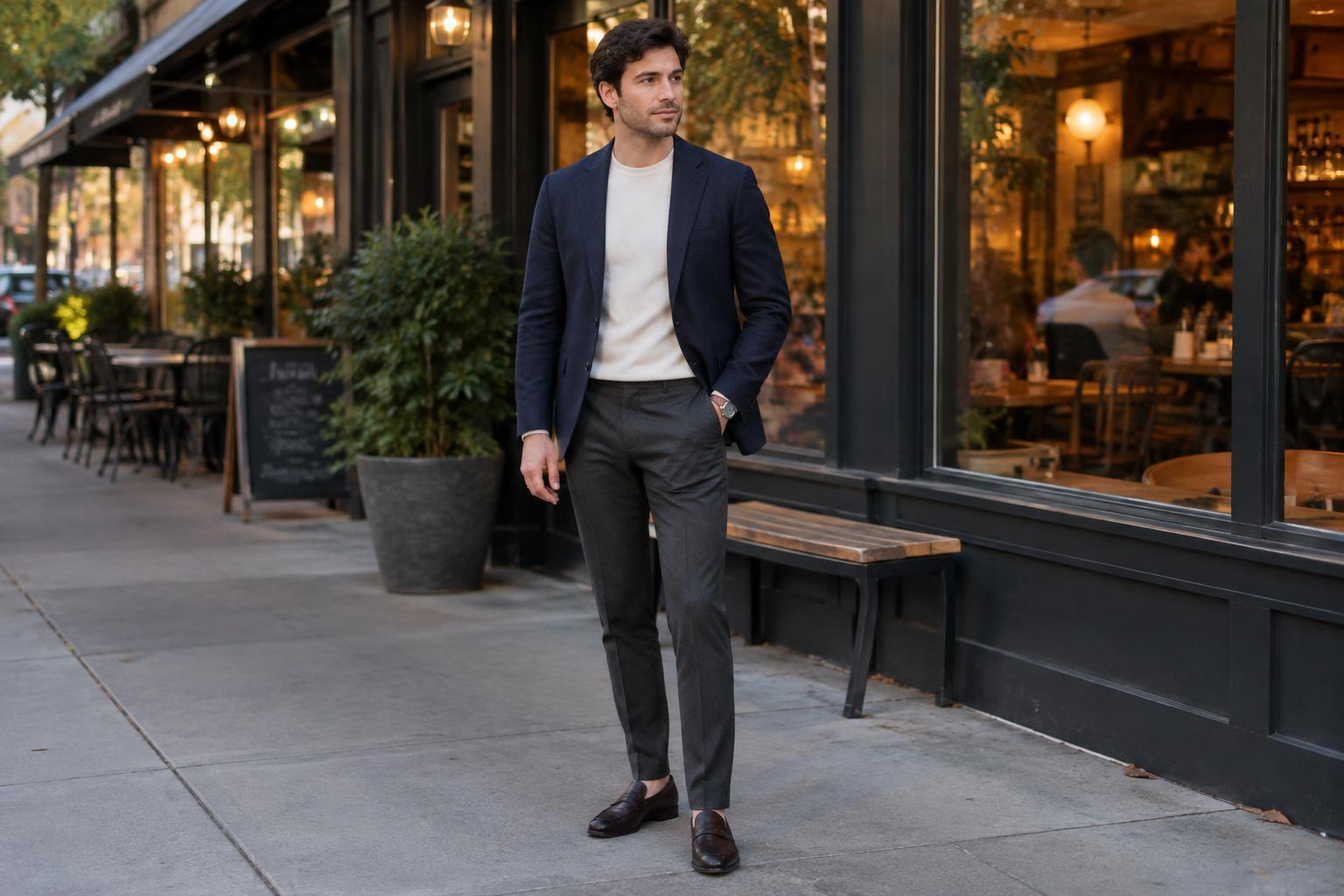
Dinner outfits depend on the restaurant, so check its atmosphere before choosing between jeans and tailored trousers. For many casual-to-smart settings, a button-down or fine-gauge knit with chinos or neat dark denim is a useful starting point. Add a blazer if the place feels dressier. You do not need a tie unless the setting calls for one.
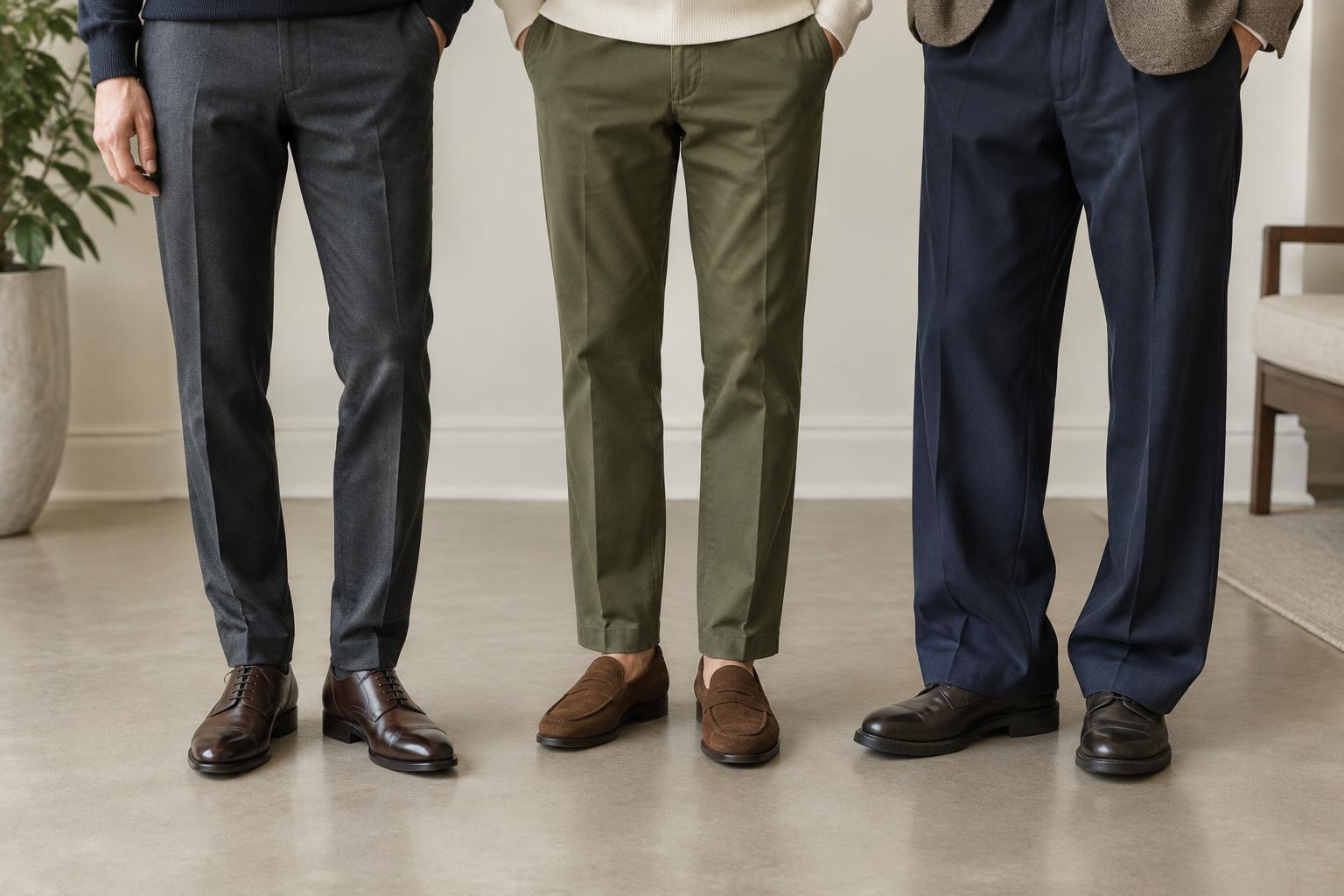
Keep the details consistent. A blazer sits more naturally with trousers that have a clean shape and shoes that are in good condition, such as loafers or simple leather lace-ups. A dark knit can offer a polished alternative to a collared shirt. If you choose denim, avoid pairs with heavy fading or frayed hems when the rest of the outfit is refined. Make sure you can sit through a meal comfortably; dinner is not the time to test trousers that are tight at the waist.
For casual activities: dress for what you will do
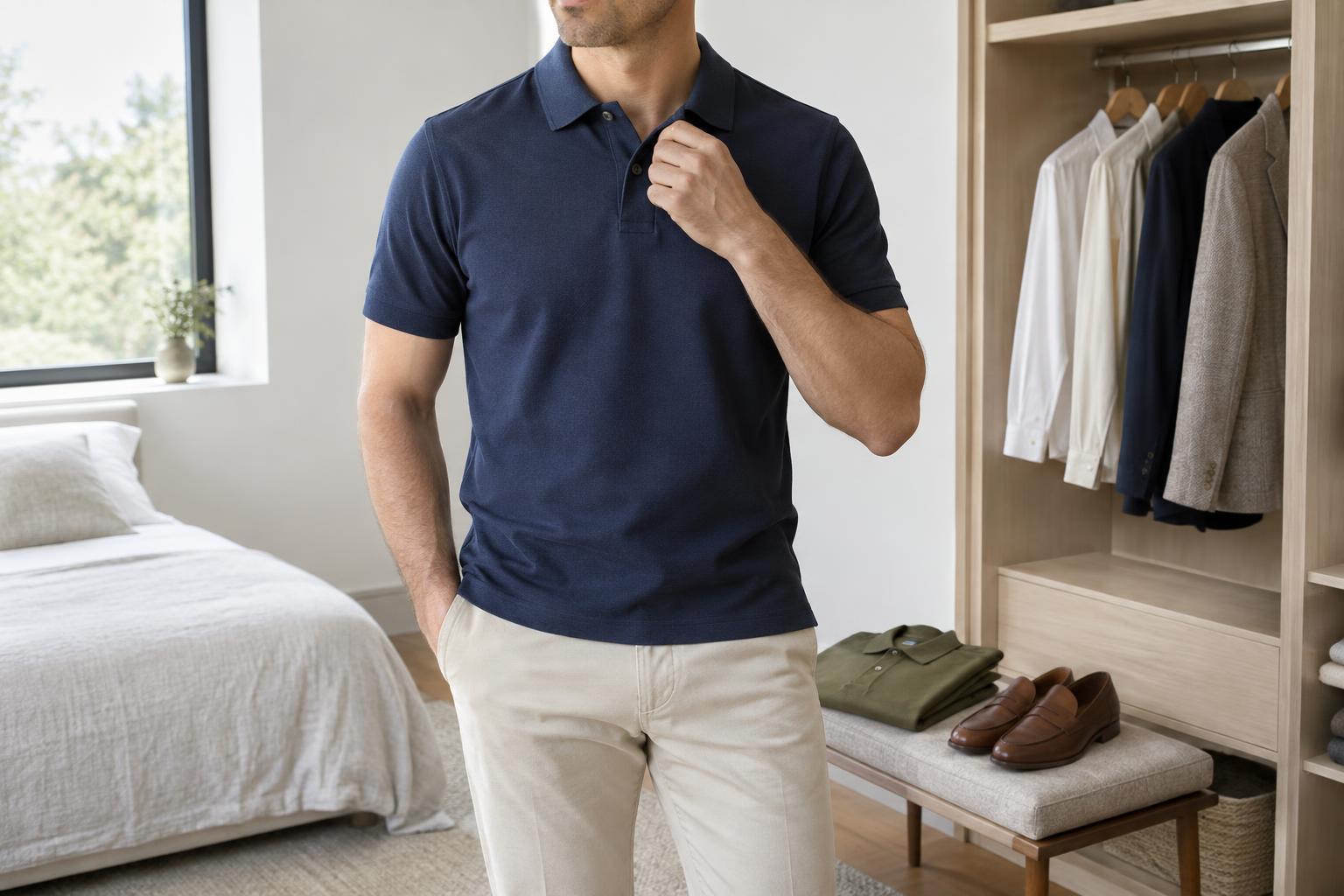
A walk, market visit, museum trip, or game calls for an outfit that can handle the activity. Start with comfortable shoes you have worn before. Pair them with jeans, chinos, or other practical trousers and a T-shirt, polo, or casual shirt. An overshirt or lightweight jacket gives you an easy way to adapt as the temperature changes.
Consider the specific plan rather than dressing for a vague idea of casual. For a long walk, prioritize grip and comfort over delicate footwear. For an indoor activity, a bulky coat may be more trouble than it is worth unless there is somewhere to put it. Choose fabrics that let you move easily, and carry only what you need. Being able to focus on the conversation is better than worrying about scuffed shoes or an awkward bag.
Make the final checks simple
Before leaving, check your outfit in ordinary light. Look for a wrinkled collar, visible stains, loose threads, or shoes that need a quick wipe. Keep accessories purposeful: a watch, belt, or understated piece of jewelry is enough if it suits your usual style. Grooming can be equally uncomplicated—neat hair, clean nails, and a restrained amount of fragrance help you feel ready without drawing attention away from the conversation.
If you are deciding between two outfits, choose the one that fits the setting and needs less fussing. First-date clothes do not have to communicate everything about you at once. They only need to let you arrive feeling comfortable, appropriately dressed, and free to enjoy the plan.