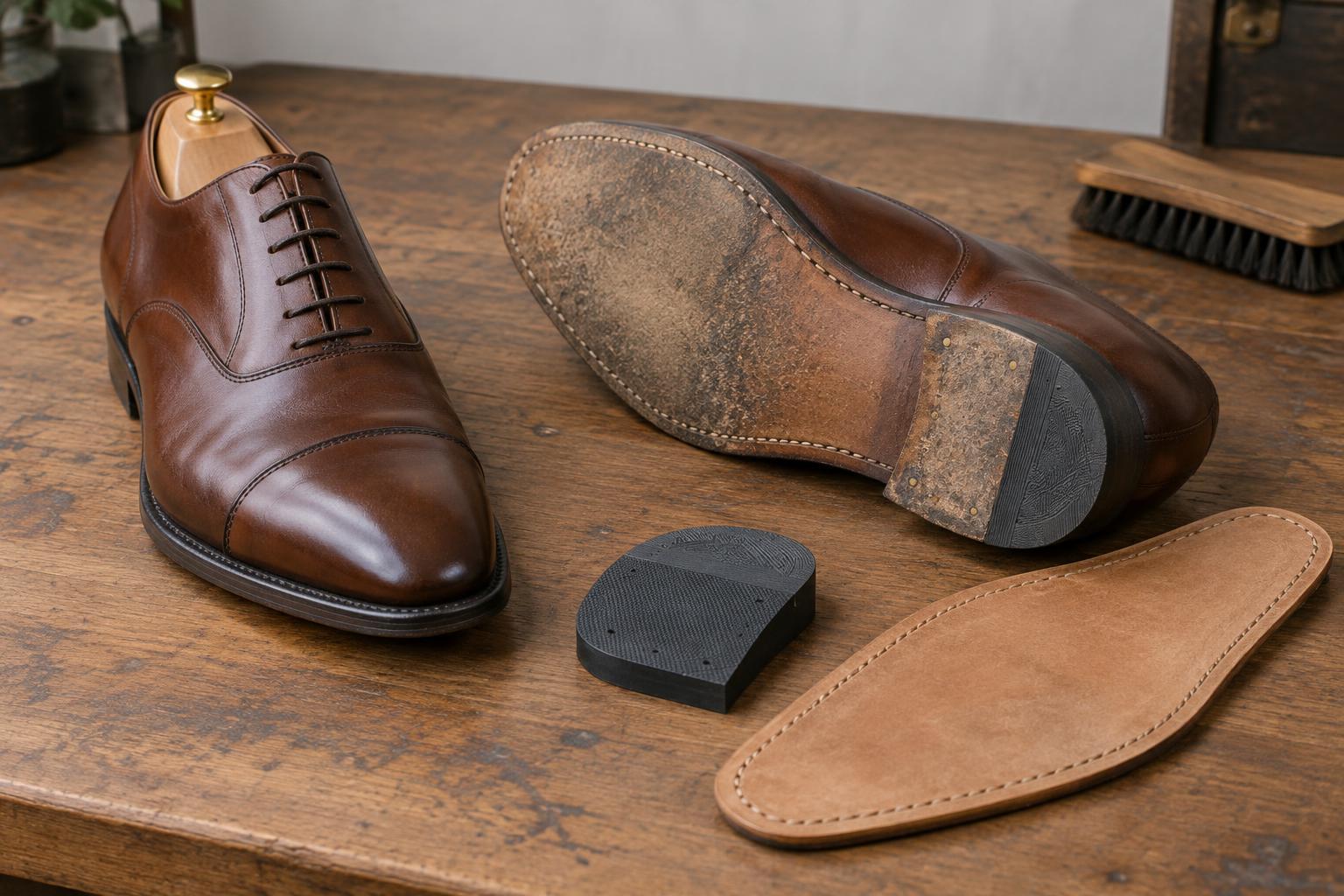
Start with a clean, dry inspection
A scuffed shoe can look worse than it is, while a polished one can hide a failing sole. Before deciding what to do, brush away dirt, let the shoes dry naturally, and inspect each one in good light. Look at the heel from behind: does it sit level, or has one edge worn much lower than the other? Then check the sole at the ball of the foot, the area that flexes most as you walk. Press gently for unusually thin or soft spots, and look for holes, splitting, or edges pulling away from the upper.
Also examine the parts a new sole cannot fix. Check for torn leather or fabric around the toes, cracked uppers at the flex point, loose stitching, and a heel counter that no longer supports the back of your foot. Try the shoes on. A pair that has become unstable or persistently uncomfortable deserves attention even if the wear is hard to see.
Replace heels before wear reaches the structure
On many dress shoes and boots, the first part of the heel to wear down is the replaceable piece that touches the ground, often called a heel lift or top lift. If it is worn unevenly but the heel beneath it remains sound, a cobbler may be able to replace that piece without rebuilding the entire heel. This is a good repair to make early: continued wear can grind into the heel stack or leave the shoe tilted when you stand.
A deeper repair may be needed if the heel itself is loose, cracked, or badly misshapen. Do not assume a new top lift will correct a heel that moves under pressure. If you notice a sudden wobble, exposed nails, or a heel separating from the shoe, stop wearing the pair until it has been assessed. The right repair depends on how the heel is built and how much sound material remains.
Consider a resole when the upper is worth keeping
A resole addresses wear across the bottom of the shoe rather than just at the heel. It may be worth considering when the outsole is thin, holed, cracked, or separating, but the upper still fits well and has plenty of life left. A good fit matters: replacing the sole will not make a shoe that pinches, slips badly, or has lost its shape into a comfortable one.
Construction affects the options. Some stitched shoes are designed to allow sole replacement, though the condition of the stitching and surrounding materials still matters. Cemented shoes may be harder to resole neatly or economically, and some lightweight sneakers have sole units that are difficult to replace. A cobbler can tell you what is feasible for the particular pair. Ask what the proposed work includes, especially whether the heel, midsole, or other worn components also need attention. Compare the estimate with the shoe’s fit, condition, and likely remaining use, not just its original price.
Know when it is time to retire a pair
Some damage is too extensive for a heel replacement or resole to solve. An upper that is tearing in a high-stress area, severe cracking that opens when the shoe flexes, or a collapsed structure can make further repair impractical. The same may be true when several components need work and the result would still be uncomfortable. If the shoe no longer feels secure underfoot, avoid wearing it while you weigh your options.
Sentimental value can justify asking about a repair even when the cost seems high. For an everyday pair, however, it is reasonable to retire it when the repair would be extensive and the remaining materials are also near the end of their useful life. Worn-out does not have to mean poorly cared for; shoes take repeated impact, moisture, and abrasion, and their parts do not always age at the same rate.
Make the next pair last longer
Inspect the heels and soles every so often rather than waiting until you can feel the ground through them. A timely heel replacement may prevent more involved work, while an early resole can protect a sound upper. Let damp shoes dry away from direct heat, remove surface dirt, and use shoe trees if they suit the pair. Rotating shoes gives them time to dry between wears and makes changes in wear easier to notice.
Before leaving shoes with a cobbler, describe where they feel worn or unstable as well as what you can see. Ask which parts can be repaired, whether the proposed work will address the problem, and what it will cost. That conversation helps you choose a repair for the shoe you have, rather than assuming every worn sole needs replacement or every scuffed heel means the pair is finished.