Start With the Result, Not the Product Name
Hair product labels can make choosing feel more complicated than it is. Start with three questions: Do you want a neat shape or a loose one? Should your hair look glossy or natural? And do you want it to stay firmly in place or remain easy to rearrange? Your answers narrow the field before you consider a brand or a particular formula.
Hold describes how strongly a product keeps hair in position; shine describes how much light the finished style reflects. Texture is the separation and definition you can see between strands. These qualities vary within every product category, so treat “pomade,” “clay,” “wax,” and “gel” as useful starting points rather than guarantees. If you are unsure, buy a small size where available and test it on an ordinary day, not just before an event.
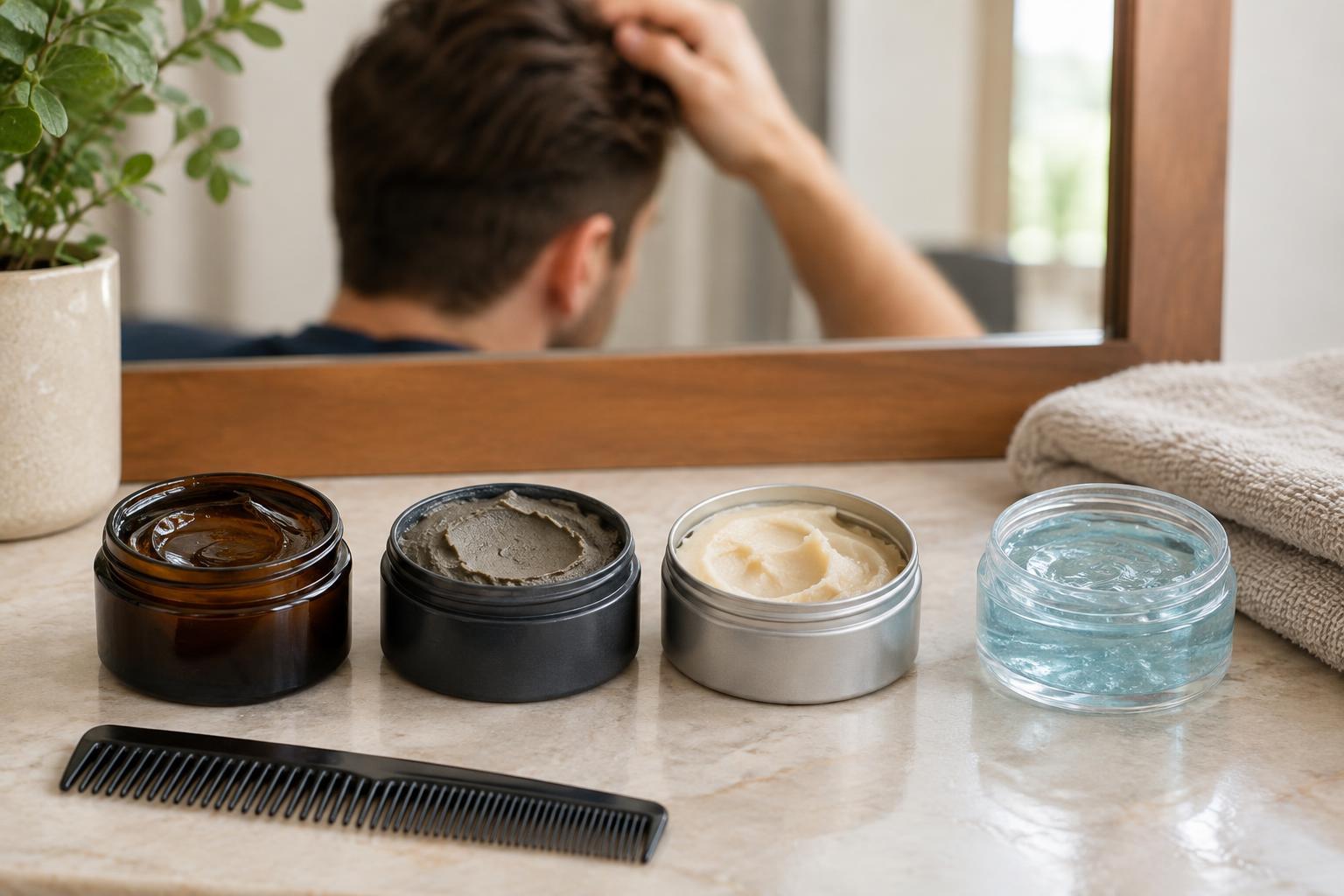
Pomade: Polished Shape and Control
Pomade is a good place to start for combed styles, side parts, and controlled hair that still looks touchable. Many pomades give a smooth finish with some shine, though matte versions exist. A flexible pomade can let you adjust your hair during the day; a stronger one may suit a more defined shape. It is often easier to work through hair that has been combed into the direction you want.
Check whether a pomade is water-based or oil-based rather than relying on the name alone. Water-based formulas are generally simpler to rinse out, while some oil-based formulas can feel more pliable and take more effort to wash away. Neither is automatically better. If your hair looks flat or greasy soon after application, use less product or try a lighter, lower-shine formula.
Clay and Wax: Two Routes to Texture
Clay is commonly chosen for a matte or low-shine finish and a fuller-looking, deliberately undone style. It can be useful when you want separation without the wet look of gel. Some clays feel quite dry or grippy, which helps build texture but can make them harder to spread through long or very dense hair. Work a small amount thoroughly between your palms before applying it; this helps avoid visible patches of product.
Wax often sits between polished and rugged. It can add definition to short or medium-length hair while allowing some movement, although hold and shine differ widely by formula. Choose it when you want to shape pieces of hair rather than set every strand in place. If a wax feels heavy or leaves your hair looking coated, reduce the amount before deciding you need a different product. With both clay and wax, a little extra can change a natural finish into a clumpy one.
Gel: Defined Styles That Stay Put
Gel is useful when your priority is a firm, tidy result with less need for restyling. It can help hold a slicked-back shape, keep shorter hair in place, or define curls, depending on the formula and application. Many gels create noticeable shine and can dry to a firm cast. That cast is not necessarily a problem if you like a crisp finish; it is less suitable if you want to run your fingers through your hair.
For a softer result, start with less gel than you think you need and spread it evenly through damp hair. Let your hair dry before judging the finish. If the set looks too stiff, you may prefer a lighter gel or a flexible pomade. Brushing repeatedly through hair after gel has dried can disturb the shape and create flakes, so do most of your styling while the product is still workable.
Match the Product to Your Hair and Routine
Fine hair can be weighed down by generous amounts of dense wax or oily pomade; try a small amount of a lighter product first. Thick hair may need more control, but adding product in stages usually works better than applying a large scoop at once. For curls or waves, consider whether you want to preserve their natural pattern or reshape the hair into a combed style. The product that works for one person’s short cut may behave differently as that cut grows out.
To test a product fairly, begin with clean hair and follow the label’s advice about applying it to damp or dry hair. Use a small amount, rub it between your hands, and distribute it from the back toward the front so excess product does not collect at your hairline. Style with your fingers for looseness or a comb for precision, then add more only where needed. Notice how the style looks after several hours and how easily it washes out. A good everyday choice should suit both your hair and the time you are willing to spend using and removing it.