Start with the laces
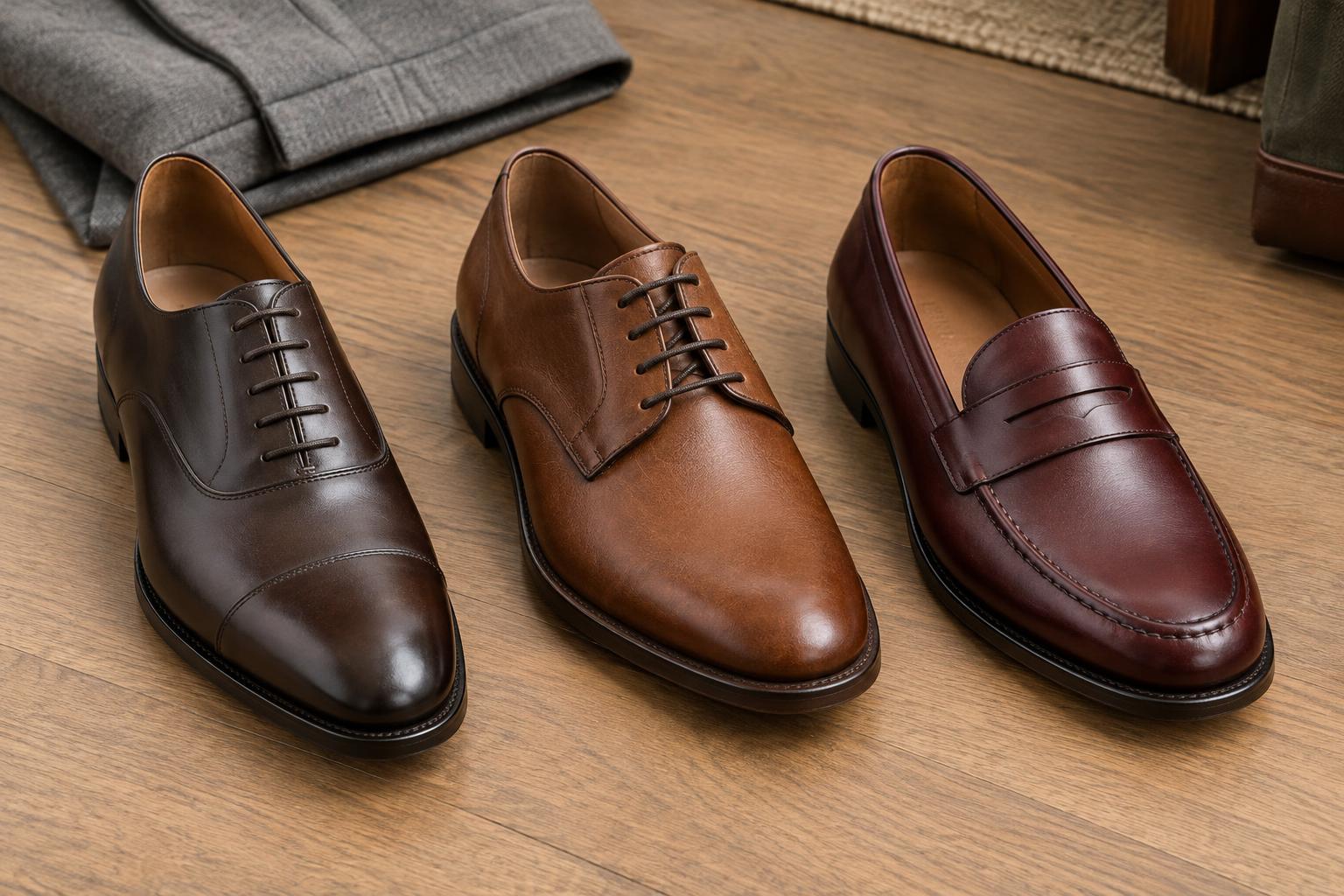
Oxfords, Derbies, and loafers can all look polished, especially in dark leather. The simplest way to tell them apart is to ignore the color and examine the upper—the part of the shoe above the sole. Oxfords have closed lacing, Derbies have open lacing, and loafers have no laces at all. That distinction is more reliable than a shoe’s toe shape, stitching, or level of shine.
On a lace-up shoe, look at the two pieces of leather that hold the eyelets. These are often called the facing or quarters. If they appear tucked beneath the front section of the shoe, you are probably looking at an Oxford. If they sit on top and can spread apart more freely, it is a Derby. Once you know where to look, the difference is easy to spot even when both shoes are plain black leather.
Oxfords: a neat, closed-lace shape
An Oxford’s eyelet panels are sewn under the vamp, the leather that covers the front of the foot. When the laces are tied, the panels draw together into a narrow opening. This gives the shoe a tidy, uninterrupted appearance that generally suits more formal clothing. A plain-toe or cap-toe Oxford in smooth, dark leather is a dependable choice with a suit, provided the shape and finish complement the outfit.
Not every Oxford is equally formal. Broguing—the decorative perforations along seams—adds visual detail, while lighter colors, suede, and substantial soles tend to make a pair feel more casual. The closed construction can also feel less accommodating across the top of the foot for some wearers. Try both shoes on with the socks you expect to wear, and check that the eyelet panels do not pull uncomfortably far apart.
Derbies: open lacing and easy versatility
On a Derby, the eyelet panels are attached on top of the vamp. You can usually lift or spread them more easily when the shoe is unlaced. That open-lace construction gives the shoe a slightly less streamlined look than an Oxford, but it can offer useful adjustment over the instep. Fit still depends on the last—the form around which a shoe is made—so do not assume every Derby will suit a high instep or wide foot.
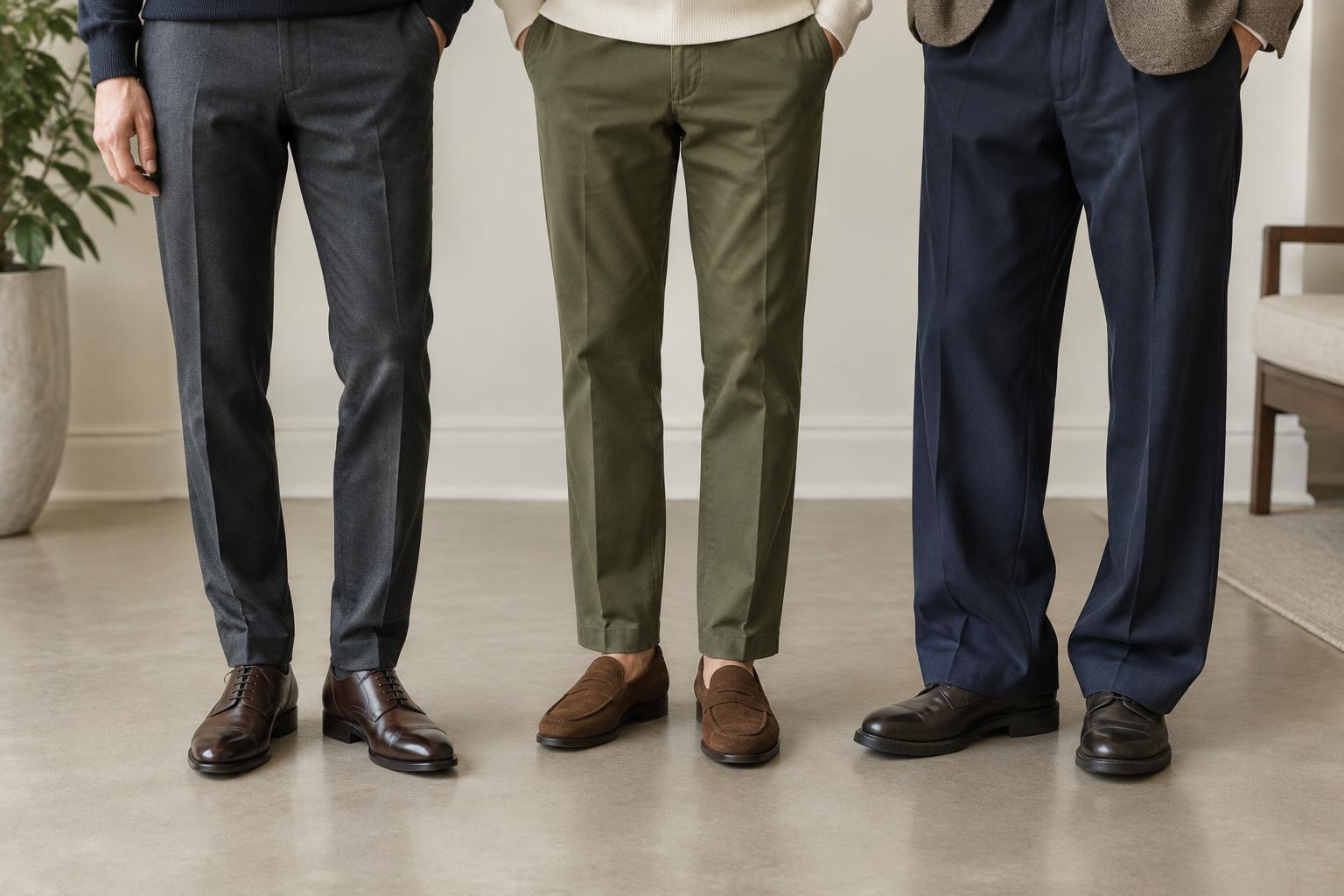
Derbies are adaptable because their details can shift the mood of an outfit. A sleek, dark pair with a thin-looking sole can work with many suits and tailored trousers. A rounder pair in suede or textured leather often sits more naturally with chinos, cords, or denim. If you need one lace-up shoe for a mix of smart and relaxed settings, a simple Derby is worth trying alongside an Oxford rather than treating either as universally better.
Loafers: slip-on shoes with several personalities
A loafer has no lacing and is made to slip on. Common details include a strap across the front, sometimes with a small cutout, on a penny loafer; a metal ornament on a bit loafer; or tassels on a tassel loafer. These features identify styles of loafer, but the absence of laces is the defining clue. A low-cut opening also means more of the sock or ankle may show than with a lace-up shoe.
Loafers range from dressy to relaxed. A slim, dark leather pair may look at home with tailored trousers, while a soft suede pair can make an easy partner for chinos. Their convenience comes with a fit trade-off: there are no laces to tighten. A well-fitting loafer should hold the heel securely without squeezing the toes. Some initial heel movement may occur, but a shoe that slips off as you walk is unlikely to become easier to wear.
Choose by outfit, fit, and upkeep
If you regularly wear conservative suits, start by considering a plain dark Oxford. For a wardrobe that moves between tailoring and casual trousers, compare a restrained Derby and a leather loafer. These are starting points, not rigid dress codes: the leather, sole, shape, and condition of a shoe all affect how formal it appears. A clean, understated pair usually coordinates more easily than one with several bold details.
Before buying, wear both shoes indoors long enough to notice pressure at the toes, sides, and instep. Check them with the trousers you plan to wear: a wider hem may suit a sturdier shoe, while a narrower hem often looks balanced with a slimmer one. Care is straightforward across all three styles. Brush away dirt, let damp shoes dry away from direct heat, and use suitable conditioner or polish when the leather needs it. Shoe trees can help maintain shape between wears.