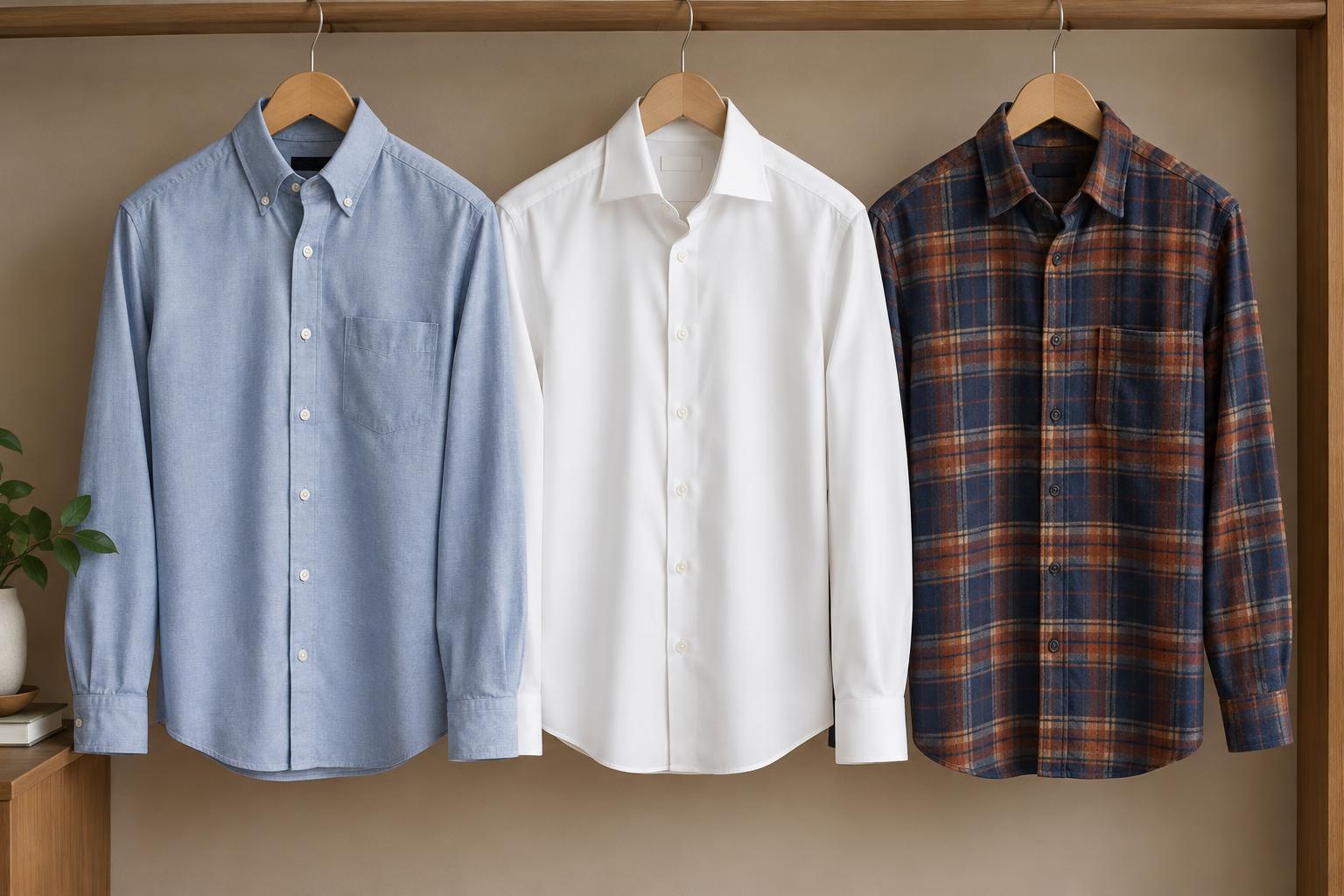
Start with fabric and formality
These three labels do not describe perfectly separate kinds of shirt. Oxford refers to a textured woven cloth, while flannel describes a soft fabric, often brushed for a slightly fuzzy feel. “Dress shirt” is a broader description of a shirt designed to look polished, particularly with tailored clothing. An Oxford can be made into a dress shirt, and a flannel shirt can have a neat collar and cuffs. What matters in a wardrobe is how the finished shirt looks and feels, not just what its tag calls it.
To judge a shirt, look at the cloth, collar, pattern, and cut together. A smooth fabric, restrained color, and structured collar tend to read more formal. Visible texture, a soft collar, and a bold check tend to read more casual. That simple scale makes it easier to choose a shirt for the clothes and occasions you already have.
The Oxford shirt: the versatile middle ground
An Oxford shirt earns its place by working with both tidy and relaxed outfits. Its cloth has a noticeable texture that feels at home with chinos, dark jeans, and casual tailoring. A button-down collar is a common choice: it stays in place when worn open at the neck and looks natural under a sweater. Choose white or pale blue if you want one shirt to cover the most ground.
For everyday wear, an Oxford should leave enough room to move without billowing at the waist. Try it tucked and untucked before buying. If you plan to wear it untucked, check that the hem does not hang so low that it looks like a shirt meant only for tucking. An Oxford is a useful starting point for a small wardrobe because it can make jeans look more considered without making them look dressed up for the wrong occasion.
The dress shirt: a cleaner line for tailored outfits
A dress shirt is the reliable choice when the outfit needs a sharper finish. Its smoother cloth sits neatly under a jacket, and its collar is generally designed to frame the face and, when needed, accommodate a tie. White is especially adaptable for formal outfits; light blue offers a slightly softer alternative. If you wear suits regularly, those plain colors are usually more useful than an attention-grabbing print.
Pay close attention to the neck, shoulders, and sleeves. A collar should fasten without feeling restrictive, shoulder seams should sit close to the shoulder’s edge, and cuffs should reach the wrist without swallowing the hand. The body should be comfortable when seated and tucked in. A shirt that pulls at the buttons or bunches heavily beneath a jacket will look less polished regardless of its fabric. If your workplace is casual, you may need only one or two dress shirts for interviews, celebrations, or other occasions that call for tailoring.
The flannel shirt: softness and casual texture
Flannel brings warmth and a relaxed feel. It is often sold in checks, but solid flannel can be easier to combine with the rest of a wardrobe. A midweight version can serve as a shirt on its own or as an open layer over a T-shirt. Pair it with denim, sturdy chinos, or casual boots; its soft surface generally looks more at ease with these pieces than with a crisp suit.
Choose the weight according to how you will wear it. A lighter flannel can fit beneath a sweater or jacket, while a heavier one may work better as an outer layer indoors or in mild weather. Check that the sleeves and chest allow comfortable movement, especially if you intend to layer it. Flannel is not automatically a cold-weather-only purchase, but a very thick shirt may get little use if your days are mostly spent in warm indoor spaces.
Build a useful rotation and care for it
You do not need equal numbers of all three. Start with the situations you dress for most often. For a casual week with occasional smart plans, a pale blue Oxford, a white dress shirt, and a flannel in a subdued color or check offer distinct options without much overlap. If you wear tailoring every day, add dress shirts first. If you rarely need a tie or jacket, an Oxford may do more work than another formal shirt.
Follow each garment’s care label, particularly for drying and ironing. Washing shirts inside out on an appropriate cycle and avoiding excessive heat can help protect their appearance. Hang dress shirts promptly and press them when you want a crisp finish. Oxfords can look good with a less exacting finish, while flannel’s softer character rarely calls for sharp creases. Give shirts room in the closet and address stains before putting them away. Good care makes each type easier to reach for when its particular strengths are needed.