Start with the shape, not the label
Jean fit describes the shape of the garment, but the name on the tag does not tell the whole story. One brand’s slim fit may resemble another brand’s straight fit. Before choosing a style, look at four areas: the rise, which determines where the waistband sits; the seat; the room through the thigh; and the width of the leg opening. Each affects how the jeans feel and how they sit over shoes.
Try jeans with the shoes and belt you expect to wear most often. The waistband should stay in place without being cinched tightly, and the seat should lie reasonably smooth when you stand. Sit down and take a few steps, too. Jeans that look neat in a fitting-room mirror may feel restrictive at the thighs or knees once you move.
Straight jeans: a dependable starting point
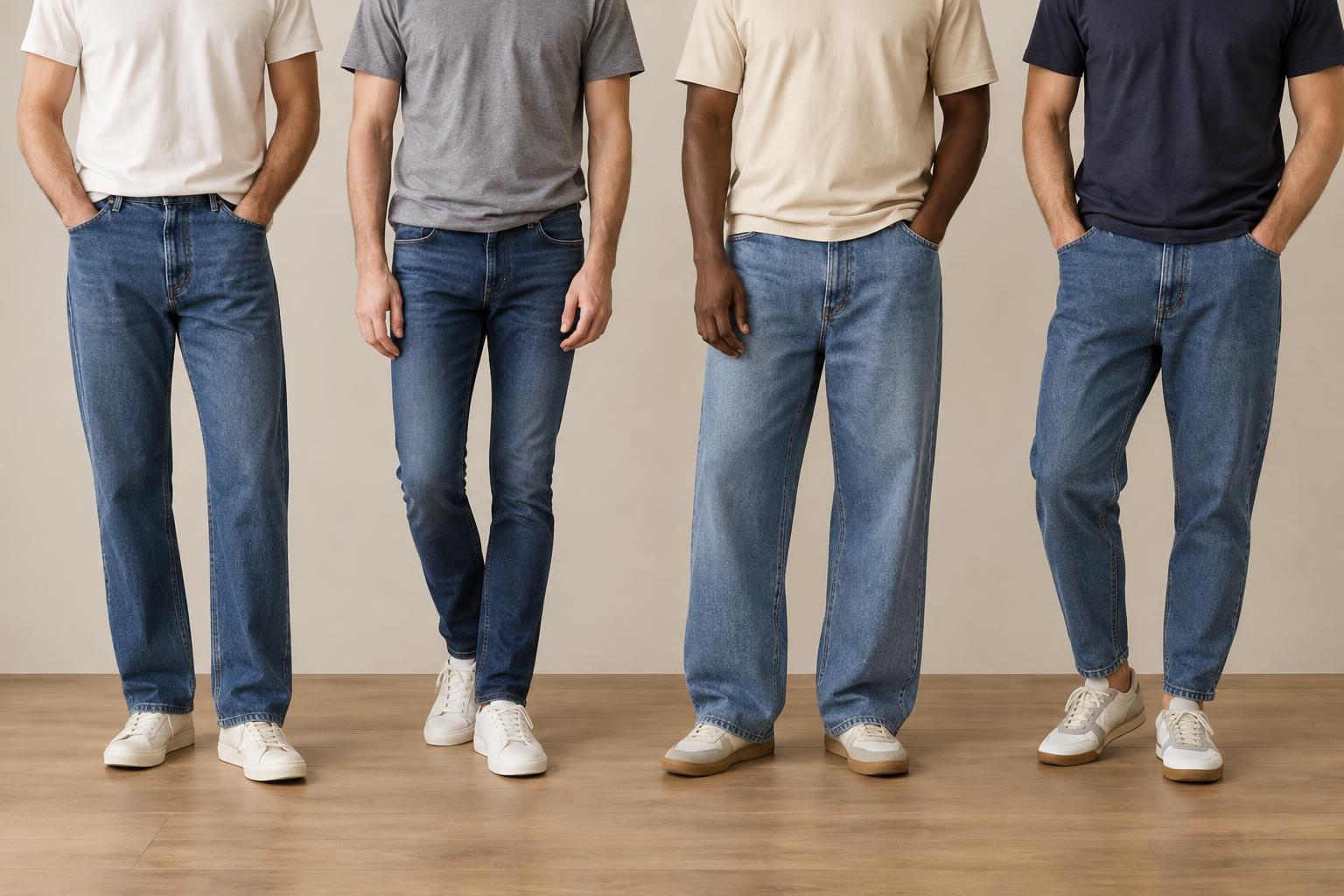
Straight jeans maintain a fairly consistent width from the knee to the hem. They do not cling closely to the lower leg or widen dramatically at the ankle, which makes them an adaptable choice for many wardrobes. A pair with enough room in the seat and thigh can work with a T-shirt and sneakers, a knit sweater and boots, or a casual shirt and jacket.
Straight does not mean baggy. If the fabric bunches heavily behind the knees or the hems swallow your shoes, try a smaller size, a different cut, or a shorter inseam. Conversely, if the thighs pull when you sit, look for a roomier straight cut rather than assuming all straight jeans fit alike.
Slim jeans: a closer line without a squeeze
Slim jeans follow the shape of the leg more closely through the thigh, knee, and calf. They can create a tidy silhouette under an overshirt, sweater, or casual blazer, especially when the hem rests cleanly on a low-profile shoe. A good slim fit leaves enough space to bend your knees and sit comfortably; it should not depend on stretch fabric to make basic movement possible.
Check the pockets and seams for strain. Pockets that flare open, horizontal pulling across the thigh, or a waistband that digs in when seated are signs to try another size or cut. If you prefer slim-looking jeans but need more thigh room, a tapered fit may give you a similar outline with less restriction up top.
Relaxed and tapered jeans: where the room goes
Relaxed jeans offer extra space, usually through the seat and thigh and often through the leg as well. That room can be useful if you value ease of movement or prefer a looser silhouette. To keep the outfit intentional, pay attention to length: a manageable break at the shoe generally looks cleaner than fabric pooling around the ankles. A closer-fitting top can balance a fuller leg, though a loose top also works when its length and proportions are considered.
Tapered jeans narrow toward the ankle. The term describes the leg shape, not a fixed amount of room at the waist or thigh, so tapered pairs may start slim or relatively relaxed. They are worth trying if straight jeans feel too wide at the hem but slim jeans feel tight above the knee. Check that the narrowing is gradual enough to pass over your calves comfortably and sit the way you want over your shoes.
Make the final choice by fit and use
Choose the cut you can wear comfortably with several outfits, rather than the one that looks best from only one angle. Dark, minimally faded denim often reads a little neater; visible fading and heavier texture tend to feel more casual. Fabric matters as well: rigid denim may soften with wear, while stretch denim can feel easier from the first try-on. Neither should require you to tolerate a painfully tight waistband.
Once you find a promising pair, check the inseam before altering anything else. A hem that falls where you want it can change how the entire leg looks. Wash according to the care label, avoid unnecessary high heat, and reassess the fit after a few wears. Whether you settle on straight, slim, relaxed, or tapered jeans, the most useful pair is one that moves with you and earns a regular place in your wardrobe.