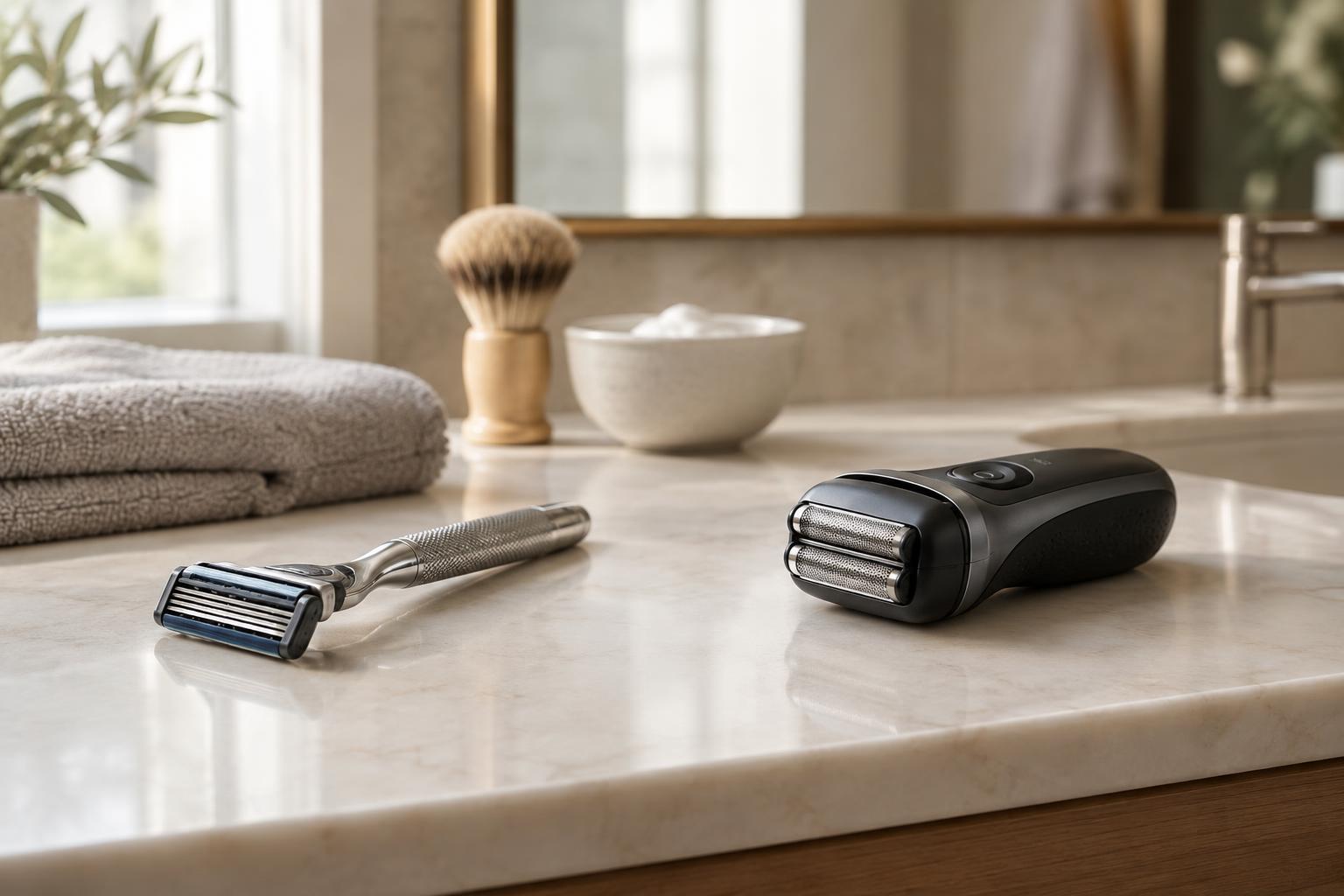
Start with the shave you actually need
The better shaver is the one that gives you an acceptable finish without making your morning harder. A manual razor usually cuts closer to the skin, which can be useful when you want a particularly smooth face for work or an occasion. An electric shaver typically leaves a little more texture, but many people find it quicker and easier to fit into an ordinary weekday routine. Neither tool guarantees a comfortable shave: preparation, technique and the condition of the blades matter.
Before choosing, consider how often you shave, how smooth you want to feel by the end of the day and how much time you are willing to spend at the sink. If you wear stubble most of the week, a trimmer may do more of the work than either shaver. If you shave daily, a tool that feels comfortable on a rushed Tuesday may be more valuable than one that delivers the closest possible finish.
What a manual razor does well
Manual razors give you direct control over where the blade goes. They are useful for shaving tight edges around a moustache or sideburns and for achieving a smooth finish on the cheeks and neck. Options range from cartridge razors to single-blade safety razors. A cartridge can be straightforward to learn; a safety razor calls for more attention to its angle and pressure. The number of blades is less important than finding a razor you can use gently and consistently.
The trade-off is contact with the skin. Pressing hard, making repeated passes over the same spot or shaving against the direction of hair growth can leave some people uncomfortable. Soften the hair with warm water, use a shaving product that lets the blade glide and begin with light strokes in the direction the hair grows. Rinse the blade as you go, and replace it when it tugs rather than cuts cleanly. If you want a closer result, reassess your skin before making another pass instead of automatically scraping over every area.
Where an electric shaver fits
Electric shavers are appealing when speed and a simple setup matter. Many can be used without a separate shaving product, although you should follow the instructions for your particular model. Foil shavers use cutting elements beneath a thin screen and are commonly used with short, controlled strokes. Rotary shavers have circular heads that can be moved over the contours of the face. Either style may take practice, especially when shaving the neck, where hair often grows in several directions.
An electric shaver may feel less aggressive than a manual blade for some users because its cutters do not contact the skin in the same way. That does not make it irritation-proof. Pushing the head firmly into the face, going over one patch repeatedly or letting the cutters become dirty or worn can still cause discomfort. Electric models also need charging or a power source, regular cleaning and eventual replacement parts. Check the cost and availability of those parts before treating the purchase price as the whole cost.
Match the method to your skin and schedule
If a very close shave tends to leave you with redness or bumps, try reducing the number of passes before deciding that you need an entirely different tool. An electric shaver may provide a finish you like with less fuss, while a careful manual shave with light pressure may also work well. Hair that lies flat against the neck can be difficult for either method. Take note of its growth direction and avoid chasing every last hair if doing so leaves your skin uncomfortable.
For frequent, time-pressed shaves, electric convenience may outweigh a slightly less smooth result. For occasional shaving, a manual razor may be simpler to store and easier to use after several days of growth; an electric shaver may work better if you trim longer hair first. You can also keep both: use the electric shaver for regular mornings and a manual razor when you want a closer finish. Judge the result after several shaves, not just the first attempt with an unfamiliar tool.
Build a routine that keeps either tool comfortable
Good habits make a bigger difference than a complicated collection of products. Give yourself enough light to see the neck and jawline, use gentle pressure and avoid shaving over visibly irritated areas just to perfect the finish. Afterward, rinse away any shaving product, pat the skin dry and use a moisturizer if your skin feels tight. A strong fragrance or a product that stings is not a requirement for looking well groomed.
Clean and dry your equipment according to its instructions. Do not leave a manual blade damp between shaves if you can avoid it, and clear hair from an electric head at the recommended intervals. Replace dull blades, foils or cutters rather than compensating with more pressure. If shaving repeatedly causes significant irritation, stop pursuing a closer shave and consider getting individualized advice. The aim is a neat, repeatable result that suits your skin and the way you live.