Read the occasion before choosing the outfit
Cocktail attire usually sits between everyday smart casual and formal eveningwear. A suit is often a safe choice, but the invitation alone may not tell you how dressed up the room will be. Consider the venue, the time of day and the reason for the gathering. A work reception in a hotel may call for a more conventional suit than a birthday party at a neighborhood restaurant.
When the setting is unclear, aim for a tailored outfit with room to adjust. A jacket and smart trousers will give you a polished starting point. You can wear a tie if the event sounds formal, then remove it if the room feels relaxed. It is harder to make an outfit look sharper once you arrive if you have skipped the jacket or chosen very casual shoes. If the invitation specifies a dress code, treat that as your first guide rather than relying on a general rule.
Make the fit do most of the work
An outfit can look overdressed when its details demand attention, even if the garments themselves are appropriate. Begin with a jacket that sits comfortably across the shoulders and closes without pulling. The sleeves should leave room for a little shirt cuff to show, while the trousers should hang cleanly rather than bunch heavily over the shoes. These choices look considered without making the clothes seem like a costume.
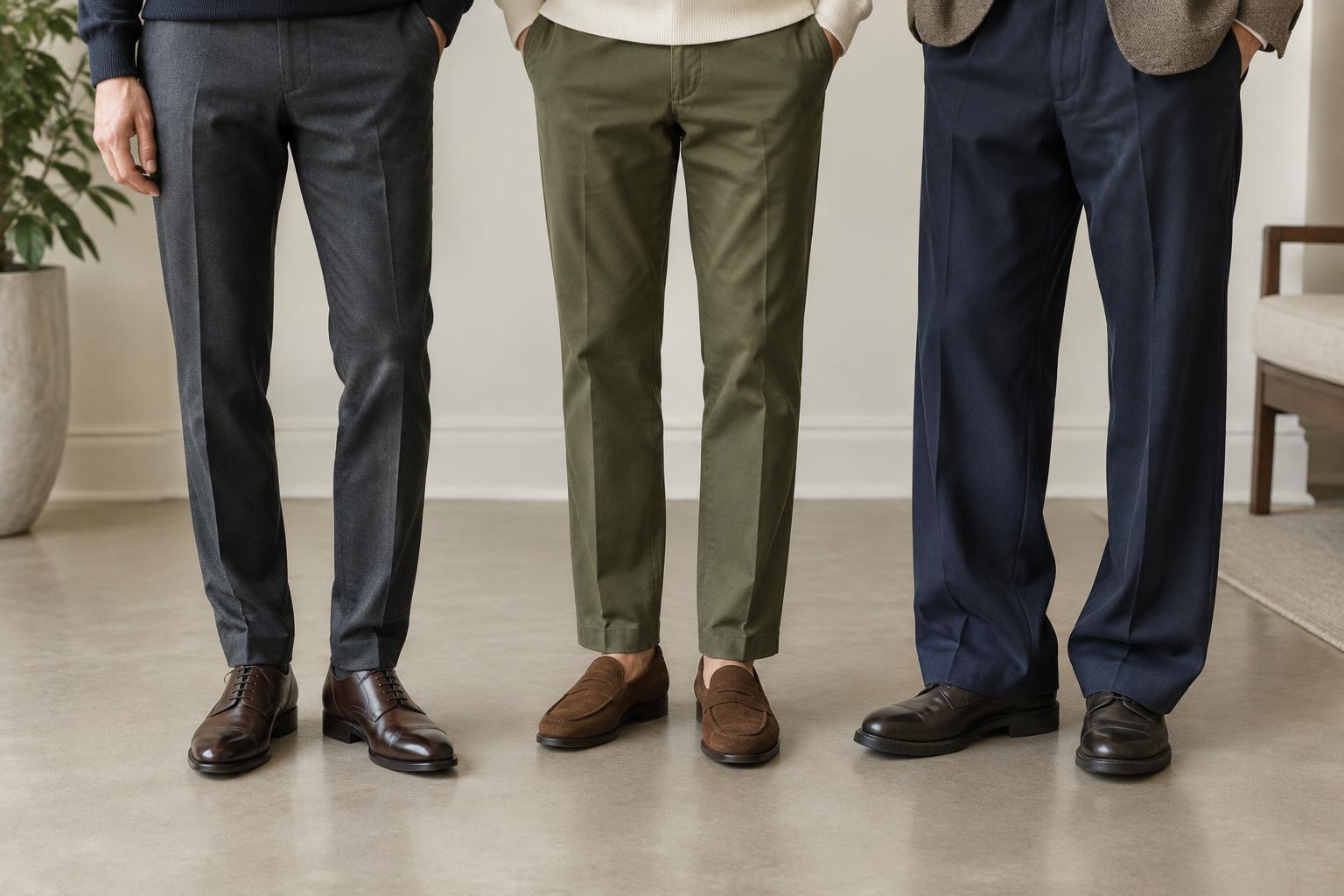
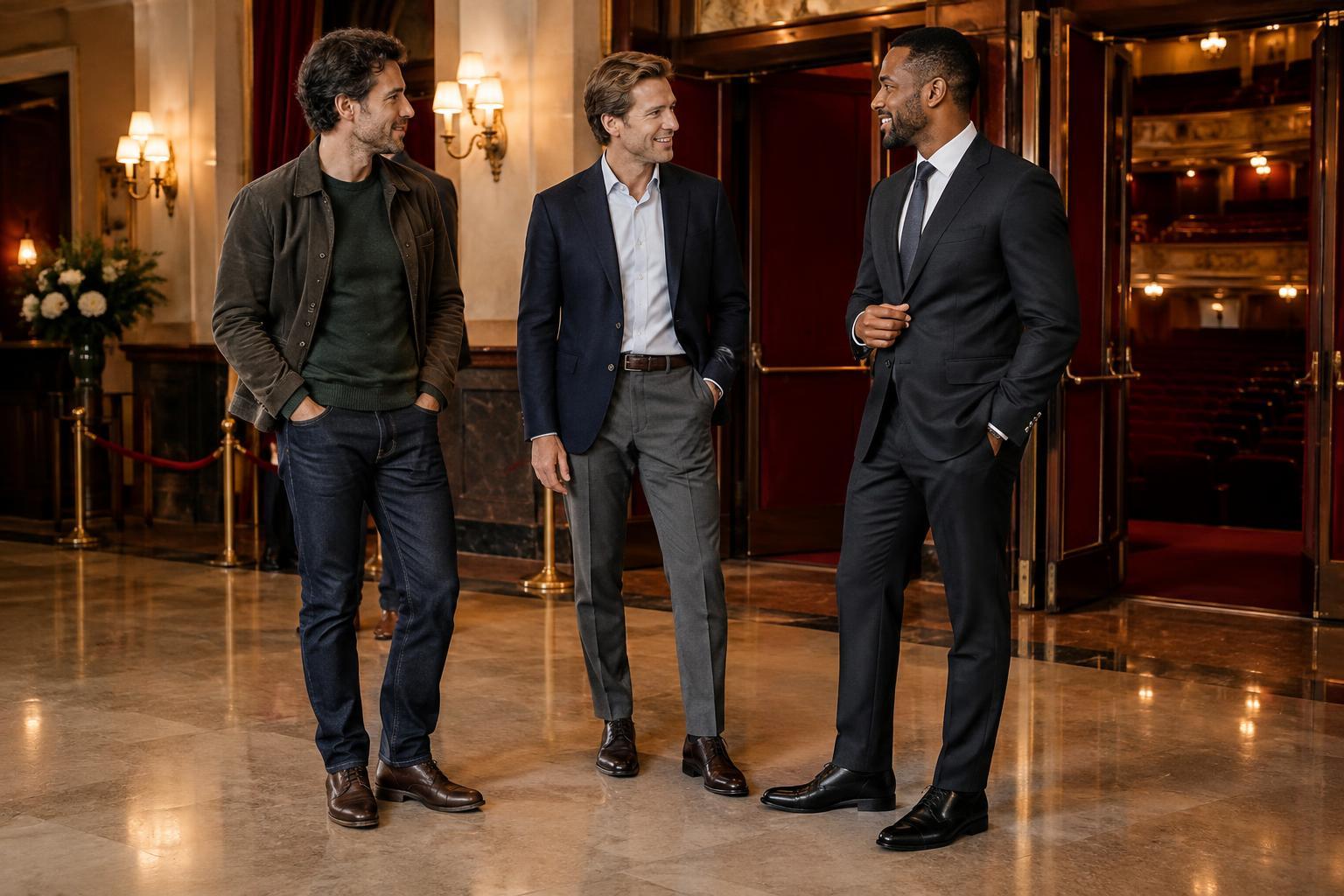
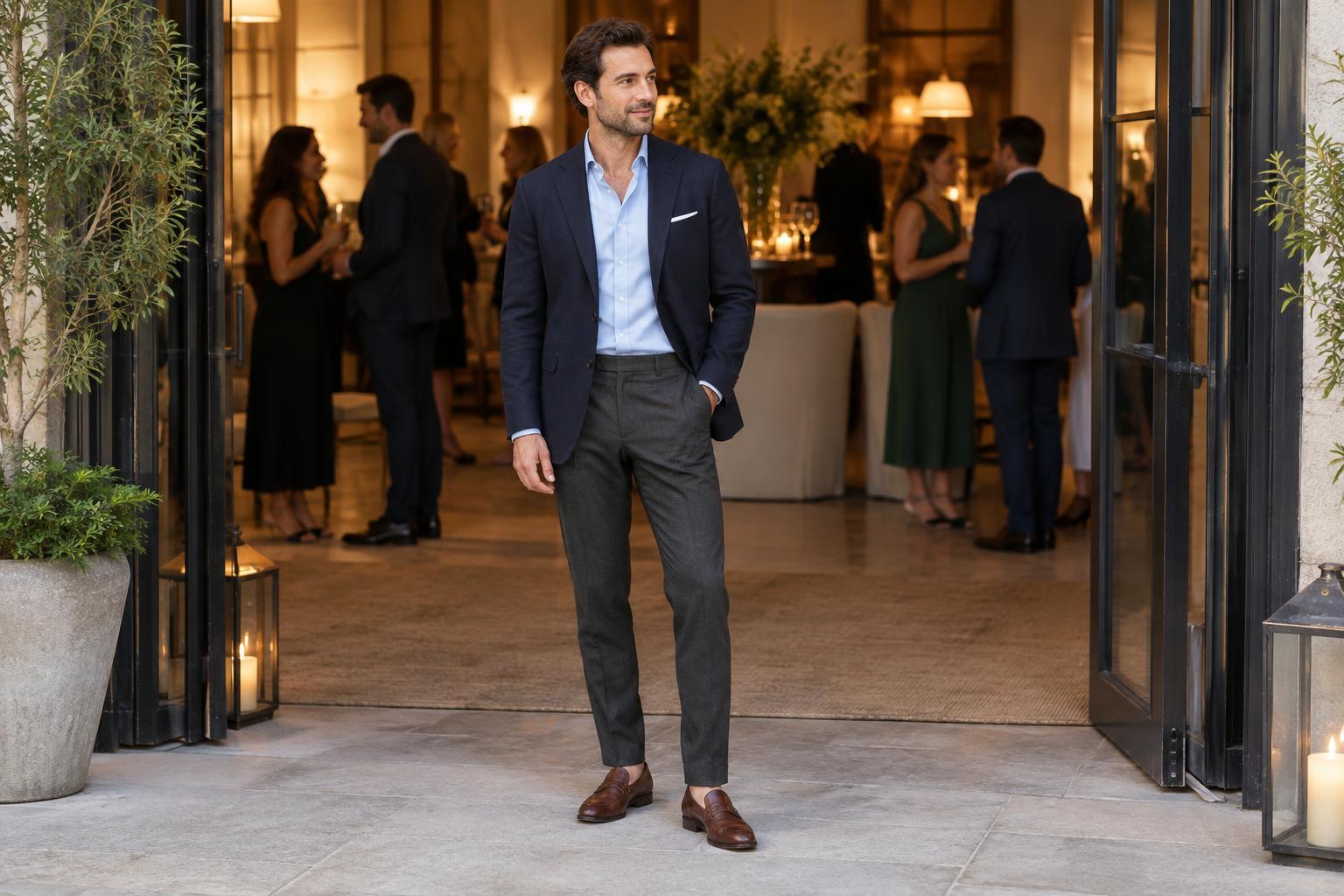
A navy or charcoal suit is versatile for many cocktail events, especially when the venue or guest list is unfamiliar. A textured jacket with coordinated, not matching, trousers can feel less formal while still looking intentional. If you separate a jacket from a suit, check it in good light: some suit jackets look incomplete without their matching trousers. Avoid combining pieces that are almost the same color but noticeably different in texture, as the near-match can seem accidental.
Keep the shirt and tie in proportion to the room
A crisp shirt is an easy foundation. White works with nearly any dark jacket; pale blue or another quiet color can soften the outfit. For a relaxed evening event, an open collar often looks appropriate if the shirt holds its shape and the neckline sits neatly under the jacket. Skip a rumpled casual shirt, even if you are trying to dress down. Clean, pressed fabric makes a simpler outfit feel ready for the occasion.
A tie is useful when the event leans toward business or the invitation sounds particularly dressy. Choose one that complements the jacket rather than competing with it. A subtle pattern or textured fabric adds interest without requiring a matching pocket square. If you do wear both, let them relate in color instead of looking like a prepackaged set. You can also leave the tie out and add a modest pocket square; one small point of interest is usually enough.
Use shoes and accessories to set the tone
Shoes can shift the whole outfit. Clean leather loafers or lace-ups are reliable options, provided they suit the trousers and the setting. Darker, sleeker shoes tend to make a suit feel more formal; softer brown leather or suede can relax a jacket-and-trousers combination. Check the weather and venue before choosing suede, and make sure the shoes are comfortable enough for standing and walking.
Keep the supporting details quiet. A belt that works with the shoes, socks that do not interrupt the trouser line, and a simple watch are plenty for most events. You do not need every accessory at once. If your jacket has a strong pattern, let the tie, pocket square or footwear recede. If everything else is understated, one distinctive detail can give the outfit personality without making you look as though you dressed for a different party.
Do a final check, then stop adjusting
Try the complete outfit on before the event, including shoes and outerwear. Sit down, walk around and check that the shirt stays tucked, the trousers move comfortably and the jacket does not feel restrictive. Brush off lint, address obvious wrinkles and empty bulky pockets. These small checks often matter more than buying something new for a single evening.
The goal is to look at ease in the setting, not to assemble the most formal version of cocktail attire. If you are uncertain, a well-fitting dark suit with a plain shirt and restrained shoes gives you a dependable base. For a more relaxed venue, an open collar or a tailored separate can bring it down a notch. Once the outfit is neat and appropriate, let it fade into the background so you can enjoy the occasion.