Start with the care label and a quick inspection
A clean dress shirt starts before it reaches the washing machine. Check the care label for instructions on water temperature, machine washing and drying. Cotton and many cotton blends can usually be washed at home, while some delicate fabrics or structured details need gentler handling. When the label calls for dry cleaning or hand washing, follow that guidance rather than treating every shirt the same way.
Unbutton the shirt, including the cuffs and any collar buttons. Remove collar stays if they are detachable. Look over the collar band, collar points, cuffs and underarms in good light. Treating visible marks before washing is more useful than adding extra detergent to the whole load. If a shirt is new to your laundry routine, keep it separate from items that might bleed dye until you know how it washes.
Treat collars and cuffs without scrubbing them raw
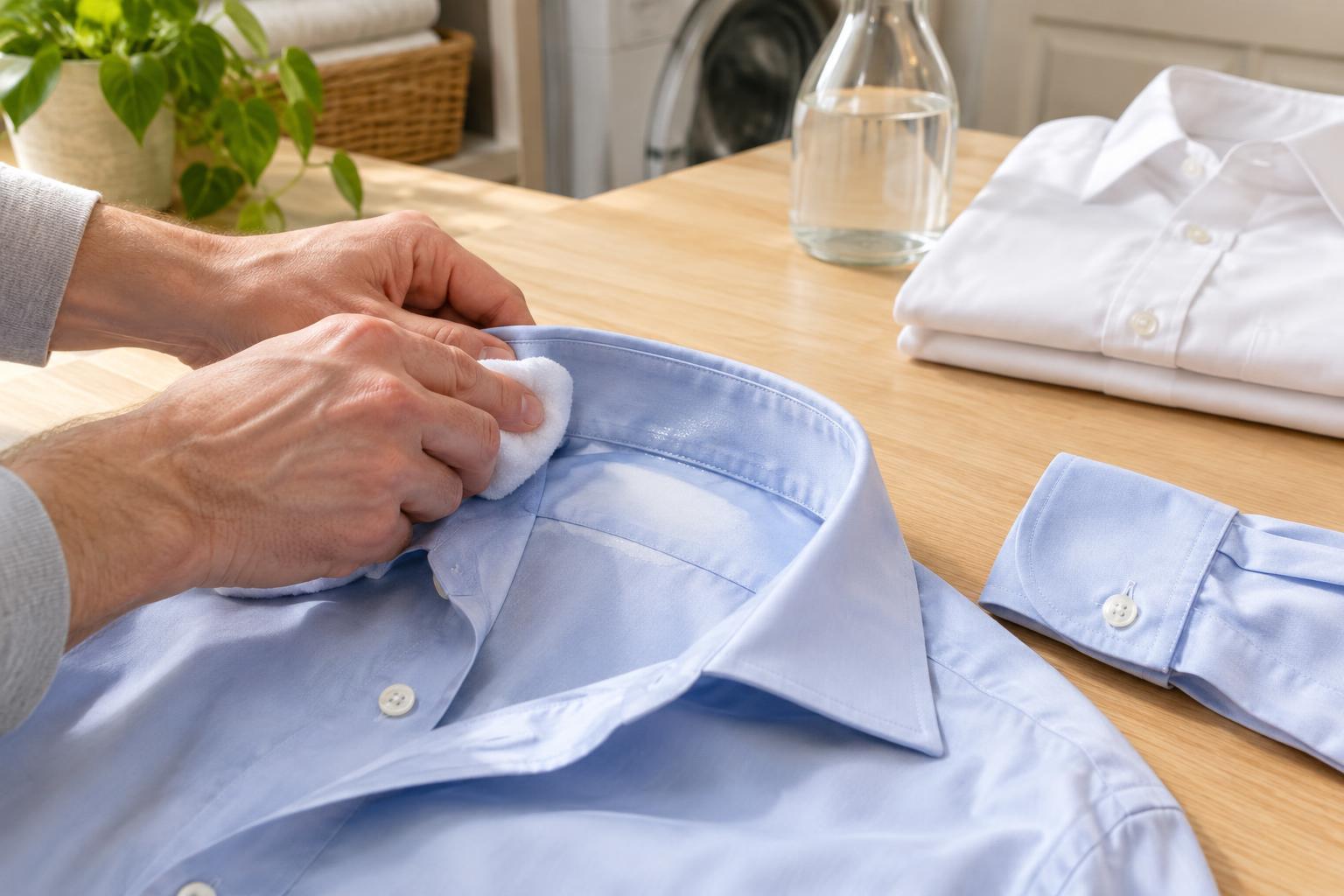
Collars and cuffs pick up skin oils, sunscreen and dirt from frequent contact. For ordinary buildup, apply a small amount of liquid laundry detergent or a laundry pre-treatment product directly to the affected areas. Work it in gently with your fingers or a soft brush, then let it sit for the time recommended on the product label. Avoid hard scrubbing: abrasion can wear the fabric or leave a collar looking fuzzy.
For a noticeable stain, test the treatment on an inconspicuous area first, particularly on colored or patterned shirts. Do not mix cleaning products, and do not use chlorine bleach unless the shirt’s care label and the product directions permit it. Heat can make some stains harder to remove, so check the collar and cuffs again after washing and before using a tumble dryer or iron. If a mark remains, repeat a suitable treatment instead of trying to press over it.
Wash with room for shirts to move
Sort shirts by color and fabric weight. Washing white shirts with dark clothes risks dulling or discoloration, while heavy items such as jeans can rub against lighter shirting. A normal or gentle cycle may be appropriate depending on the fabric and care label. Use the recommended amount of detergent for your machine and load; excess detergent can be difficult to rinse out and may leave shirts feeling stiff.
Choose a water temperature allowed by the label and suited to the garment. Cooler water is a cautious choice for many colored shirts, while some white cotton shirts may tolerate warmer water. Do not crowd the drum. Shirts need enough space to move and rinse, and an overloaded machine can leave collars and cuffs poorly cleaned and the whole load more wrinkled.
Dry carefully and press while the fabric is manageable
Take shirts out promptly when the cycle ends. Shake each one out, straighten the placket and cuffs, and smooth the collar with your hands. Hanging a shirt on a suitable hanger to air-dry can limit creasing and avoids unnecessary dryer heat. If the label permits tumble drying, use a setting appropriate to the fabric and remove the shirt before it becomes overly dry. Keep checking for stains before applying heat.
Many dress shirts are easier to iron when slightly damp. Follow the care label’s temperature guidance, especially for blends or performance fabrics that may not tolerate a hot iron. Press the collar from its points toward the center, then work on the cuffs, sleeves, front and back. Let the shirt cool and dry fully on a hanger before wearing or putting it away; folding or buttoning it while damp can create new creases.
Keep buildup from becoming a bigger job
After wearing a shirt, check the collar and cuffs before deciding whether to wash it. If it needs laundering, do not leave visible grime sitting for long periods. Pretreating those areas as part of your normal wash routine is simpler than tackling a deep-set ring later. Rotating shirts also gives you time to wash and dry each one properly rather than rushing a worn shirt back into service.
Store clean shirts only when they are fully dry. Hang them with enough space that collars keep their shape, or fold them neatly for a drawer or suitcase. Before the next wear, a quick look at the cuffs and collar will tell you whether the shirt is ready to go. Consistent, gentle care does more for a dress shirt’s appearance than aggressive cleaning after buildup has become obvious.