Start with the care label
A well-fitting wool sweater earns its place in a versatile wardrobe, but it can lose its shape if handled roughly while wet. Before washing, read the care label. Wool garments vary in their yarns, construction and finishes, so a method that suits one sweater may not suit another. If the label says dry clean only, follow that direction rather than assuming the sweater can be washed at home.
Washing less often also reduces the handling that can stretch a sweater. If it is not visibly dirty or noticeably odorous, let it air out after wearing and put it away once dry. Treat a small mark promptly according to the care label, testing any cleaner on an inconspicuous area first. When a full wash is needed, check the pockets, remove anything that might snag the knit, and turn the sweater inside out.
Prepare for a gentle wash
Use cool or lukewarm water if the label permits washing, and choose a detergent intended for wool or other delicate garments. A small amount is usually easier to rinse out than an excessive dose. Avoid bleach and ordinary harsh wash products unless the label specifically allows them. It also helps to keep the water at roughly the same temperature through washing and rinsing; abrupt changes, heat and vigorous agitation can be hard on wool.
Before the sweater gets wet, clear a space where it can dry flat later. A clean towel and a flat drying rack are useful. Having them ready means you will not need to carry a dripping sweater around by its shoulders or hem. Wet knitwear is heavy, and that weight can pull it out of shape.
Hand-wash without pulling the knit
If hand-washing is allowed, fill a clean basin with water, add the detergent as directed, and submerge the sweater. Gently press it through the water to distribute the suds. Do not scrub, twist or stretch the fabric. Pay particular attention to cuffs, underarms and the collar, but use light pressure rather than rubbing those areas against themselves.
Drain the basin and rinse with water at a similar temperature, supporting the sweater as you move it. Repeat if needed until the detergent is removed. To get rid of excess water, press the sweater gently against the side of the basin or between your hands. Never wring it: twisting can distort the body, sleeves and neckline even if the sweater looks intact afterward.
Use a machine only when the label allows it
Some wool sweaters are labeled machine washable. For those, use the specified wool or delicate cycle and the temperature given on the label. Wash with similarly gentle items, not with heavy garments or pieces with exposed zips that could catch the knit. A mesh laundry bag may help protect a finer sweater from friction, though it does not make a hand-wash-only garment machine safe.
Check the care instructions before choosing a spin setting. A permitted gentle spin can remove water without the twisting involved in hand-wringing, but a harsh cycle may leave a delicate knit misshapen. Take the sweater out promptly when the cycle ends. Do not lift it by one sleeve; gather the whole garment from underneath so its weight stays supported.
Towel-dry, reshape and store folded
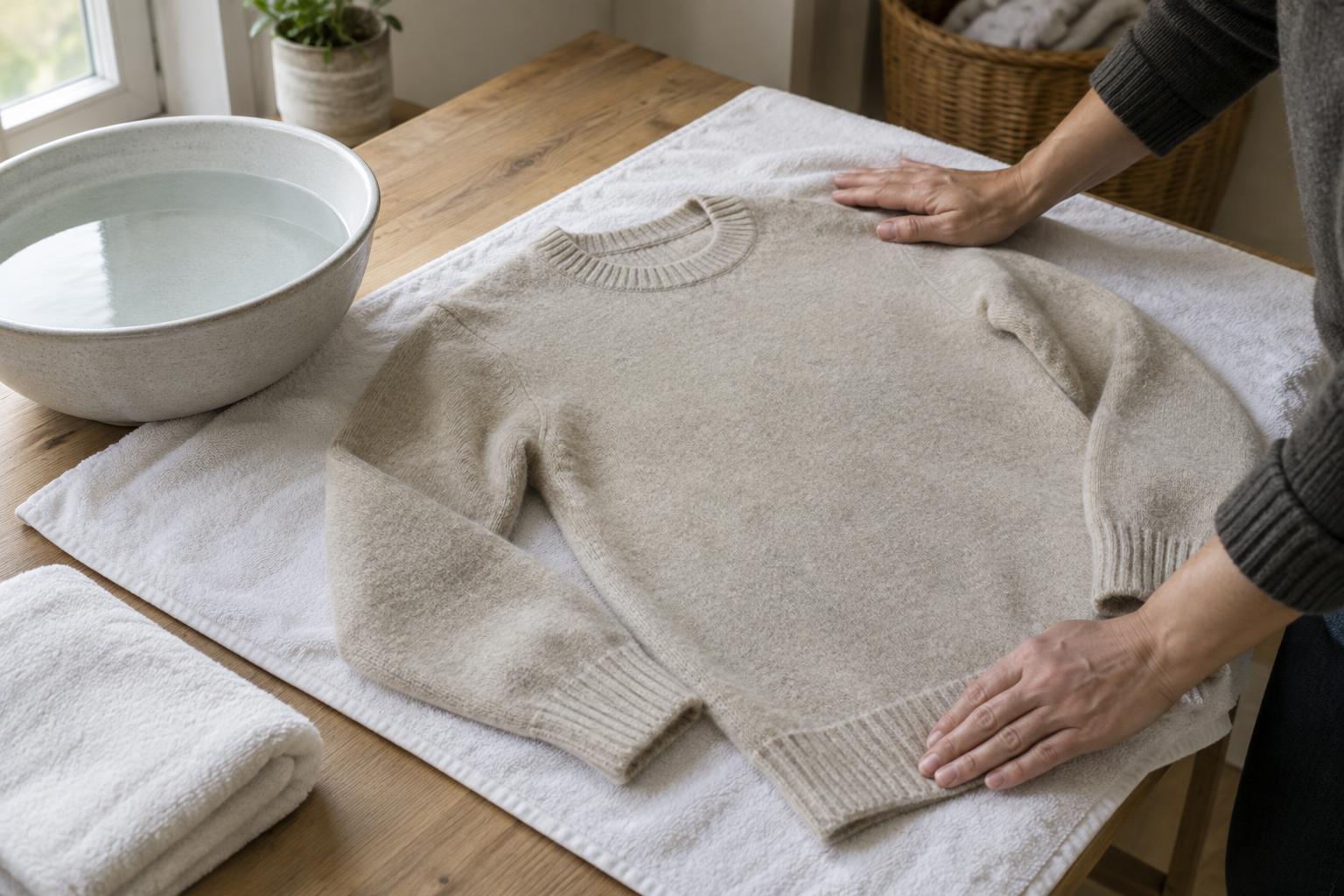
Lay the clean sweater flat on a dry towel, smooth it into its usual proportions, then roll the towel and sweater together. Press along the roll to absorb water without twisting the knit. If the sweater is still very wet, repeat with another dry towel. Next, lay it flat on a drying rack or a fresh towel in a ventilated spot, away from direct heat. A damp towel beneath it may need changing during drying.
While the sweater is flat, ease the shoulders, sleeves, cuffs and hem back into shape without tugging them longer. Give it time to dry fully, turning it carefully if the underside remains damp. Do not hang a wet sweater on a hanger or clothesline: the weight of the water can stretch the shoulders and body. Unless its care label permits tumble drying, keep it out of the dryer as well.
Once completely dry, fold the sweater for storage rather than leaving it on a hanger. The same principle applies throughout the process: support the garment’s weight, handle it gently, and let it dry in the shape you want to wear.