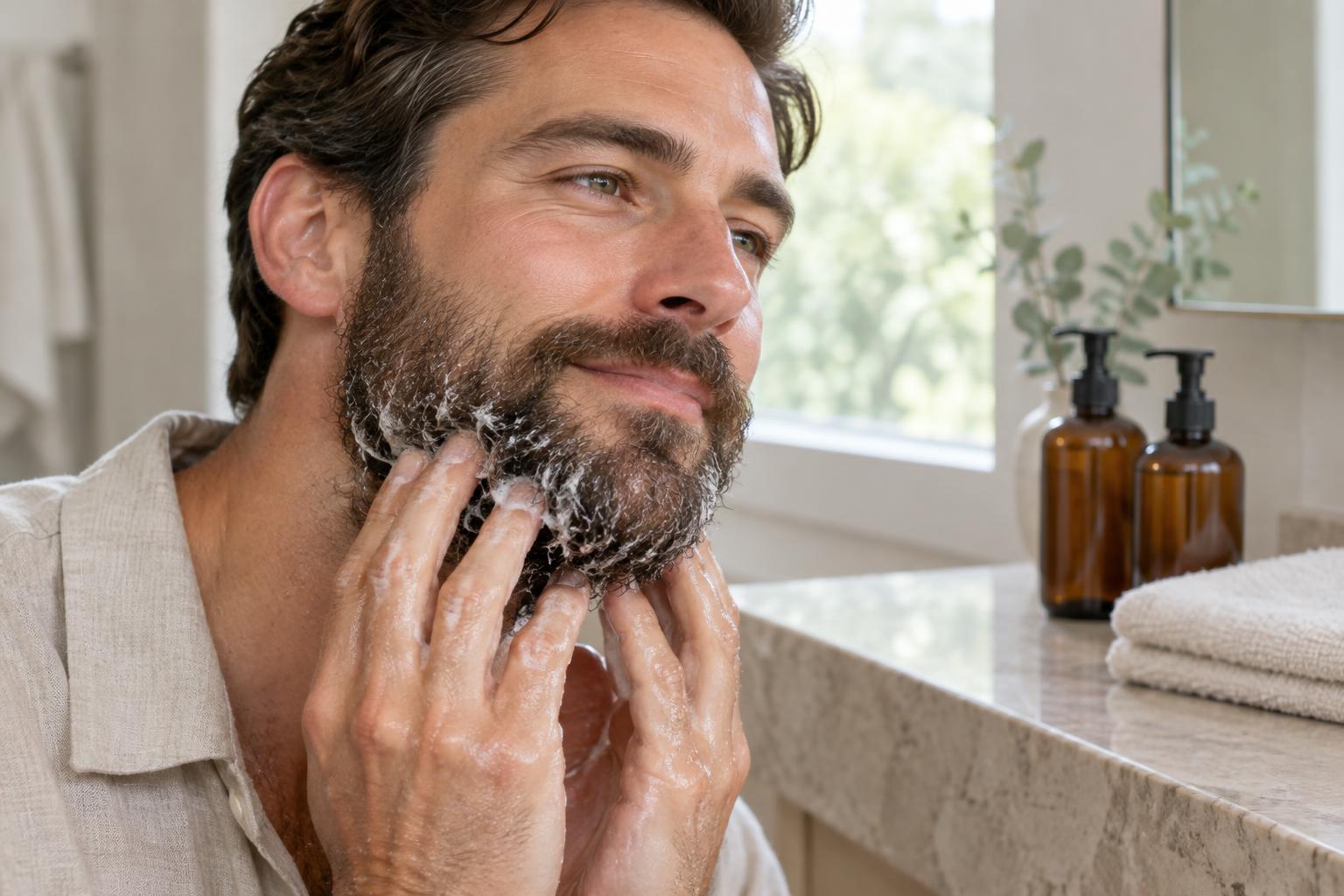
Start with a gentle wash
Beard hair catches food, sweat, and whatever your hands bring to it during the day. Washing clears that buildup, but more washing is not always better. A beard that feels squeaky clean and a face that feels tight afterward may be getting more cleansing than they need. The aim is to leave the hair clean while keeping the skin beneath comfortable.
Choose a mild beard wash or gentle facial cleanser rather than assuming a strong body wash will suit your face. If products often leave your skin feeling uncomfortable, try a simple, lightly fragranced or fragrance-free option. You do not need a large collection of products: one cleanser you can use comfortably and consistently is a better starting point than several that leave your beard feeling stripped.
Let your routine follow your day
There is no single washing schedule for every beard. Someone who exercises, works in a dusty setting, or uses a lot of styling product may want to wash more often than someone whose beard rarely picks up much residue. Start by cleansing when the beard feels dirty or smells stale, then pay attention to how the hair and skin respond. On other days, a thorough rinse with lukewarm water may be enough.
Temperature matters to comfort. Very hot water can leave some skin feeling tight, so use lukewarm water and avoid a long, steamy scrub. If you are changing your routine, adjust one thing at a time. That makes it easier to tell whether a different cleanser, water temperature, or washing frequency is helping.
Wash the skin, not just the surface hair
Wet the beard all the way through before adding cleanser. Work a small amount between your hands, then use your fingertips to massage it gently through the hair to the skin beneath. Pay attention to the chin, jaw, and the area under the lower lip, where it is easy to clean the outer hair while missing what is underneath. Use your fingertips rather than scratching with your nails.
Rinse until the beard feels free of cleanser, including along the neckline. Leftover product can make hair feel coated and may be uncomfortable on the skin. A longer beard takes more patience to rinse than short stubble; part the hair with your fingers and let the water reach the roots. There is no need to scrub hard to get a good wash.
Condition the hair without overloading the skin
Conditioner can make beard hair feel softer and easier to comb, especially as it grows longer. After washing, apply a modest amount of a beard conditioner or a gentle hair conditioner, concentrating on the hair rather than packing product against the skin. Follow the product’s directions, then rinse well. If your beard feels heavy or greasy once dry, try less conditioner next time or keep it farther from the roots.
For a short beard, conditioner may be optional. If the skin beneath feels dry, a small amount of plain, suitable facial moisturizer worked through the beard to the skin may be more useful than adding more hair conditioner. Beard oil can help some beards feel smoother, but it is not a substitute for washing or for a moisturizer that suits your skin. Introduce any leave-in product sparingly so you can judge how it feels.
Dry gently and check the result
Press the beard with a clean towel instead of rubbing it vigorously. If you comb it, start gently and work through tangles without pulling. When using a hair dryer, choose a lower heat setting and keep it moving rather than aiming hot air at one spot. Letting the beard dry thoroughly also makes it easier to tell whether the hair actually needs more conditioning or simply felt rough while wet.
A good routine should leave both the beard and the skin beneath comfortable. If you notice persistent tightness, try washing less often, using a milder cleanser, or applying less product. If irritation continues or becomes pronounced, seek advice from an appropriate health professional rather than trying to cover it with more grooming products. The most useful routine is the simplest one that keeps your beard clean without leaving the skin underneath feeling neglected.