Start with an outfit that can do both
The easiest office-to-dinner transition happens before you leave home. Choose an outfit that meets your workplace’s dress code without looking tied to a particular meeting or uniform. A well-fitting jacket, a simple shirt or fine-gauge knit, and clean, tailored trousers make a useful foundation. Each piece can look appropriate during the day and relaxed enough for a restaurant in the evening.
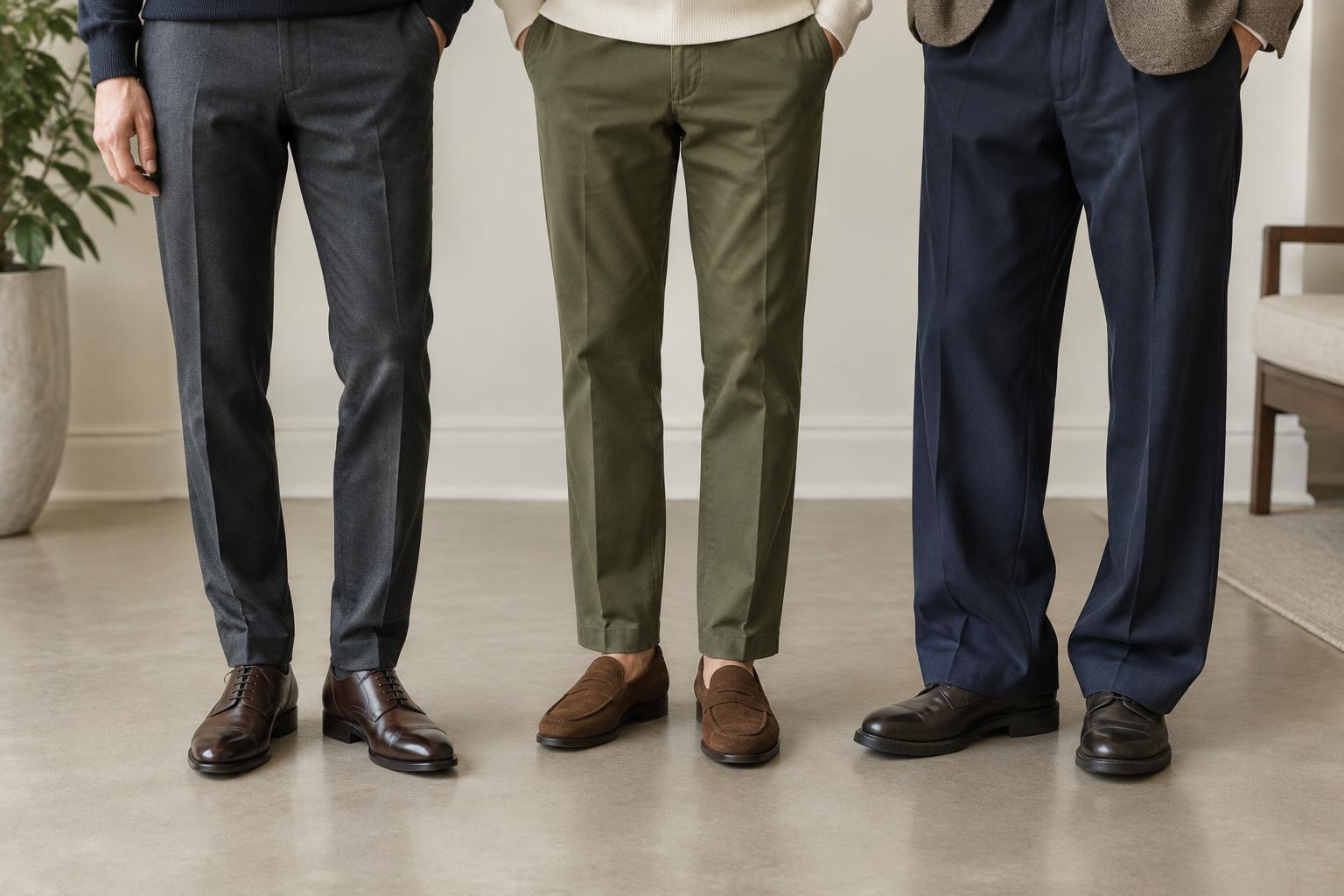
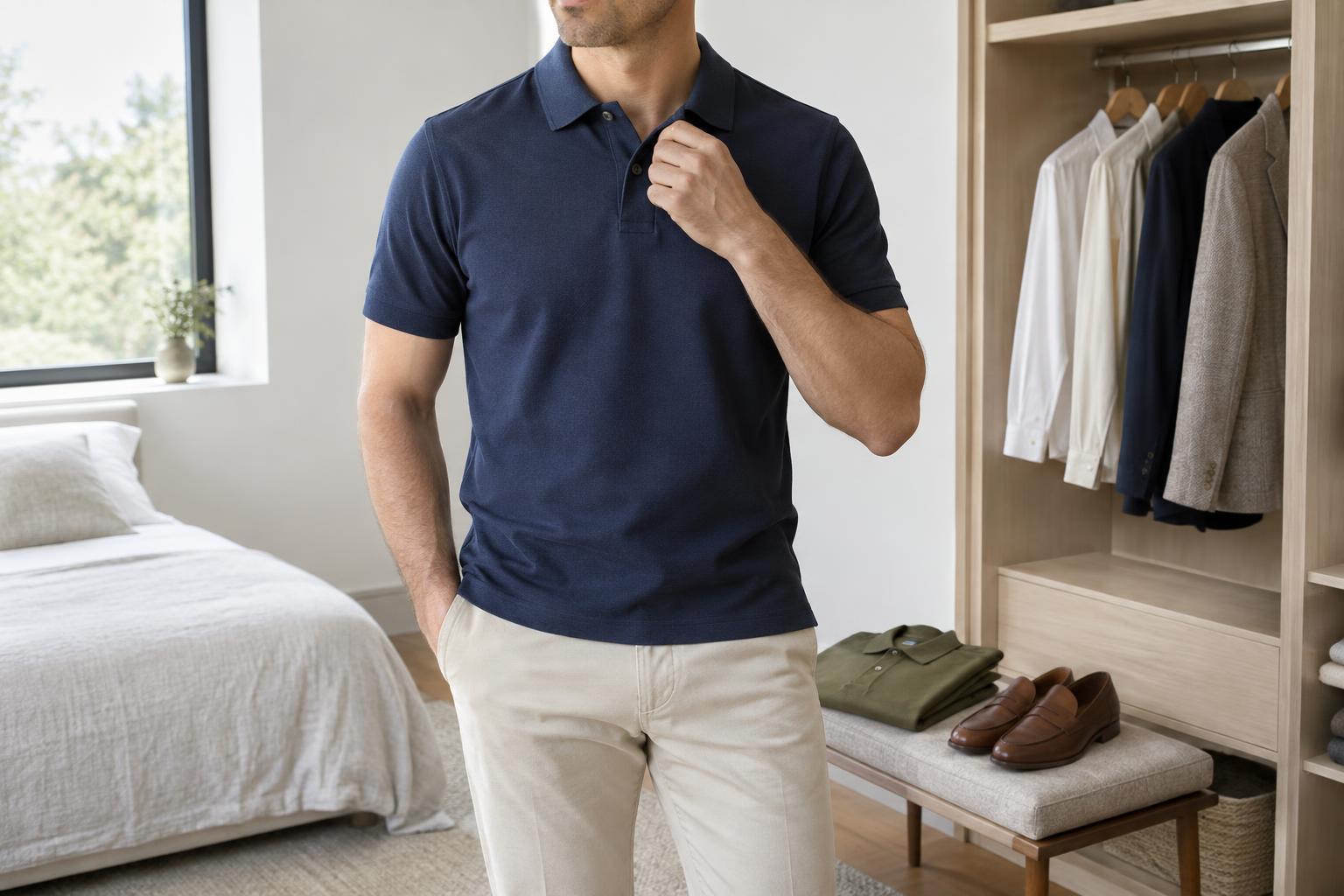
Keep the colors easy to combine. Navy, charcoal, olive, brown, cream and white can form a quiet base, leaving room for one piece with more character. Texture can do some of that work: a knitted polo, an Oxford shirt or a softly structured jacket often feels less formal than a crisp business shirt and matching suit. Fit matters more than the number of layers. Clothes that pull when you sit or bunch under a jacket will be uncomfortable through a long day, however good they look at the start.
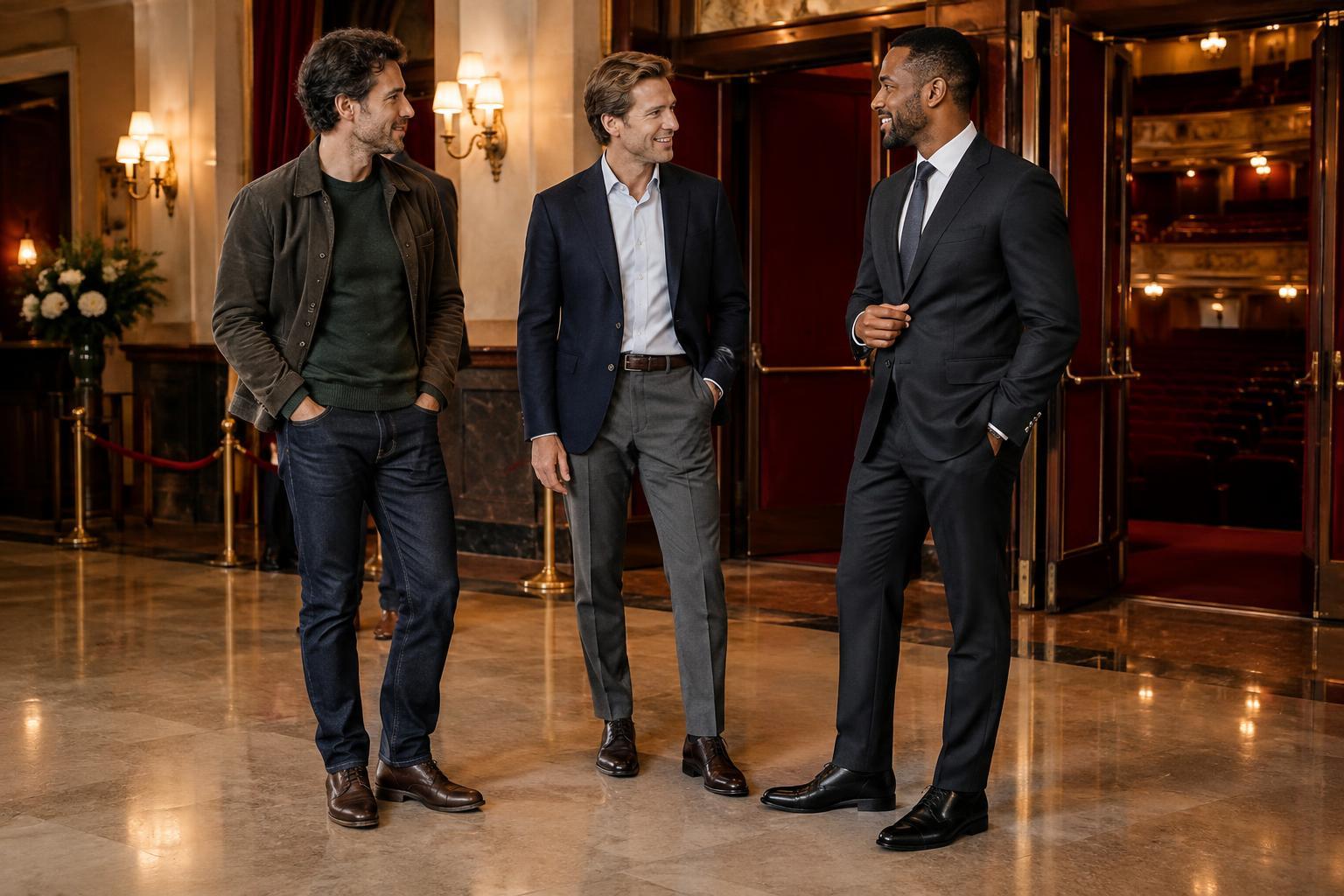
Let your office set the starting point. In a formal workplace, you may need a suit and tie until the day is over. In a casual one, dark jeans and a jacket might be enough, provided the jeans are permitted at work. The aim is not to force the same formula into every setting; it is to find the least formal outfit that still feels right for your workday.
Make one or two deliberate changes
A transition usually works better when you change a small number of details rather than trying to remake the whole outfit. If you wore a tie, removing it and opening the top shirt button can make a suit feel easier. If you wore a jacket over a knit, keep the jacket for a smarter dinner or carry it over your arm for a more relaxed place. You can also swap a business shirt for a clean, plain knit or polo if you have somewhere convenient to change.
Shoes can make a noticeable difference, but a swap is not always necessary. Loafers, simple derbies and understated leather boots can work across many offices and dinner plans. Pick a pair that is comfortable enough for your commute and neat enough for the evening. If your workplace requires very formal footwear but dinner is casual, carrying another pair may be worthwhile; otherwise, one well-chosen pair keeps the plan simpler.
Use accessories sparingly. A watch, belt or pocket square can add interest, but stacking several new details rarely makes an outfit more versatile. For most dinners, removing an office badge and tidying up your pockets will have more impact than adding something conspicuous.
Match the adjustment to the dinner
For a casual meal with friends, soften a tailored office outfit by taking off the tie or jacket and rolling your sleeves neatly if the shirt allows it. If you start the day in business-casual clothes, a jacket added before dinner can make a shirt and trousers feel more considered without making them stiff. Check the venue’s dress expectations when you know them; a relaxed neighborhood restaurant and a formal celebration may call for different choices.
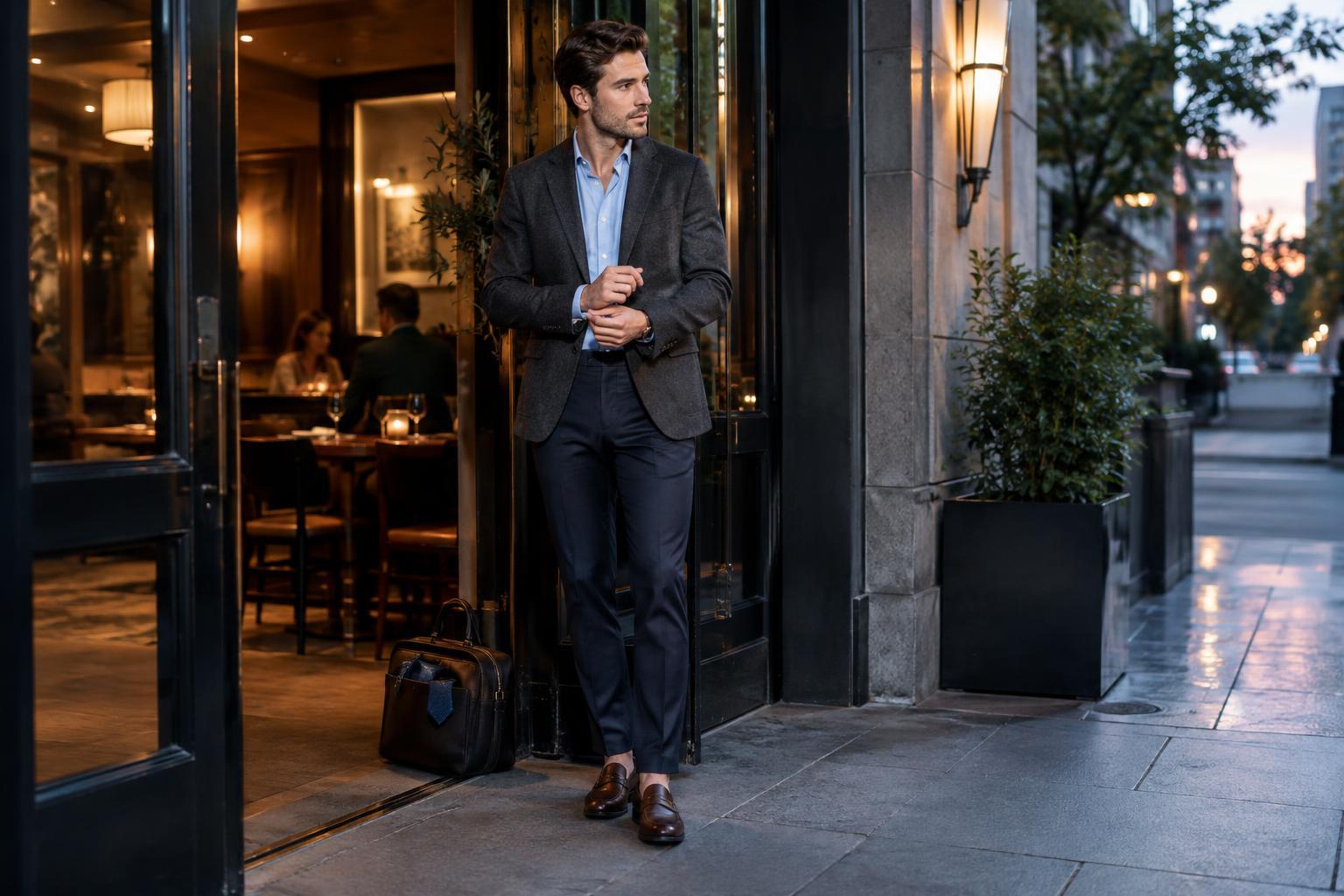
For a date or a work-related dinner, err on the side of looking put together rather than dramatically different from your daytime self. A jacket that sits cleanly on the shoulders, trousers with an appropriate break and shoes free of visible dirt give you a reliable base. If the dinner is an extension of work, keep any changes subtle. If it is personal and informal, you have more room to lose a layer or switch to a softer top.
Weather also affects what is practical. A lightweight coat can protect the outfit on a wet commute, while a breathable layer is easier to wear indoors once the office day ends. Choose outerwear you can remove without revealing a creased or unfinished-looking outfit underneath.
Keep a small refresh kit, not a second wardrobe
A few minutes of upkeep often does more than a bag full of spare clothes. Before leaving work, check your collar and cuffs, smooth your jacket, and make sure your shirt is tucked as intended. If you have been sitting for hours, hang the jacket briefly while you stand or walk rather than trying to flatten every crease by hand. A quick look at your shoes can catch a scuff or splash before you arrive.
Carry only what solves a likely problem: a compact comb, a lint roller or brush, and any personal grooming items you normally use. A spare shirt can be useful on a particularly long or hot day, but it need not become a daily requirement. Packing less is easier when your main outfit was chosen for both parts of the day.
The best office-to-dinner plan should feel repeatable. Notice which pieces stay comfortable, hold their shape and suit the places you actually visit. Build around those, and the transition becomes less about changing clothes and more about making the outfit you already have work a little harder.