Start with clean, completely dry clothes
Wash or clean garments according to their care labels before putting them away. A shirt that looks fine after one wear may still hold body oils, deodorant or a small food mark. Stains can become harder to remove while a garment sits in storage, and lingering residue may attract pests. Empty pockets, remove detachable accessories and check for loose buttons so you can deal with small repairs now rather than rediscovering them next season.
Dryness matters just as much as cleanliness. Give freshly laundered pieces enough time to dry all the way through, paying attention to waistbands, cuffs, pockets and heavy seams. If a coat or suit has been worn in rain, let it air out before covering it. Packing even slightly damp clothing into a closed space creates conditions in which mildew is more likely to grow. Avoid adding fragrance to mask a musty smell; find and address the source of the moisture instead.
Choose a dry storage spot and the right container
A cool, dry, stable spot is generally a better choice than a damp basement, a humid garage or an attic with large temperature swings. Check the area before loading it: look for condensation, leaks, a musty smell or signs of pests. Keep clothing off the floor where possible, and avoid pressing boxes directly against an exterior wall that sometimes feels damp. A closet shelf or space under a bed may be useful if it stays dry.
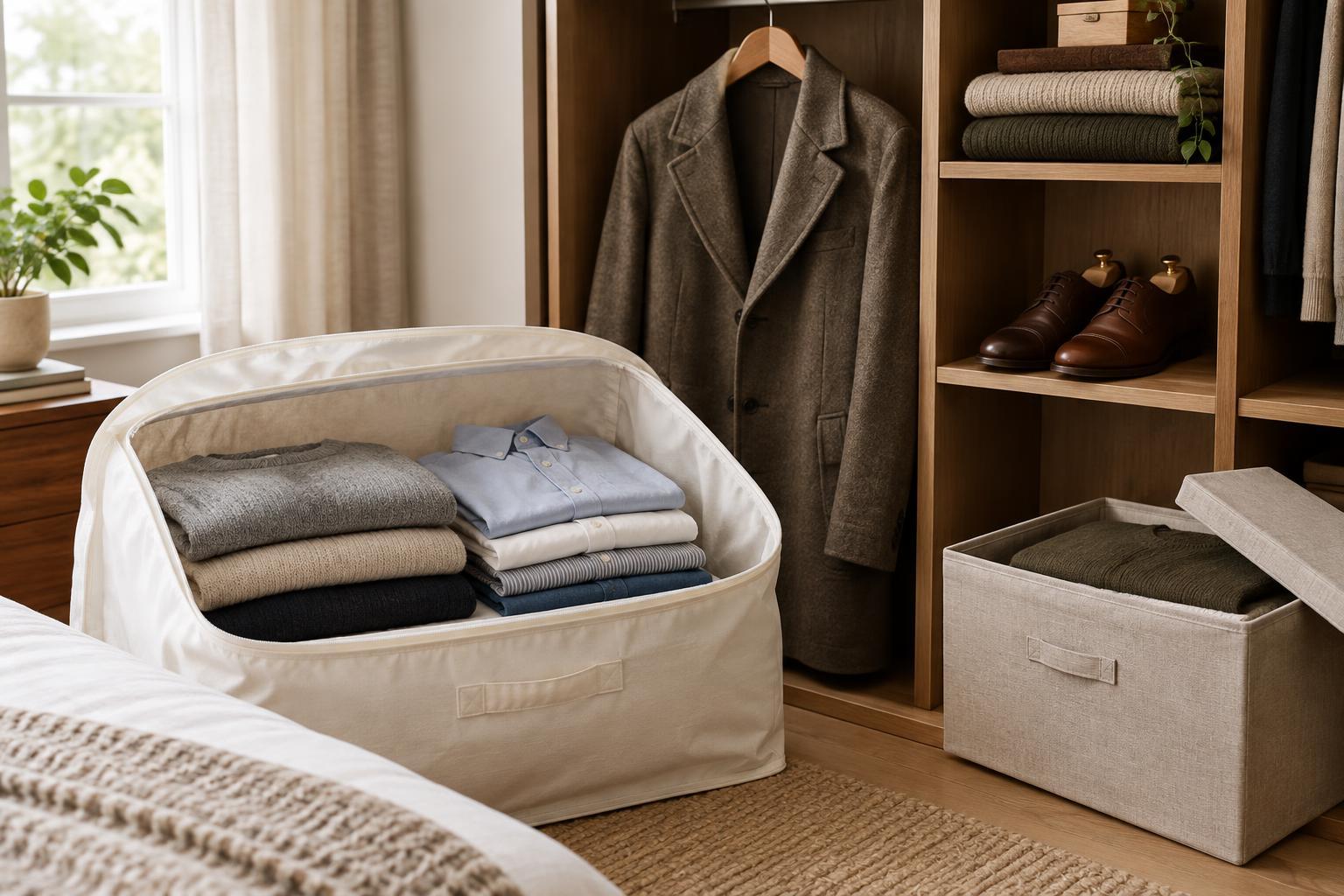
Choose clean containers with enough space that garments are not compressed. A lidded bin helps keep out dust, but everything inside must be thoroughly dry before you close it. A breathable fabric bag can protect a hanging coat or suit from dust without sealing in moisture. Avoid plastic dry-cleaning covers for long-term storage; they are intended for transport, not as permanent garment bags. Whatever container you use, label it by season or garment type so you can retrieve one piece without unpacking the entire wardrobe.
Fold knits and hang structured garments
The simplest way to prevent stretching is to fold garments that are heavy or flexible. Sweaters, cardigans and many jersey pieces can lose their shape on hangers, particularly at the shoulders. Lay each one flat, smooth out the sleeves and fold along its natural lines without pulling the fabric taut. Stack heavier items at the bottom, keep piles low, and place a sheet of clean, unprinted tissue between delicate pieces if they tend to catch on one another.
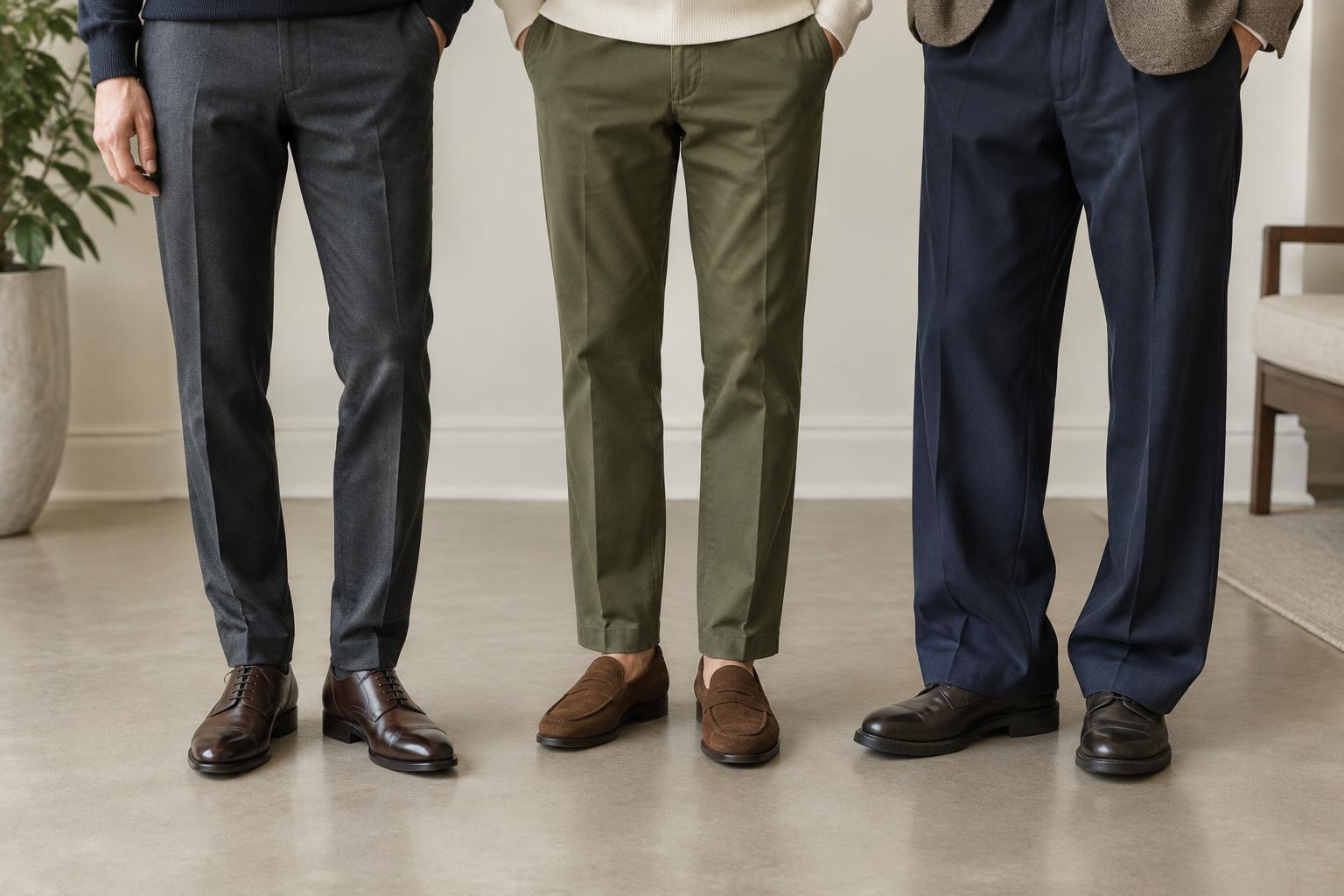
Hang garments whose shape benefits from support, such as tailored jackets, suits and structured coats. Use hangers wide enough to support the shoulders, fasten a button if it helps the front lie flat, and leave space between garments. Fold trousers along their existing crease if they have one; otherwise, smooth them carefully before hanging or folding. Do not force a full closet door shut against coat sleeves. Pressure and tight folds are often what turn a manageable crease into a stubborn one.
Pack to limit creases, not to save every inch
For shirts, chinos and other folded items, start on a clean, flat surface. Smooth each garment as you fold, align seams and avoid making more folds than necessary. Place heavier, sturdier pieces below lighter ones so they do not crush soft collars or thin fabrics. If a piece wrinkles easily, give it extra room rather than squeezing it into the last corner of a box. A loose roll may work for some casual clothes, but it is not a substitute for careful folding of tailored pieces.
Be cautious with vacuum bags. They can reduce bulk, but prolonged compression may leave deep creases and can distort padded or structured garments. Shoes also need their own space: clean and dry them, insert suitable shoe trees or light stuffing to help preserve their shape, and store them where a heavy box cannot flatten them. Keep leather footwear away from trapped moisture and direct heat. A little space around stored items usually does more good than an impressively tight packing job.
Check stored clothes before the season changes
Storage is not a one-time task if the space is prone to moisture. Occasionally check for leaks, condensation, pest activity or a new musty odor, especially after periods of damp weather. If you find a wet container or garment, remove the contents, identify the moisture source and follow each item’s care instructions before storing it again. For persistent mildew or damage on a delicate garment, a qualified cleaner may be the safest option.
When it is time to rotate your wardrobe, unpack with a few days to spare. Hang folded shirts and trousers to let minor creases relax, and use an iron or steamer only where the care label permits. Inspect each item before wearing it or putting it back on a hanger. The aim is not a perfectly preserved wardrobe; it is clothing that stays clean, holds its shape and needs little work when the next season arrives.