Start with a wardrobe gap, not a bargain
Secondhand racks reward patience, but they can also make an almost-right purchase feel irresistible. Before browsing, name the item you need and how you would wear it. “A dark casual jacket that works with jeans and trousers” is more useful than “something interesting.” Think about the colors, layers and shoes you already own. An inexpensive piece is only good value if it earns a place in regular outfits.
Bring a short list of useful measurements from clothes you like wearing. For tops, note the chest width, shoulder width and length; for trousers, note the waist, inseam and rise. Lay each garment flat and measure it the same way you expect a seller to measure theirs. Label sizes vary between brands and can change after washing, so measurements and a try-on tell you more than the number on a tag.
Check fit where alterations are difficult
Try a garment on over the kind of clothes you would normally wear beneath it. A shirt should let you move your arms without pulling sharply across the chest. A jacket should sit comfortably at the shoulders and close without strain; its collar should rest against the back of your neck rather than standing away. Check the length in a mirror from the front, side and back. Sit down in trousers to see whether the waist, rise and thighs remain comfortable.
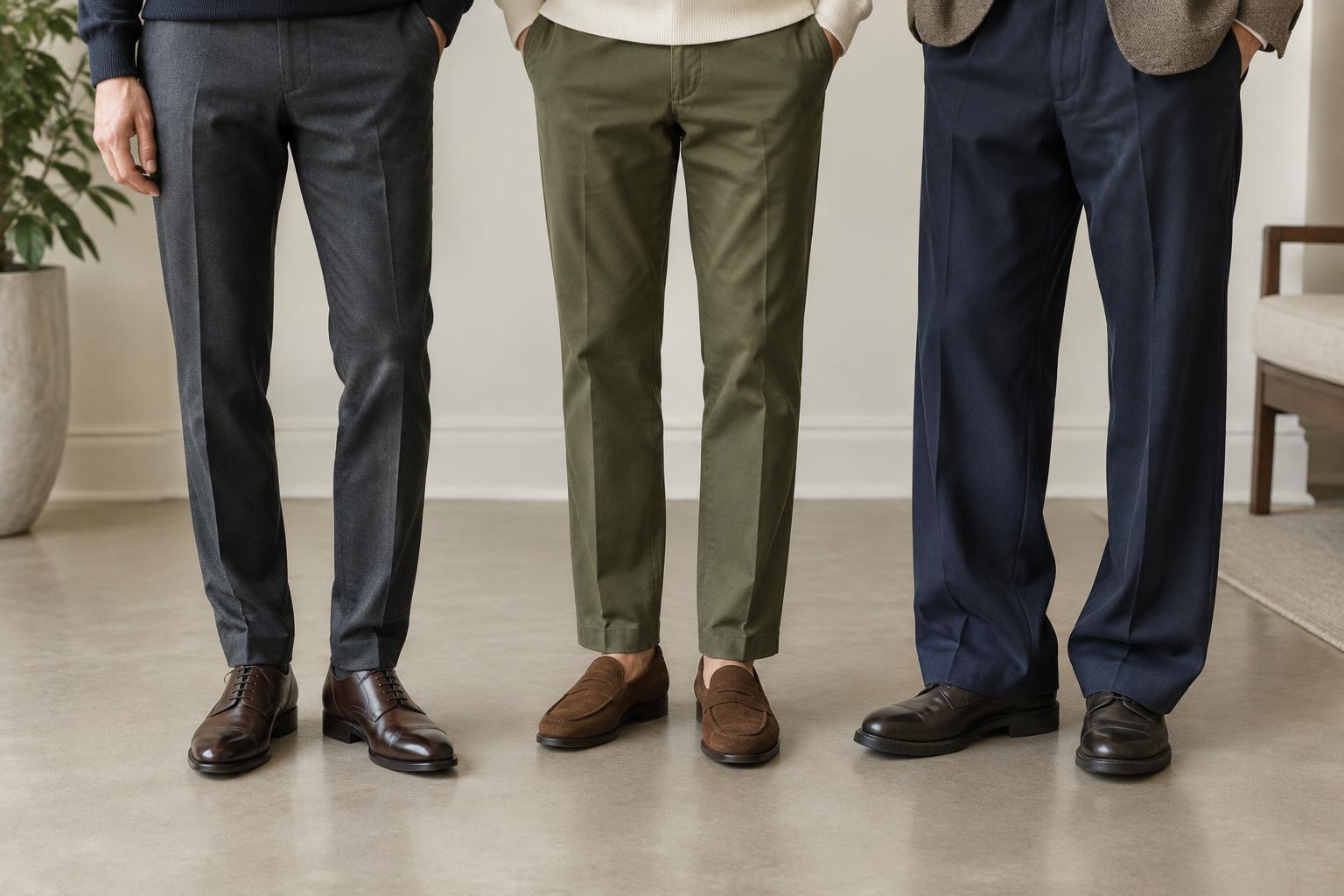
Some changes are simpler than others. A trouser hem or a slightly loose waist may be adjustable, while narrow jacket shoulders, a tight armhole or trousers that pull across the seat are poor bets. Leave room for the intended use: a coat needs space for layers, while a shirt worn under a jacket should not bunch excessively. If you cannot try an item on, compare its measurements with a similar garment you own and ask for any missing measurements before buying.
Inspect the whole garment, especially high-wear areas
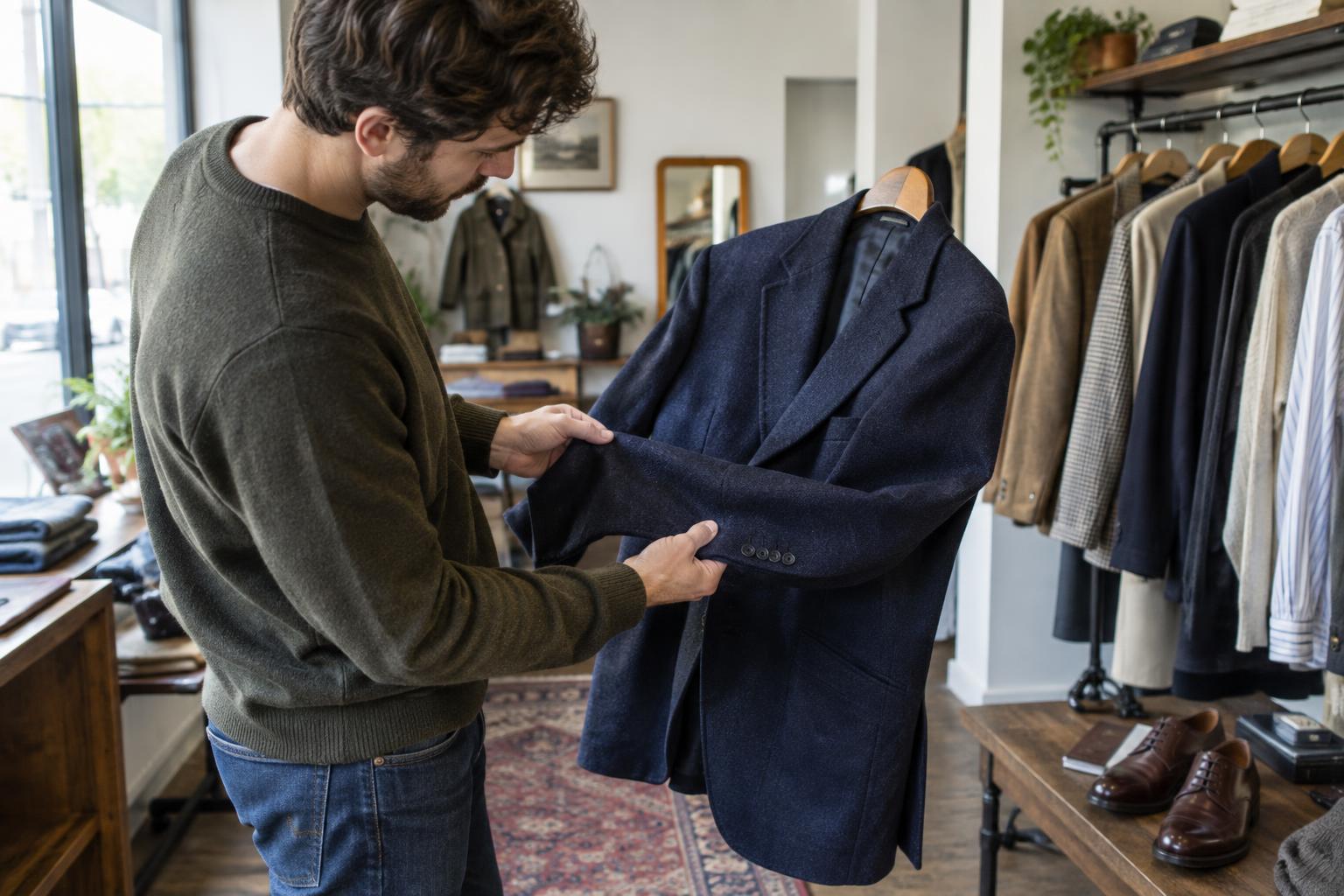
Look at the item in good light, then turn it inside out. Check collars, cuffs, underarms, elbows, pockets, hems and the seat of trousers for discoloration, thinning, fraying or holes. Hold lightweight fabric up to the light to spot worn patches. Run your fingers along seams for loose stitching, and make sure buttons, snaps and zippers work. On knitwear, look for pulled threads and areas stretched out of shape, not just surface pilling.
Examine whether damage is local or widespread. A loose button is usually a smaller project than fabric that is thinning across the elbows or seat. Stains and persistent odors are uncertain: some may come out, but you cannot count on it. Check the lining of jackets and coats, as well as pocket corners, where tears can hide. If shopping online, request clear photos of these areas and a close-up of any flaw described in the listing.
Read the fabric and care label
Feel the fabric and consider how it will suit your routine. A sturdy cotton shirt, wool sweater or denim jacket may show wear differently, but fiber content alone does not guarantee quality. Look for fabric that still has an even surface and holds its intended shape. Check that a lined garment hangs smoothly rather than twisting, and that knit cuffs recover after a gentle stretch. Avoid assuming a garment will shrink, soften or reshape into the fit you need.
Read the care label before committing. If an item calls for cleaning you are unlikely to arrange, it may sit unworn. If the label is missing, assess the fabric conservatively and avoid promising yourself an easy wash. Notice any previous alterations, such as a shortened hem or taken-in waist; they may be well done, but they can affect proportions and leave little fabric for further changes.
Decide whether the total effort is worthwhile
Before paying, add up what the item needs: cleaning, a repair, an alteration and the time to arrange them. Decide which flaws you can accept as they are and which must be fixed before you would wear it. For an online purchase, read the seller’s condition description and return terms, then resolve fit or damage questions before ordering. Photos can help, but they cannot fully show how a fabric feels or a jacket moves.
A useful final test is to picture three outfits you could make with the piece and a real occasion when you would wear it. If the fit works, the condition is sound and the upkeep suits your habits, secondhand clothing can become a dependable part of a versatile wardrobe. If you are relying on a difficult repair or hoping a major fit problem will somehow disappear, leave it for someone it fits better.