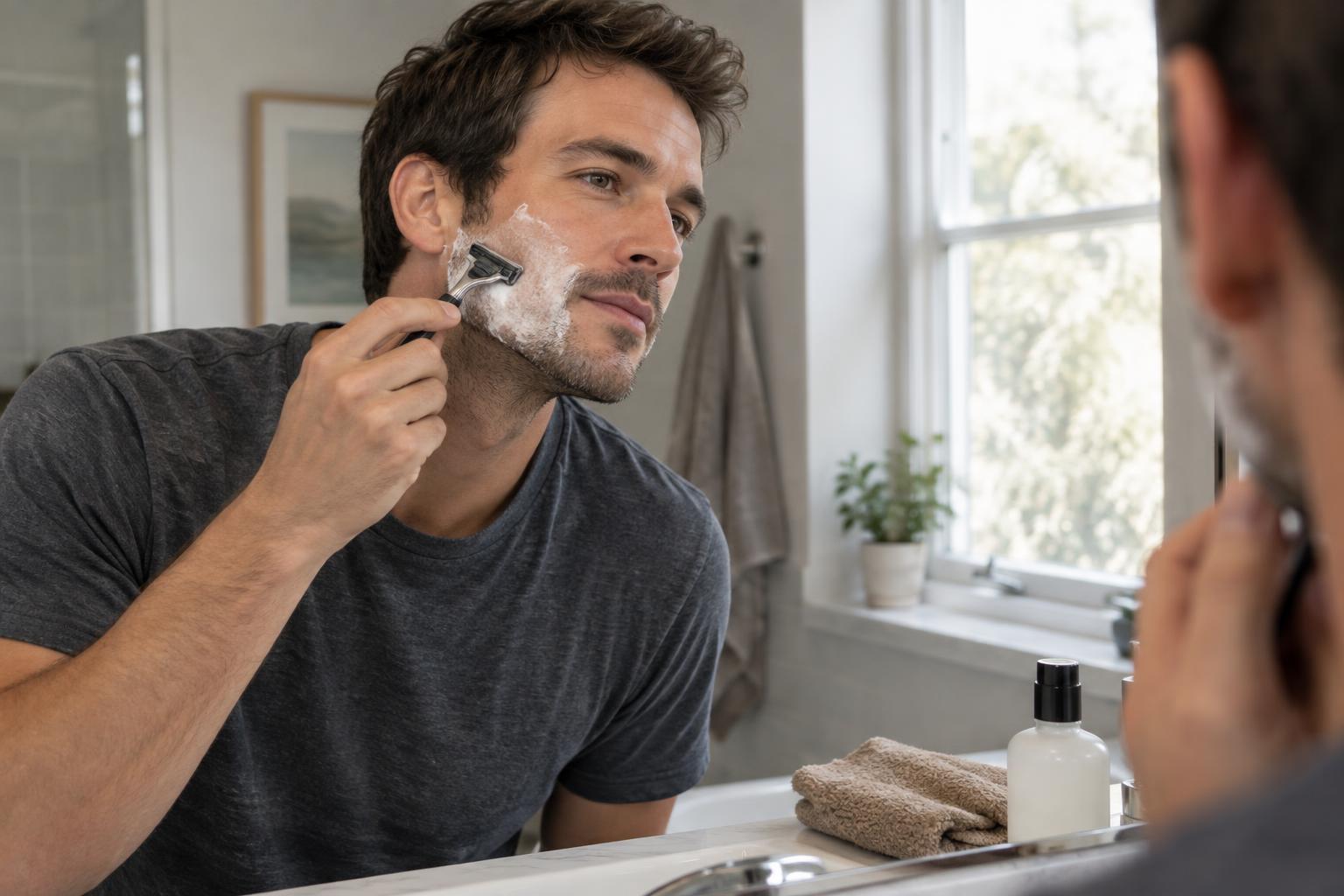
Prepare the beard before reaching for a razor
Rushing straight into a shave can make the razor tug at hairs and encourage you to press harder. Start by washing your face with lukewarm water and a gentle cleanser to remove oil and residue. If your beard is dense or coarse, shaving after a shower may make the hairs easier to cut. Hot water is not necessary; if it leaves your skin feeling tight, use a cooler temperature.
Apply a shaving cream or gel that gives the razor some glide, then allow it a short moment to coat the beard. Use enough that you can still see the area you are shaving without dragging the blade over bare skin. If a product stings on contact, rinse it off rather than assuming the sensation means it is working. Fragrance-free options may be worth trying if your skin reacts easily.
Let the razor do the work
A clean, sharp blade should cut hair without much force. Replace a cartridge or blade when it begins to pull, feels rough or takes repeated strokes to clear an area. Rinse the razor as you go so hair and shaving cream do not clog it. More blades are not automatically better for every face: the best choice is one that lets you shave comfortably with minimal repeated passes.
Use short, controlled strokes and light pressure. Follow the direction your hair grows for the first pass, especially on the neck, where growth patterns often change. Check the grain by running your fingers over short stubble before you shave; the direction that feels smoother is generally with the grain. Avoid stretching the skin tightly or going over the same patch again and again. Both habits can produce a closer-looking shave at first while leaving the area more irritated afterward.
Treat close shaving as an option, not a requirement
If one pass leaves visible stubble, decide whether a second is worth it. Reapply shaving cream before another pass; do not make dry touch-ups with a blade. Shaving across the grain may give a closer result without being as aggressive as shaving directly against it, but comfort varies by person and by area of the face. If your neck regularly develops bumps, a less-close shave there may be the better trade-off.
An electric shaver or a beard trimmer with a short guard can also be useful when a blade shave repeatedly causes trouble. Neither has to deliver a perfectly smooth finish to look neat. Consistent edges and an even length often matter more than removing every trace of stubble.
Finish with calm, simple aftercare
When you are done, rinse away remaining product with cool or lukewarm water and pat your face dry with a clean towel. Rubbing can aggravate skin that has just been shaved. Follow with a light moisturizer that feels comfortable on your face. If an aftershave burns or leaves you red, try a gentler product instead; a strong sting is not a required part of a good shave.
Give irritated areas time to settle. Shaving over an existing nick or a cluster of bumps can prolong the problem, so trimming around those spots may be more comfortable for a few days. Keep your razor clean and let it dry between uses. Do not share blades, and store them where they are less likely to stay damp.
Build a routine around your own skin
The most useful way to improve a shave is to change one habit at a time. If you usually shave against the grain, try a week of with-the-grain passes. If the blade tugs, replace it sooner. If discomfort follows a particular cream or aftershave, try a simpler product. This makes it easier to tell what helps, rather than buying an entirely new kit at once.
Notice whether irritation is concentrated on the neck, follows every shave or appears only when you rush. Your routine can vary by area: a close shave on the cheeks and a gentler pass on the neck is perfectly reasonable. If you develop persistent or painful bumps, spreading redness or other symptoms that do not improve, seek advice from a qualified healthcare professional rather than continuing to shave over the problem.