Why rotation matters
Shoes bend, warm up and absorb some moisture during a day of wear. Wearing the same pair again before it has had a chance to air out can leave the upper and lining feeling damp and may encourage persistent creases or odors. Rotation gives each pair time to dry and settle back into shape. You do not need a large collection to make it work: if your routine allows, alternate between two suitable pairs rather than wearing one pair every day.
Choose the pair that suits the conditions, not just the outfit. A dry-weather leather shoe may be a poor choice for a wet commute, while a rugged boot can be unnecessarily warm indoors. If one pair does get soaked, set it aside until it is fully dry instead of forcing it back into service the next morning. A rotation is most useful when each pair is comfortable and appropriate for where you actually go.
Let shoes recover after each wear
When you take shoes off, loosen the laces and open them enough for air to circulate. Remove loose dirt with a soft brush or cloth, especially around seams and the edge of the sole. Take out removable insoles if they are damp and the maker’s care guidance permits it. Let the shoes dry at room temperature, away from radiators and direct heat, which can be hard on leather, adhesives and some synthetic materials.
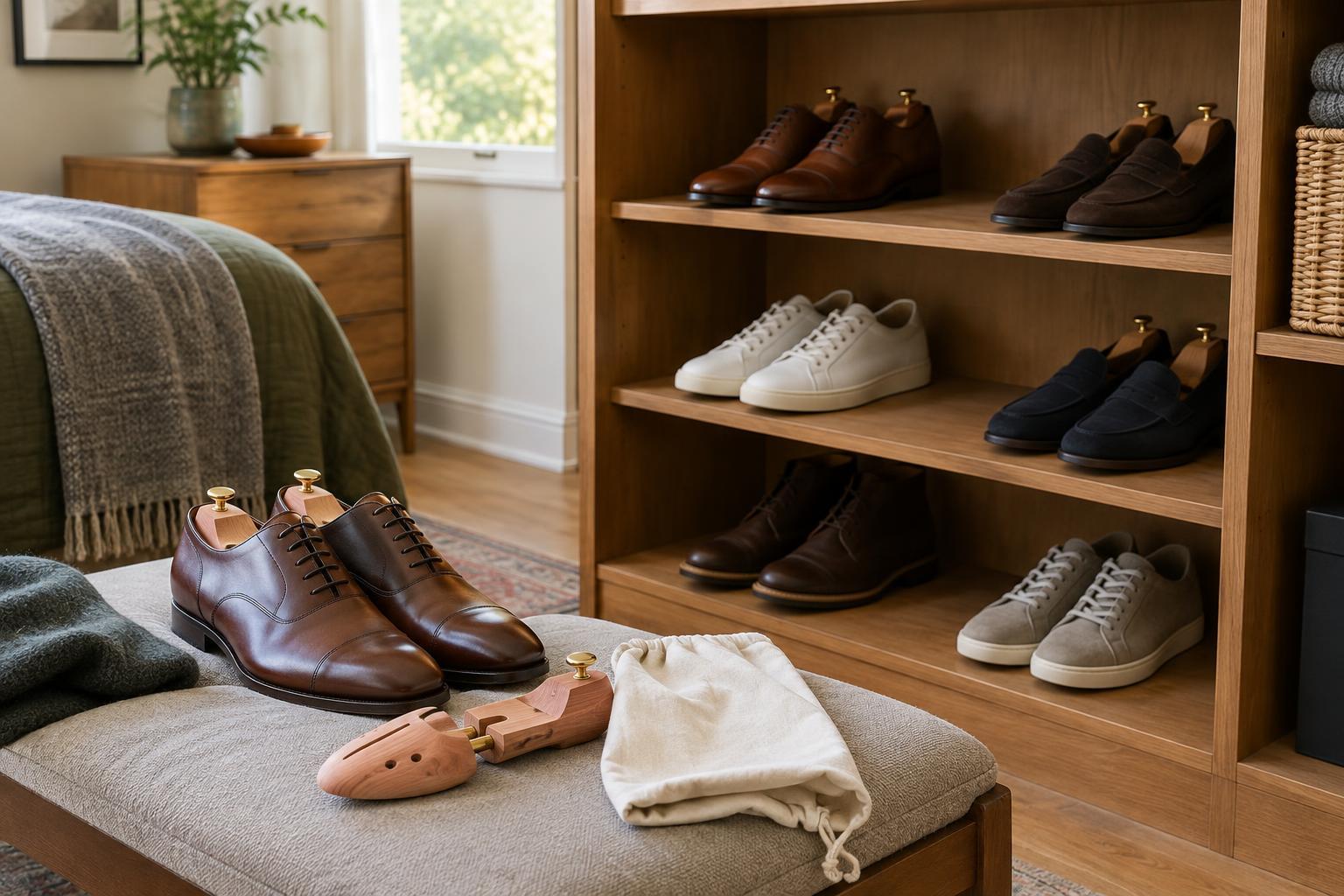
A shoe tree can help a structured leather shoe hold its form while smoothing out some wear creases. Insert one gently, without stretching the upper or forcing the heel. An adjustable wooden tree is a common choice, but the fit matters more than the label: it should fill the shoe lightly, not push against its sides. For soft sneakers or delicate uppers, clean paper placed loosely in the toe can offer support without adding much pressure. Replace paper used in wet shoes as it becomes damp, and allow everything to dry before storage.
Give each pair the right amount of support
Different shoes need different handling. Structured dress shoes and boots often benefit from shoe trees or boot shapers that support the shaft without stretching it. Sneakers generally need less internal pressure; their shape is better protected by not stacking heavier footwear on top of them. For loafers, choose a tree that slips in easily and does not distort the opening.
Pay attention to the heel when putting shoes on and taking them off. Repeatedly stepping on a heel counter to slip into a shoe can flatten a part that is difficult to restore. Unfasten laces or straps, use a shoehorn if it helps, and pull shoes off by hand rather than using one foot to pin down the other shoe. These small habits protect shape before storage even becomes a concern.
Store shoes where they can breathe
For pairs in regular use, a shelf or rack with space between shoes is usually more convenient than a crowded pile. Let footwear dry completely before putting it in a closed cabinet or box. If you use boxes, make sure the shoes are clean and dry first; a breathable bag can protect a polished or delicate pair from dust without pressing on its upper. Keep heavier boots on a lower shelf and avoid balancing them on lighter shoes.
A cool, dry storage spot is generally kinder to footwear than a damp entryway, a hot attic or a place in constant direct sunlight. Prolonged dampness can affect linings and encourage odors, while heat and light may change the appearance of some materials. If your closet tends to feel humid, improve airflow and check stored pairs periodically rather than leaving them sealed and forgotten.
Prepare seasonal and travel pairs before putting them away
Before storing a pair for a season, brush off grit, clean it using a method suited to its material, and let it dry thoroughly. Leather may benefit from occasional conditioning if it feels dry, but too much product can leave a buildup. Suede and nubuck call for appropriate brushes and care products rather than the same routine used on smooth leather. Check the maker’s instructions when you are unsure, particularly for coated or mixed-material shoes.
For travel, pack shoes in bags to keep dirt away from clothing, and fill empty space inside them with socks or soft items that will not stretch the uppers. Place footwear where it will not be crushed by a packed case. Once you arrive home, unpack it rather than leaving it compressed in luggage. A useful routine is simple: clean off what you can, let each pair dry, support it where needed, and give it enough space until its next wear.