First, identify what you are removing
Lint is loose fiber, dust or hair resting on a garment. It usually lifts away with a lint roller, clothes brush or slightly damp cloth. Fabric pills are small balls of fiber attached to the surface. They form as fibers work loose and tangle, often where a garment rubs against itself, a bag strap or another layer. A lint roller may pick up loose fluff around a pill, but it will not reliably remove the attached knot.
Check the care label and look closely at the fabric before reaching for a tool. A sturdy sweatshirt can tolerate a different approach from a loosely knitted sweater or a fine wool coat. Work in good light so you can see whether you are lifting surface debris or catching the garment’s own threads. If you are unsure how a tool will behave, test it on a small, inconspicuous area first.
Lift lint with the least aggressive tool that works
For everyday lint, lay the garment flat or hang it where it will not pull out of shape. Roll in short passes with a lint roller, replacing the sheet when it stops picking anything up. A clean clothes brush is useful for coats, suits and other structured pieces: brush gently in the direction of the fabric’s nap rather than scrubbing back and forth. A barely damp, clean cloth can collect light surface lint on some fabrics; let the garment dry fully before wearing or storing it.
Avoid pressing sticky tape hard onto delicate knits or fabrics with a raised finish. Strong adhesive can tug at fibers, and rubbing to remove stubborn lint may make a fuzzy surface look worse. For pet hair or heavy lint, make several light passes instead of one forceful pass. Check pockets and seams too, where loose debris can collect and reappear as soon as you put the garment on.
Remove pills slowly and keep the fabric supported
A fabric shaver can tidy many firm, smooth knits. Place the garment on a flat surface, smooth out wrinkles and hold the fabric steady without stretching it. Start with the shaver’s least aggressive setting or greatest guard clearance, if it has those options. Move lightly over the pilled area, checking your progress often. Never push down to make the job faster: the blade should catch raised pills, not cut into the cloth. Empty the shaver as directed so it continues to work cleanly.
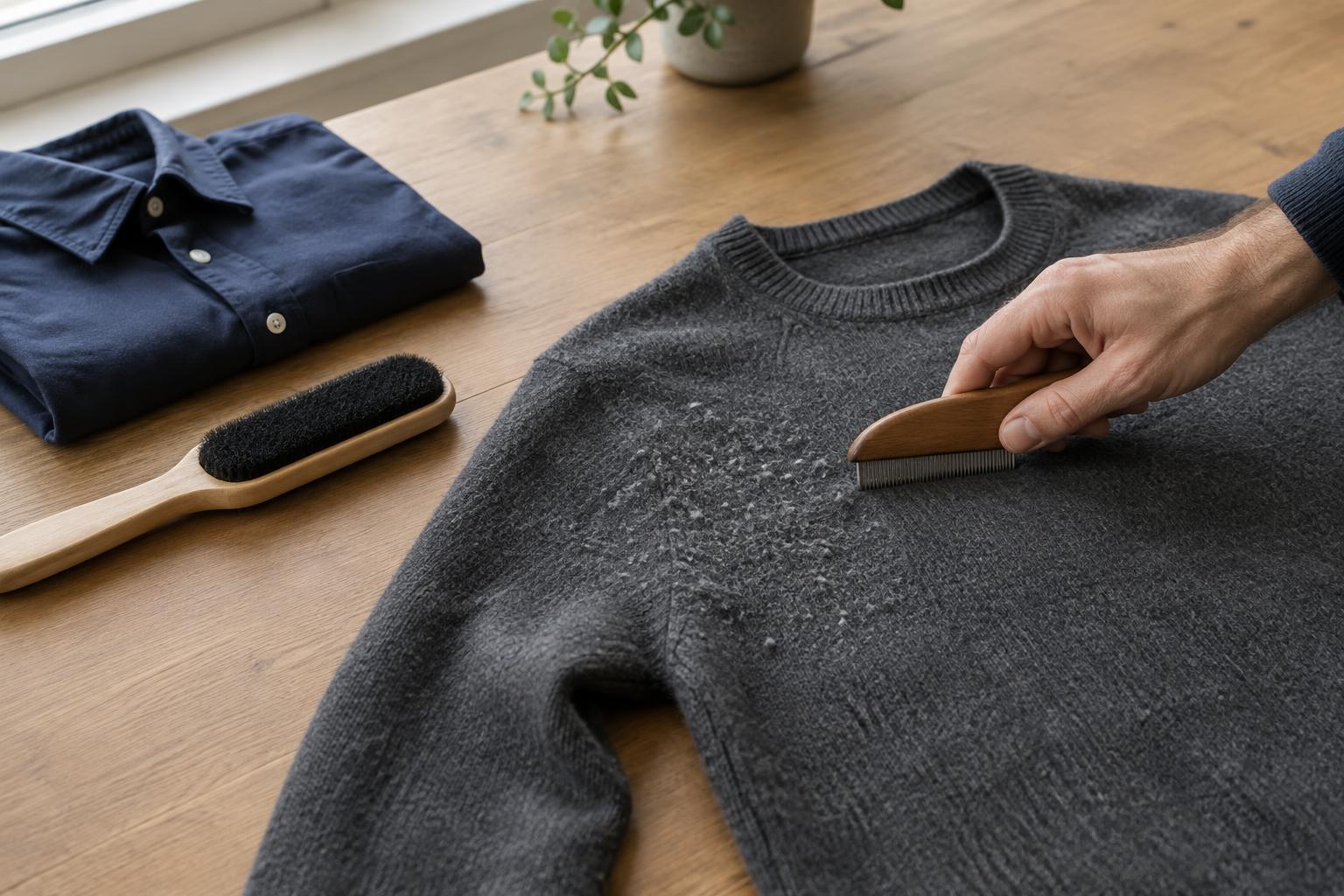
For a small number of pills, a sweater comb may offer more control. Use short, gentle strokes on a flat, supported area and stop if the comb catches. On a loose knit, cashmere piece or garment with decorative loops, carefully snipping individual pills with small scissors may be safer than sweeping a tool across the surface. Keep the scissors clear of the underlying threads. Do not pull pills off with your fingers; a pill can be connected to fibers that still belong in the garment.
Blades, razors and coarse abrasive tools are easy to overuse. Even when they appear to remove pills, they can shave away sound fibers, thin a high-wear area or snag a seam. If a piece is valuable or especially delicate, try a tiny test area or ask a reputable clothing-care specialist before treating the whole garment.
Match the method to the garment
Sweaters commonly pill at the underarms, sides and cuffs. Treat those spots while the knit is flat, and avoid pulling it taut to expose more surface. For trousers, pay attention to the seat and inner thighs, where the fabric may already be worn; removing pills will improve the finish but cannot restore weakened cloth. A wool coat may need only regular brushing, with an occasional careful pass over persistent pills. Keep brushes and shavers away from buttons, zips, embroidery and loose stitching.
After removing pills, brush or roll away the detached fibers and inspect the area in daylight. Stop when the garment looks neater, rather than trying to make every textured fabric perfectly smooth. Some fabrics naturally have a soft or fuzzy finish, and repeated shaving can gradually change their appearance.
Reduce lint and pilling between cleanups
Friction is difficult to eliminate, but you can limit unnecessary wear. Wash garments according to their care labels, turn suitable pieces inside out, and avoid overloading the machine so clothes are not pressed and rubbed together throughout the cycle. Separating lint-shedding items, such as towels, from dark trousers or knitwear can also save time with the lint roller later. Use a gentle cycle when the label allows it, and dry items as directed; excess heat or tumbling may be hard on some fibers.
Give knitwear room to rest between wears and store it folded if hanging would stretch it. Before putting away a coat or suit, brush off surface debris so it does not settle into the fabric. A small amount of pilling is normal on many garments, including well-made ones. Gentle, occasional maintenance is usually better for their appearance than frequent, aggressive attempts to make them look new.