Start with the whole label
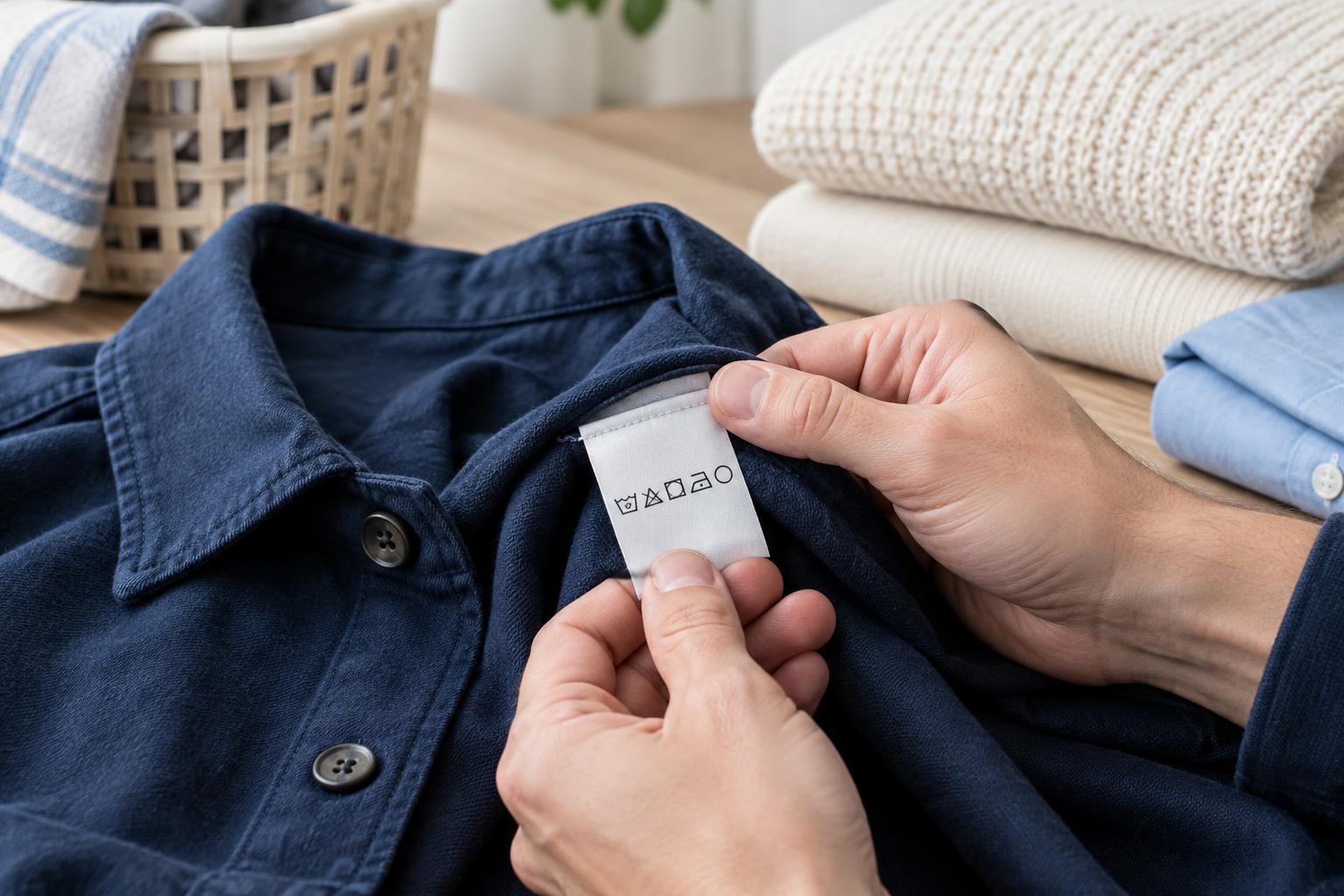
Before washing a new shirt, knit or pair of trousers, find its care label. It is usually sewn into a side seam or near the collar or waistband. Read any written instructions as well as the symbols: they may specify a wash temperature, recommend washing inside out or warn you not to wring the garment. The fiber label is useful context, but it does not replace the care instructions. Two garments made from the same fiber may need different treatment because of their dyes, lining, trim or construction.
Most laundry symbols use a shape to identify the task: a tub for washing, a triangle for bleaching, a square for drying, an iron for ironing and a circle for professional cleaning. Marks inside or beneath those shapes add detail. A cross means do not use that method; one or more lines underneath generally call for gentler handling. Symbol systems and wording can vary by region, so use the full label rather than relying on a single mark.
Read the wash tub before choosing a cycle
A tub of water means the garment can be washed. A number inside the tub usually gives the maximum water temperature in degrees Celsius, not a target you must reach. If the label uses dots instead, more dots indicate a higher permitted temperature. Washing cooler can be a sensible choice for many everyday loads, provided the garment gets clean.
One line beneath the tub calls for a mild cycle; two lines indicate a very mild cycle. These marks matter for pieces that may stretch, crease or abrade in a vigorous wash. A hand in the tub means hand wash, while a crossed-out tub means do not wash. When washing a permitted item, sort by color and fabric weight, leave room for clothes to move, and use an appropriate amount of detergent. For an unfamiliar fabric or a garment with delicate details, check the label again before treating a stain or putting it in a mixed load.
Check bleach and drying instructions separately
The triangle covers bleaching. An empty triangle generally permits bleach; a crossed-out triangle means do not bleach. A triangle with two diagonal lines commonly indicates that only non-chlorine bleach is permitted. These marks describe what the garment may tolerate, not what every wash requires. If you use a bleach product, follow its directions and avoid applying it casually to a visible spot, where it could leave an uneven result.
Drying symbols usually sit inside a square. A circle inside the square refers to tumble drying: one dot means low heat and two dots mean normal heat. A cross over that symbol means do not tumble dry. A horizontal line in a square means dry flat; a vertical line indicates line drying. Diagonal lines in a corner can mean dry in the shade. Air drying is not one method for every garment: a heavy wet sweater, for example, may lose its shape if hung rather than laid flat. Reshape garments while damp when their instructions call for it.
Treat ironing and professional cleaning as distinct steps
An iron symbol tells you whether and how to press a garment. One dot indicates low heat, two medium and three high; a crossed-out iron means do not iron. Start with a lower setting if you are unsure, and avoid pressing directly over prints, coated surfaces or decorative details unless the label permits it. Steam can also affect some finishes, so check for any extra wording before using it.
A circle on its own refers to professional cleaning, not an ordinary machine cycle at home. Letters such as P or F inside the circle give a cleaner information about suitable processes or solvents. A W may indicate professional wet cleaning. A crossed-out circle means do not dry clean. If a favorite jacket has a lined or structured construction, take the complete label to the cleaner rather than guessing from its outer fabric.
Turn the symbols into a simple laundry routine
Check labels when you buy clothes, not only when laundry day arrives. Knowing that a shirt needs gentle washing or that trousers cannot be tumble dried helps you decide whether they fit your routine. Before each load, separate items with incompatible instructions. Fasten closures, empty pockets and turn garments inside out when the label recommends it. If one item needs a milder cycle or lower heat than the rest, give it a separate load or choose a method suitable for everything together.
Finally, treat the label as the limit, not a challenge. High heat and aggressive handling are rarely necessary just because they are allowed. Careful washing, suitable drying and occasional pressing can help keep versatile clothes looking their best without making laundry complicated.