Know what you are looking for
The moths themselves are not what eat your clothes. Clothes moth larvae cause the damage, usually while feeding on animal-based fibers such as wool, cashmere, silk or fur. Blends containing these fibers can also be vulnerable. A jacket, sweater or scarf left untouched for months offers more opportunity for damage to go unnoticed than one you regularly wear and inspect.
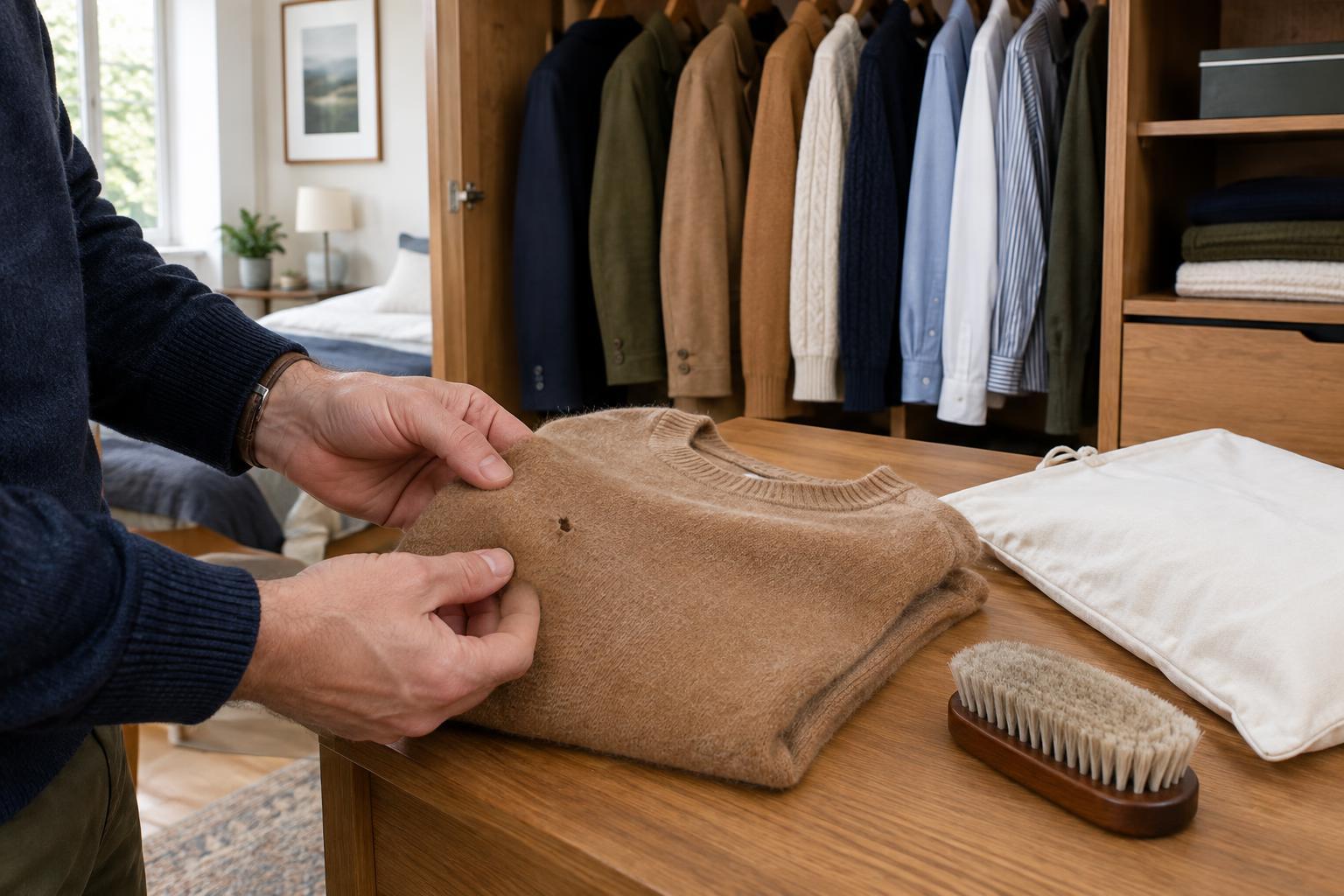
Small, irregular holes are one clue, but they do not prove moth activity on their own. Check for thinning fabric, loose fibers, fine webbing or small cases near seams, cuffs, collars and folds. Inspect the surrounding shelves, drawers and storage boxes too. Friction and ordinary wear can also create holes, so look at the garment and its storage area before deciding what caused the damage.
Respond to a suspected problem promptly
Take the affected garment out of the wardrobe and examine nearby pieces, particularly those made from animal fibers. Keep suspect items apart from clean clothes until you have dealt with them. Vacuum the wardrobe thoroughly, including corners, shelf joints, drawer edges and the floor beneath hanging garments. Empty the vacuum contents outside or into a sealed bag afterward.
Clean garments according to their care labels. Laundering, when permitted, or professional dry cleaning can help address an affected item; ask a cleaner about delicate or structured pieces rather than experimenting on a tailored coat. Some people use freezing for items that cannot be washed, but effectiveness depends on temperature, time and how the item is packed. If you cannot reliably control those conditions, seek advice from a textile-care professional instead of assuming a short spell in a household freezer has solved the problem.
Do not put a freshly cleaned garment straight back into a wardrobe that has not been checked. Continue inspecting the area and nearby clothes for signs of activity. A clothes moth trap can help you monitor whether adult moths are present, but it is not a substitute for finding and cleaning the places where larvae may be living.
Make storage less inviting
The most useful routine is simple: store garments clean and dry. Body oils, perspiration and food marks can make worn clothing more attractive to pests, even when the garment looks presentable. Before putting a wool sweater or winter coat away for the season, follow its care instructions and allow it to dry completely. Fold knits rather than hanging them if hanging would stretch their shape.
For long-term storage, use clean containers or garment covers that close securely, and check that the contents are dry before sealing them. Choose storage that suits the garment: a breathable cover may be preferable for a structured jacket you need to keep hanging, while a clean, well-closing box can work for folded knitwear. Avoid packing clothes so tightly that you cannot see or reach them. Occasionally opening storage and inspecting pieces makes it easier to catch damage early.
Cedar and lavender may add a pleasant scent, but they should not be your main defense against clothes moths. Likewise, do not place mothballs among everyday clothes without understanding their label instructions and safety precautions; they are pesticides, not general-purpose wardrobe fresheners. Cleaning, inspection and sensible storage are a better starting point.
Decide what can be repaired
Once an item has been cleaned and the storage problem addressed, assess the fabric in good light. A small hole in a knit may be suitable for darning or an unobtrusive repair. For a favorite suit, coat or fine cashmere sweater, a tailor or specialist repairer can tell you whether mending is worthwhile and how visible it is likely to be. Thin areas around a hole matter: a repair may not hold well if the surrounding fabric is weak.
Not every damaged piece needs to be discarded, but repair should come after you have addressed the possible infestation. Otherwise, a neatly mended sweater could return to the same conditions that damaged it. A regular glance at seldom-worn garments—especially when changing seasons—helps protect the pieces you have chosen to keep.