Start with the clothes you actually wear
Before buying hangers or storage boxes, take stock of what is in your wardrobe. Pull out enough clothing to see your options by type: shirts, knitwear, trousers, jackets and outerwear. Set aside anything that needs washing or repair so it does not disappear back into rotation unnoticed. You do not have to empty the entire room at once; working through one category at a time is often easier to finish.
Ask whether each piece fits comfortably, suits your life and works with something else you own. Keep occasion wear if you have a reason to use it, but do not let it take the best space from clothes you reach for every week. Put items that need alterations in a separate, visible place and decide whether you are likely to follow through. A wardrobe becomes easier to use when its contents reflect your real routine rather than an imagined one.
Give everyday pieces the easiest space
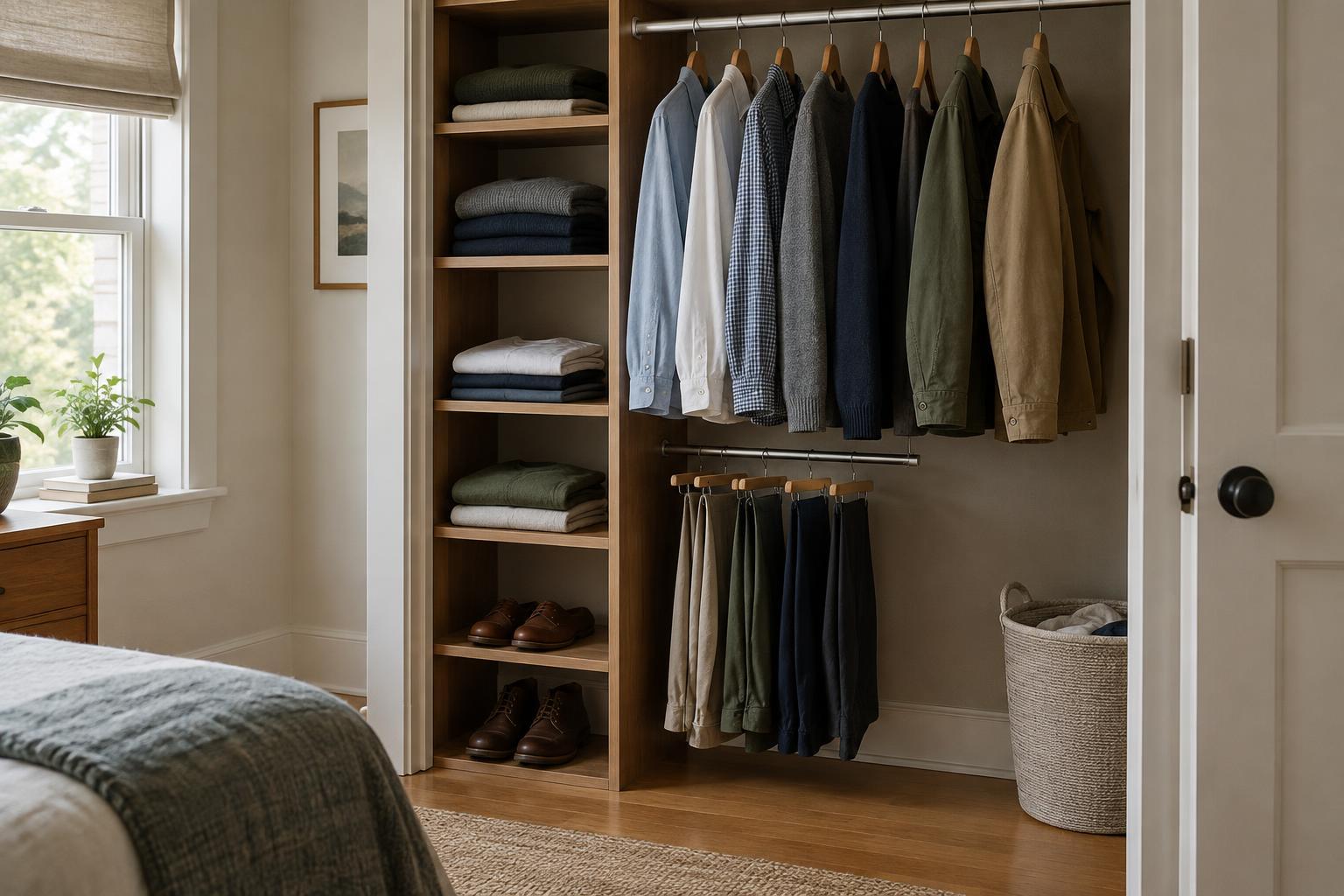
Arrange storage by frequency of use first. The clothes you wear most should be visible and reachable without moving a stack or opening several containers. Keep regular workwear, casual shirts and current-season layers at a comfortable height. Reserve high shelves, the back of a closet or under-bed storage for less-used pieces. This is more useful than making every category look perfectly symmetrical.
Within that accessible area, group similar items together. Hang shirts with shirts and trousers with trousers; fold knitwear and other pieces that may stretch on a hanger. If a drawer is crowded, fold items so you can see several at once rather than burying favorites at the bottom. Leave a little room between hanging clothes where possible. You should be able to remove a garment without disturbing everything beside it.
Organize around the way you get dressed
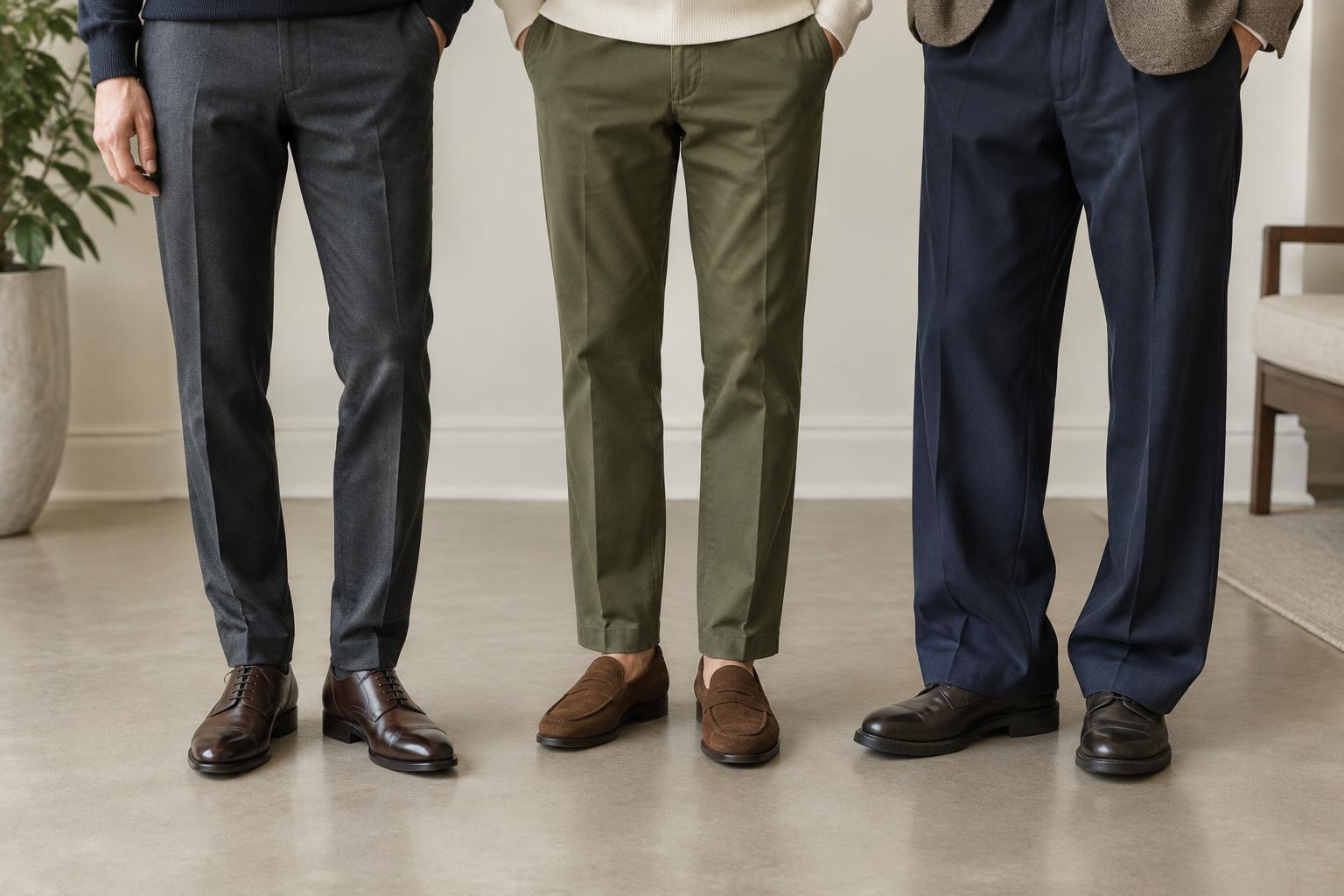
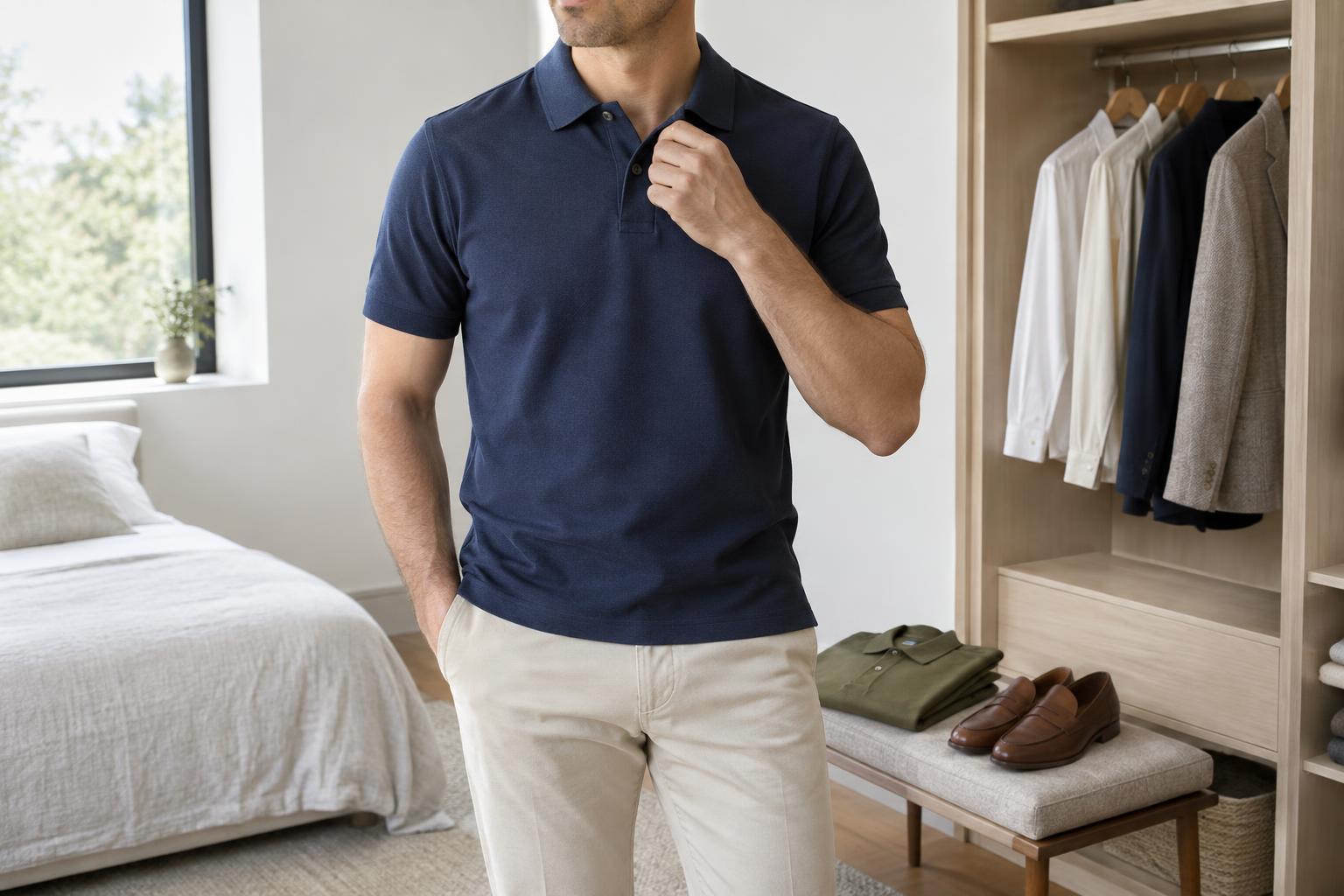
Categories help you find garments, but outfits help you use them. Notice which combinations already work: perhaps a particular pair of trousers goes with several shirts and two jackets. Keep those components close enough that they are easy to compare. If your mornings are rushed, put together a few dependable outfit combinations for your usual settings, such as work, weekends and casual evenings. These are starting points, not rules you must follow.
Make shoes and accessories part of the same system. Give everyday shoes a consistent spot and allow them to air out before putting them away. Keep belts, ties, watches or other small items where you can see the options you use, instead of dropping them into one deep drawer. When a garment seems difficult to wear, check whether the missing piece is an accessory, a suitable shoe or simply a good outfit idea before deciding it does not belong.
Separate what is ready to wear from what is not
One of the simplest improvements is to give worn-but-still-clean clothes a designated place. A hook, valet stand or small section of the closet can hold a jacket or pair of trousers you plan to wear again. Keep this area limited so it does not turn into a second laundry pile. Put clothes that need cleaning in the laundry, and keep repairs together rather than returning damaged pieces to their usual spots.
Store clean, dry garments before putting them away for a season. Fold bulky knitwear and make sure stored items are easy to identify, whether you use labeled containers or clear ones. Avoid packing clothes so tightly that retrieving one piece becomes a project. As the weather changes, swap the most accessible space between lighter and warmer clothing, while leaving a few useful transitional layers within reach.
Keep the system simple enough to maintain
A wardrobe organization method only helps if you can put clothes back without thinking hard about it. Use broad categories that make sense to you rather than creating a separate compartment for every color or occasion. Matching hangers can make a rail look calmer, but they are less important than enough space and a clear place for each item. Choose storage tools to solve a specific problem, not as a substitute for deciding what stays.
Take a few minutes each week to return stray items, move laundry out and check whether your most-used clothes are easy to reach. When something repeatedly ends up on a chair, treat that as a clue: its assigned place may be inconvenient or too full. Adjust the layout instead of relying on willpower. The goal is not a wardrobe that stays untouched and perfectly arranged. It is one that makes getting dressed straightforward and makes the clothes you own easier to wear.