Start with your feet, not your usual size
Your usual shoe size is useful, but it does not describe the whole fit. Sizing can vary between brands and styles, and two shoes marked with the same number may have different shapes inside. Before shopping, measure both feet while standing, wearing the type of socks you expect to wear with the shoes. Your feet need room under your weight, so a seated measurement may be less helpful.
Place a sheet of paper against a wall, stand with your heel lightly touching the wall, and mark the end of your longest toe. Measure from the wall edge to that mark, then repeat for your other foot. Measure across the widest part of each foot as well. If one foot is larger, use it as the starting point when comparing a brand’s size guide. You may want to measure later in the day, when your feet can be a little fuller than they were in the morning.
Use the size chart as a guide, not a verdict
Compare your measurements with the specific brand’s chart when one is available. Check whether it gives foot measurements or the dimensions of the shoe: they are not interchangeable, because a shoe needs space around your foot. If you fall between sizes, do not automatically choose the larger one. Read any fit notes, consider the shape of the style, and try both sizes if you can.
Pay particular attention to width and toe shape. A pointed dress shoe, a round-toe sneaker and a boot can feel very different even when their labeled sizes match. Going up a size may add length without giving a wide forefoot enough space. If a shoe pinches across the ball of your foot but has plenty of room ahead of your toes, look for a wider fitting or a differently shaped shoe instead. Likewise, a narrow heel with a roomy forefoot may call for a different shape rather than a smaller size.
Check the fit while standing and walking
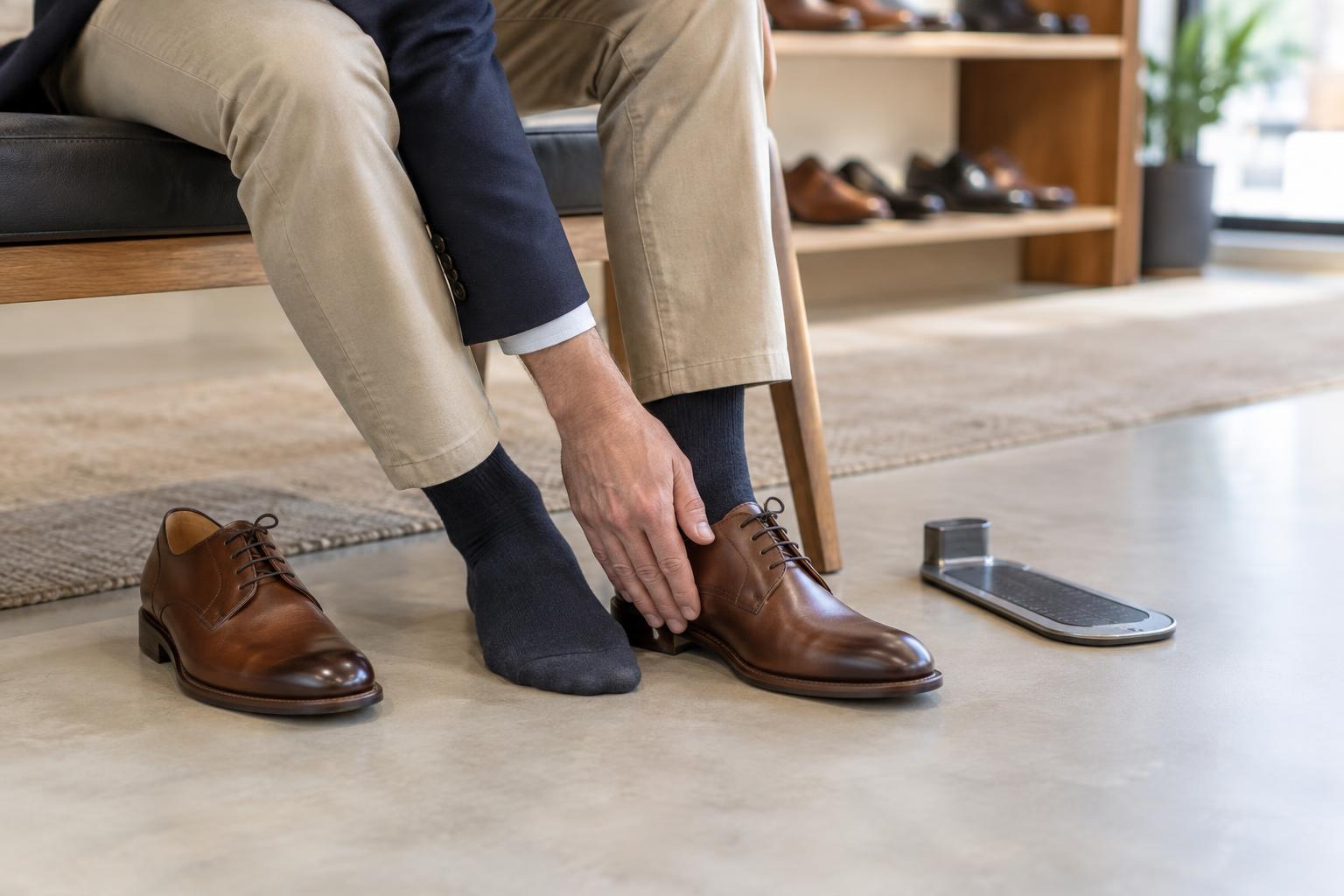
Try on both shoes with the socks you plan to use, and fasten them as you would normally wear them. Stand up and check that your toes can rest naturally rather than pressing into the front or being squeezed together. Some space ahead of your longest toe is helpful, but the right amount depends on the shoe’s design. The widest part of your foot should sit comfortably within the widest part of the shoe, without pressure along the sides.
Walk on a clean indoor surface and notice what happens at each step. Your heel should feel reasonably secure; a small amount of movement in a stiff new shoe may settle, but repeated slipping is a warning sign. The shoe should bend near where your foot bends, rather than digging into your toes or forcing your foot forward. Watch for rubbing at the heel, pressure over the top of the foot, or the urge to curl your toes to keep the shoe on.
Do not rely on a painful shoe becoming comfortable through wear. Some materials soften and mold to the foot, but breaking in is not a dependable fix for a shoe that is too short, too narrow or shaped differently from your foot.
Adjust for the type of shoe
Different styles need different checks. With lace-up shoes and boots, tighten the laces enough to hold your foot without creating pressure across the top. If the fit only works when the laces are pulled extremely tight or left unusually loose, the shape or size may be wrong. For loafers, pay extra attention to heel security: without laces, they have less room for adjustment. Check that they stay on during a normal stride without squeezing your toes.
For sneakers you plan to wear on long walks, test them with the socks and any insoles you will actually use. If you use a removable insole, make sure it does not crowd the toe box or lift your heel too high. Boots also deserve a check around the ankle and instep; a comfortable length will not help much if those areas rub with every step.
Make a careful final decision
If you are buying online, compare the brand’s size guide with your measurements, read the description for fit guidance, and check the return conditions before ordering. When the shoes arrive, try them indoors on a clean floor so you can assess them without marking the soles. Give yourself a few minutes to stand, turn and walk rather than judging the fit from one step.
Choose the pair that feels secure and comfortable now, with room for your toes and no persistent pressure points. A size label cannot tell you whether a shoe suits your foot. Once you find a style that fits well, note its brand, model and size for future shopping—but repeat the fit check whenever you try a different shoe.