Match the outfit to the meeting
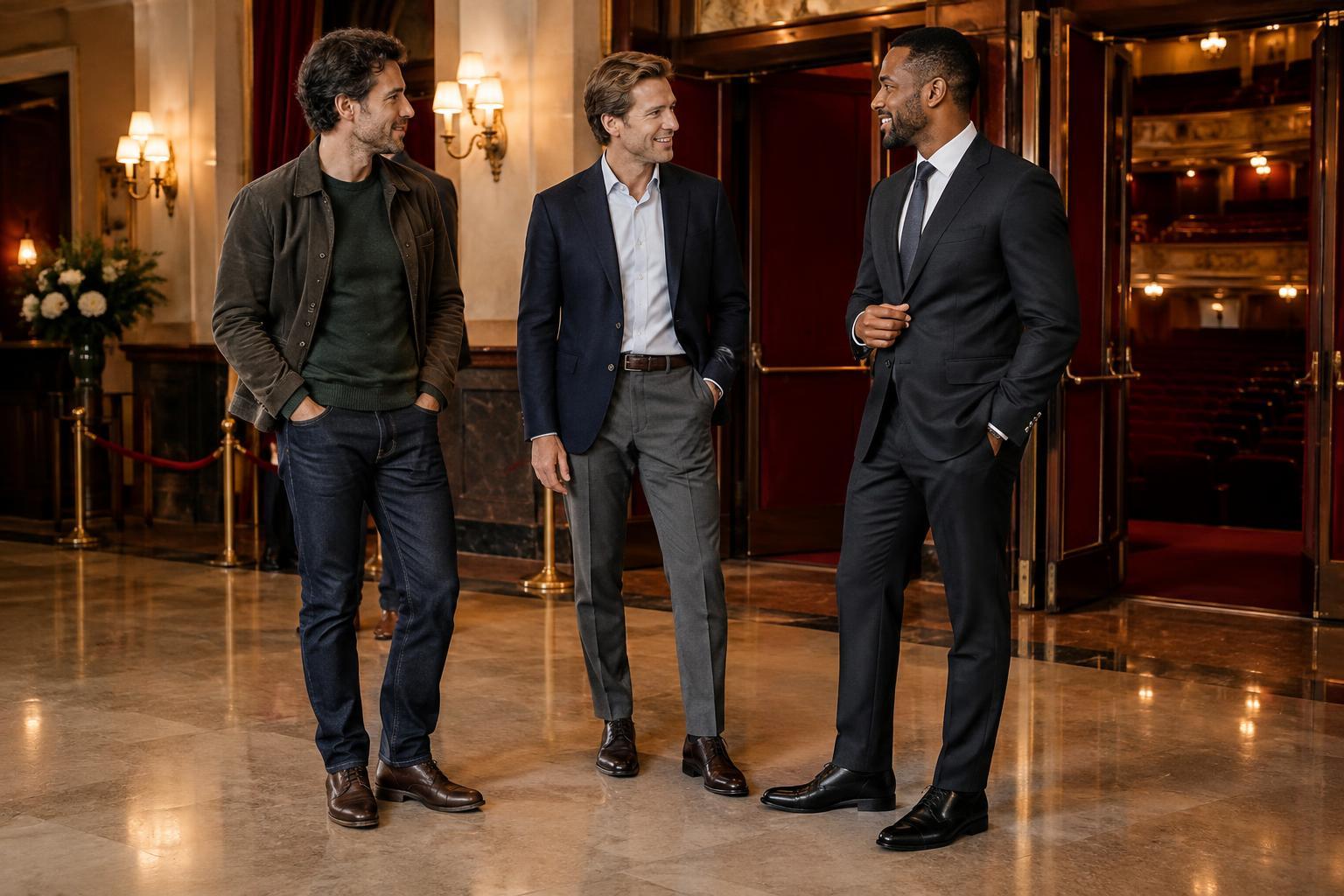
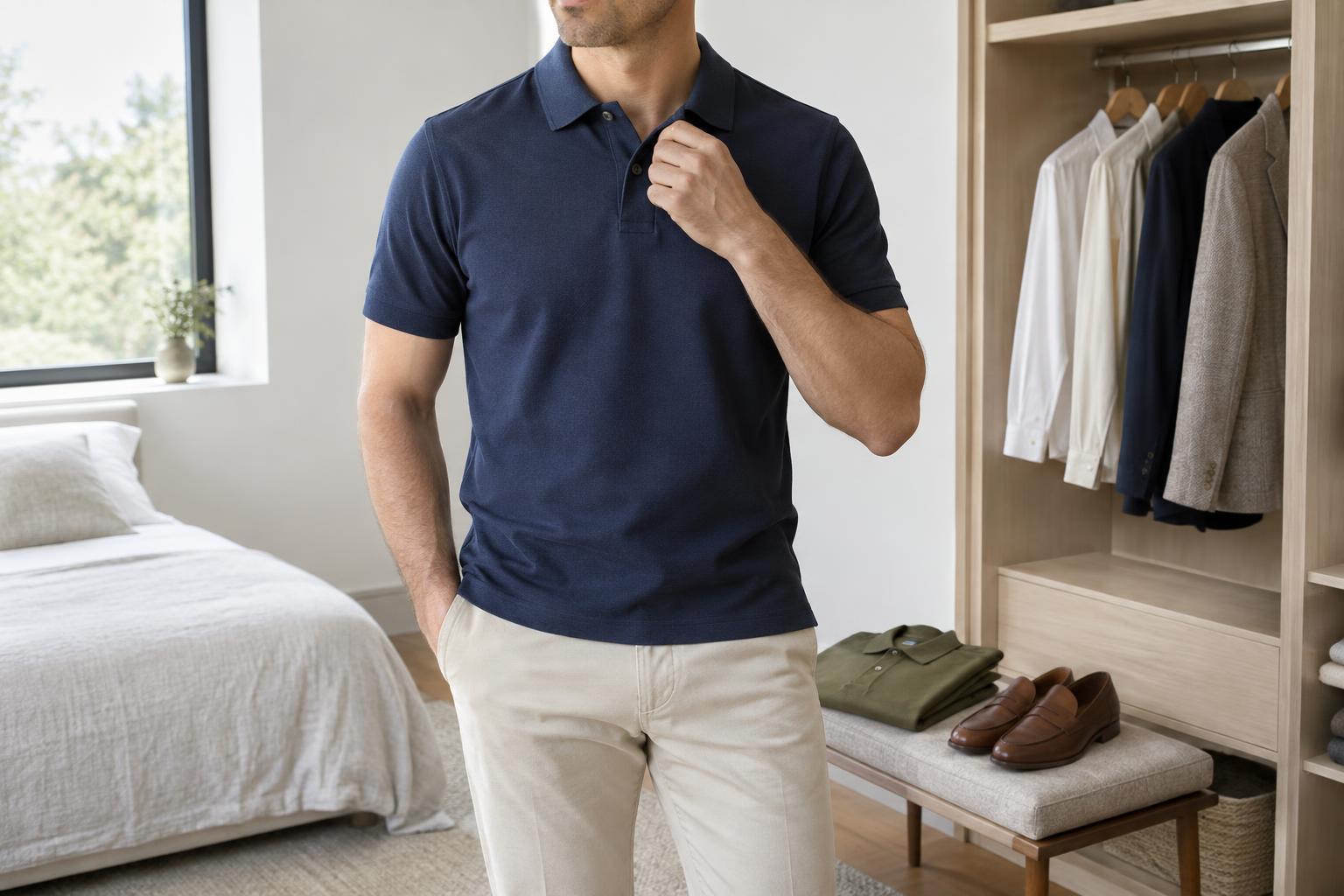
Working from home gives you more control over what you wear, but the meeting still provides the dress code. A routine conversation with close colleagues may call for a clean knit polo or a plain crew-neck sweater. A client presentation, interview or meeting with people you do not know may warrant a collared shirt or an unstructured jacket. If you are unsure, dressing one step more neatly than your everyday work clothes is usually easier than trying to make a very casual outfit look formal on camera.
Think about the impression you want to make rather than copying an office uniform. A jacket can add structure, but it need not be stiff or uncomfortable. Equally, a well-kept sweater over a shirt can look considered without appearing overdressed. The most useful video-meeting pieces are ones you would happily wear away from the screen, too.
Prioritize fit and the area in frame
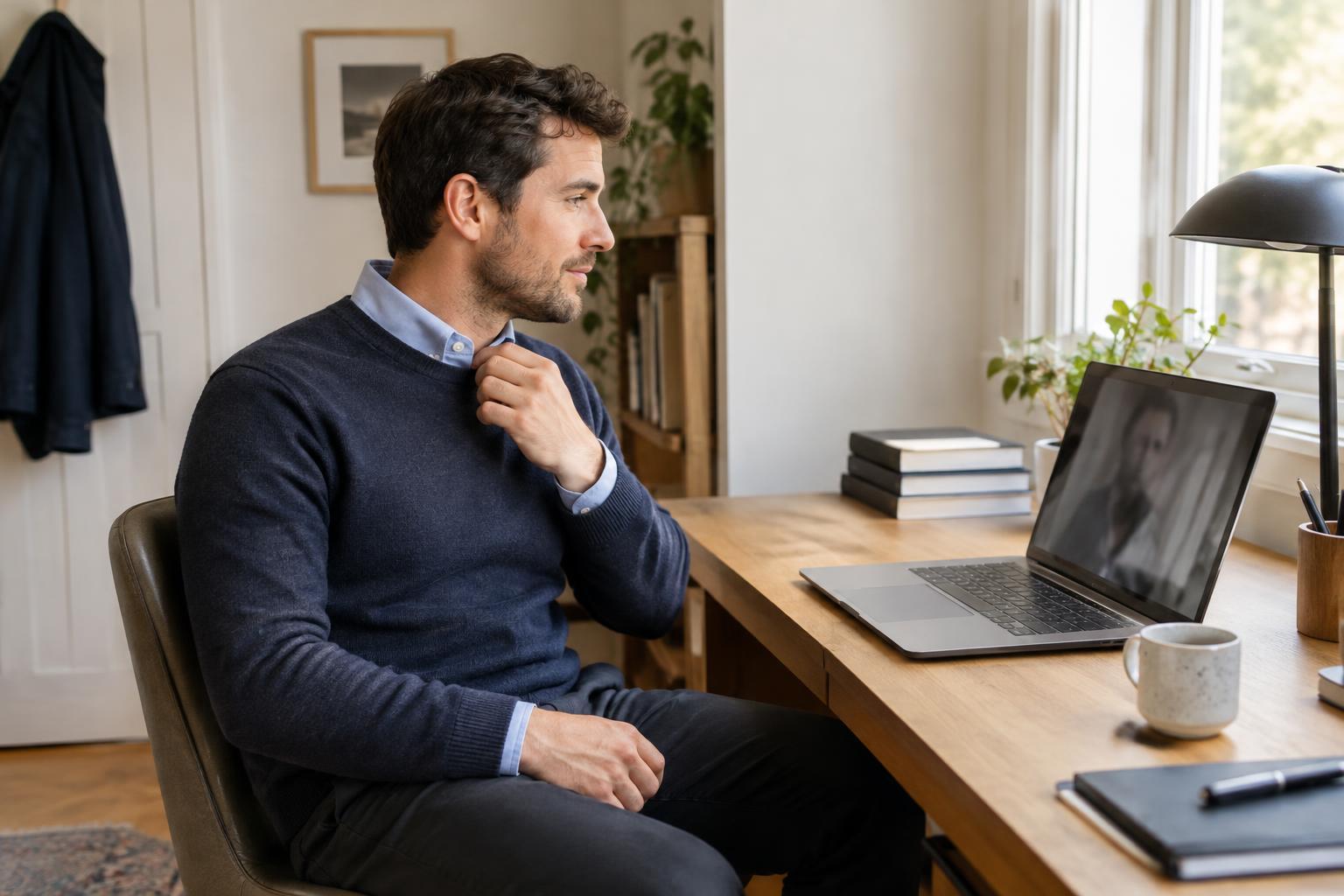
Most calls show your face, shoulders and upper chest, so start there. A shirt collar should sit comfortably instead of pulling open or folding awkwardly. A sweater should lie smoothly across the shoulders, and a jacket should allow you to sit and move without bunching around the neck. Check the fit while seated: clothes that look fine standing up can shift when you lean toward a laptop.
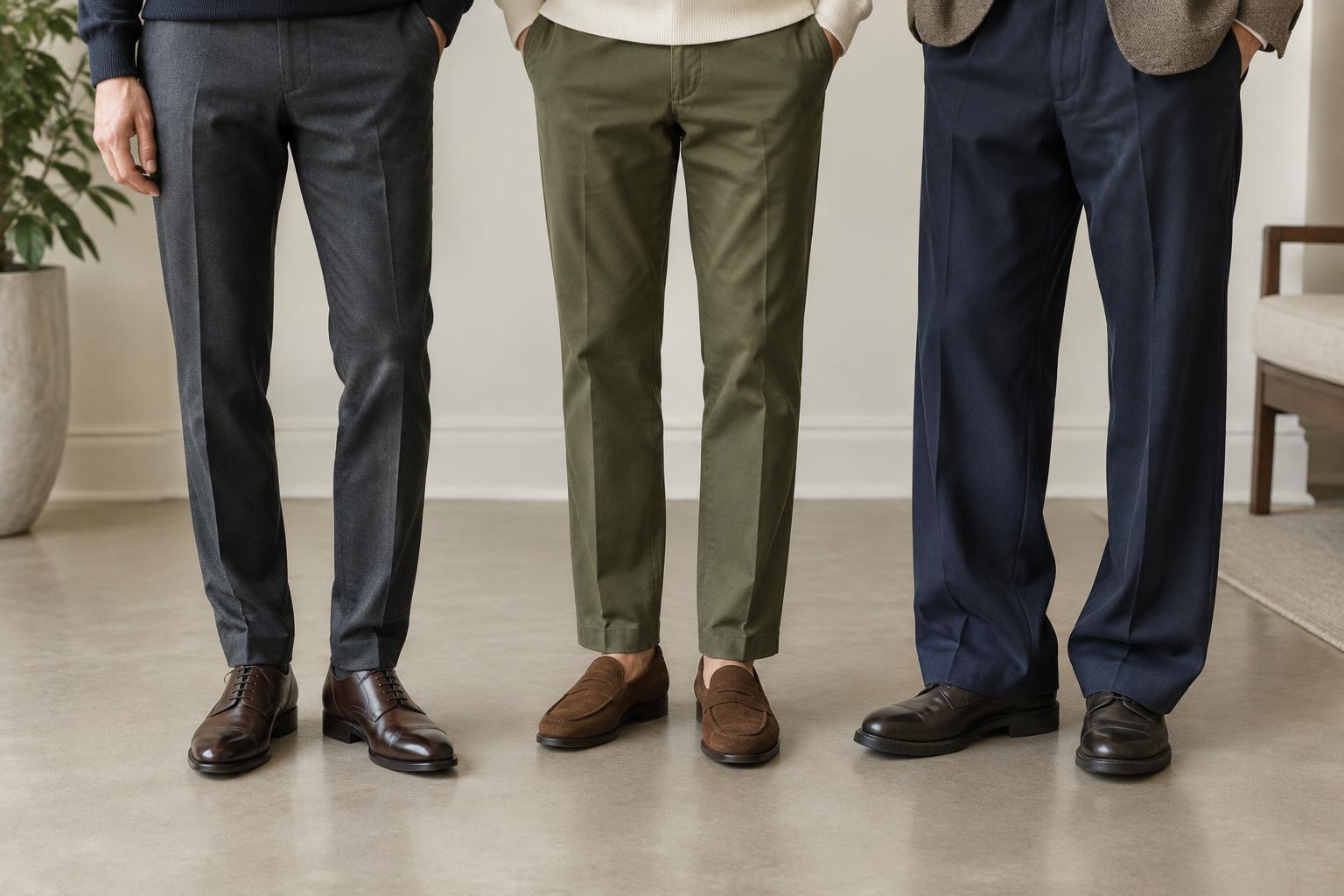
The camera frame is not a reason to ignore everything below it. Choose trousers that are comfortable for sitting and presentable if you need to stand, move the camera or answer the door. Dark jeans, chinos or relaxed wool trousers can all work, depending on the meeting. You do not need dress shoes at your desk, but wearing an intentional full outfit can make transitions through the day simpler.
Choose colors and patterns that read clearly
Solid colors are a dependable starting point. Mid-tone blue, olive, charcoal and soft neutrals often give an outfit definition without demanding attention. The best choice also depends on your lighting and background: a shirt that blends into the wall behind you may disappear, while a very bright top may dominate the frame. Aim for enough contrast that your outline and face are easy to see.
Small, closely spaced stripes or checks can look distracting on some cameras, especially when the image is compressed or resized. You do not have to avoid pattern altogether; a broader stripe, subtle texture or simple check may work well. Test it in your usual meeting window rather than judging it only in a mirror. Texture can provide interest with little effort: an Oxford shirt, fine-gauge knit or lightly textured jacket tends to look more deliberate than a worn, stretched T-shirt.
Use simple layers and restrained details
Layers help you adjust to the room without rebuilding the outfit. Keep a cardigan, overshirt or soft blazer nearby if your workspace changes temperature or a more formal call appears on the calendar. Make sure the layer sits neatly over the shirt beneath it; excess fabric around the collar can look cluttered in a close crop. If you wear a tie, reserve it for occasions where it fits the expected dress code rather than treating it as a requirement for every call.
Accessories should support the outfit, not compete with it. Glasses with clean lenses, a simple watch or a modest pair of headphones can feel natural in a home workspace. Pay more attention to visible distractions such as a twisted collar, loose threads or a badge left on from another event. These are small fixes that take less time than choosing an entirely different outfit.
Make a quick pre-call check a habit
Before an important meeting, open your camera preview in the place where you will actually sit. Check that your face is lit clearly, the background is not overly busy and the top of your outfit stays tidy when you move. Adjust the camera so it shows a comfortable view of your head and shoulders; an extreme low angle can change how a collar or jacket appears. This check also tells you whether your chosen colors work with the room.
Finish with basic grooming and garment care. Comb your hair if needed, check for lint and smooth obvious creases. Hang shirts and jackets after wearing them, and follow their care labels so your reliable meeting pieces stay ready. A small rotation of clean, comfortable tops is more useful than a closet full of clothes that need last-minute attention. The goal is not to look formal at home all day; it is to arrive on camera looking prepared for the conversation.