Start with the invitation, not the venue
The stated dress code is your best starting point. A beach wedding can still call for formal clothes, while a city venue may host a relaxed celebration. Read the invitation and any guest information before choosing an outfit. If the wording is unfamiliar or missing, consider the ceremony time, venue and couple’s usual style as clues. When you remain unsure, ask the hosts rather than guessing from a photograph of the location.
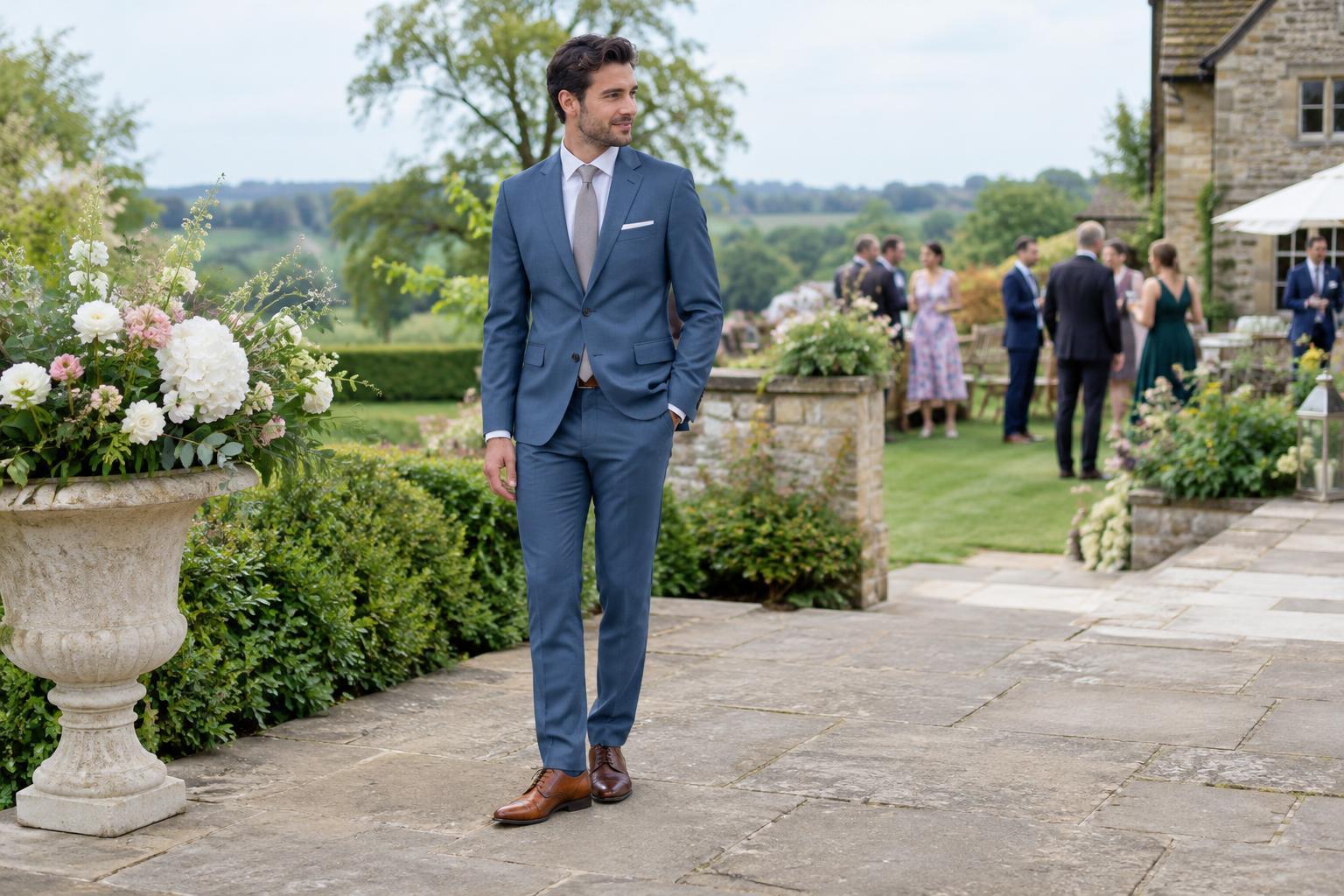
For black tie, a tuxedo, formal shirt, bow tie and appropriate dress shoes are the conventional choice. A dark suit is not quite the same thing. Formal or black-tie-optional wording generally leaves room for a well-fitting dark suit with a dress shirt and tie. Cocktail attire also suits a tailored suit, though you have more freedom with color and accessories. Semi-formal can be less precise; a suit is a safe starting point, and you can remove the tie if the setting supports it. For a casual dress code, think polished separates rather than everyday weekend wear.
If you are weighing two options, choose the one that shows care without drawing attention away from the couple. A navy or charcoal suit is especially useful because you can change its character with a shirt, tie and shoes.
Let the venue guide practical choices
A venue affects how your clothes will perform, even when it does not change the dress code. For a traditional indoor ceremony or an elegant evening reception, smooth leather shoes, a pressed shirt and neat tailoring feel at home. At a garden or vineyard wedding, check whether you will cross grass or gravel. Shoes with secure footing and a sturdy sole may serve you better than delicate soles that are uncomfortable on uneven ground.
For a beach or other outdoor ceremony, consider wind, sand and the walk between locations. Lightweight trousers and a breathable jacket can help in warm conditions, but they should still meet the requested formality. At a destination wedding, pack the complete outfit together, including belt, socks and tie, so a small missing item does not force a last-minute change. Try on everything before you travel.
Dress for the season without sacrificing fit
In warmer weather, look for fabrics and construction that feel comfortable for several hours. Linen and some lightweight wools can work well, depending on the dress code. Linen creases easily, so it may suit a relaxed daytime event better than a highly formal evening one. Lighter colors can feel natural in spring and summer, but a dark suit remains appropriate when the invitation calls for it. Choose a shirt you can wear comfortably under your jacket, even if you expect to take the jacket off later.
For colder months, a medium-weight wool suit provides a useful base. Add a proper coat for travel and outdoor photographs rather than relying on a thin suit jacket for warmth. Rain matters too: bring an umbrella and allow shoes time to dry afterward. Whatever the season, prioritize fit at the shoulders, waist and trouser length. A simple suit that fits well will usually look more considered than an elaborate outfit that pulls, sags or needs constant adjustment.
Choose restrained finishing details
A wedding is a good occasion for a little personality. A textured tie, subtle pattern or pocket square can make a familiar suit feel fresh. Keep the pieces in conversation rather than matching every color exactly. Leather dress shoes should be clean and in good condition; socks should stay in place when you sit. If you skip a tie under a relaxed dress code, a crisp collar helps the outfit look intentional.
Avoid details that could distract during the ceremony or photographs. A white dress shirt is perfectly normal with a suit, but an all-white outfit may be too close to the couple’s chosen look. The same principle applies to especially theatrical accessories: if the invitation does not invite them, let the people being celebrated stand out.
Prepare the outfit before the day
Try on the full outfit at least a few days ahead, including the shoes. Sit, walk and raise your arms to catch tight spots or awkward trouser breaks. Check for loose buttons, marks and creases, then press or clean garments according to their care labels. A quick shoe polish and a lint check can make clothes you already own feel ready for the occasion.
Finally, plan for the whole event rather than just the first photograph. You may be standing during a ceremony, sitting through dinner and dancing later. An outfit that meets the dress code, works on the venue’s surfaces and remains comfortable is more valuable than one that looks impressive only on a hanger.