Start with the result, not a haircut name
You do not need to know the technical name of a haircut to ask for one. Start with what you want it to look like and how you want it to behave. You might say, “I want the sides neat but not shaved, enough length on top to push back, and a shape that still looks tidy without much product.” That gives your barber more to work with than a name that different people may interpret differently.
Mention what you like and dislike about your current cut. Is the fringe falling into your eyes? Do the sides stick out as they grow? Does the top feel too flat or too bulky? Point to the areas you mean. If you liked your last haircut, say how long ago you had it and what you would change this time. These details turn a vague request into a useful starting point.
Bring photos, then explain what you see in them
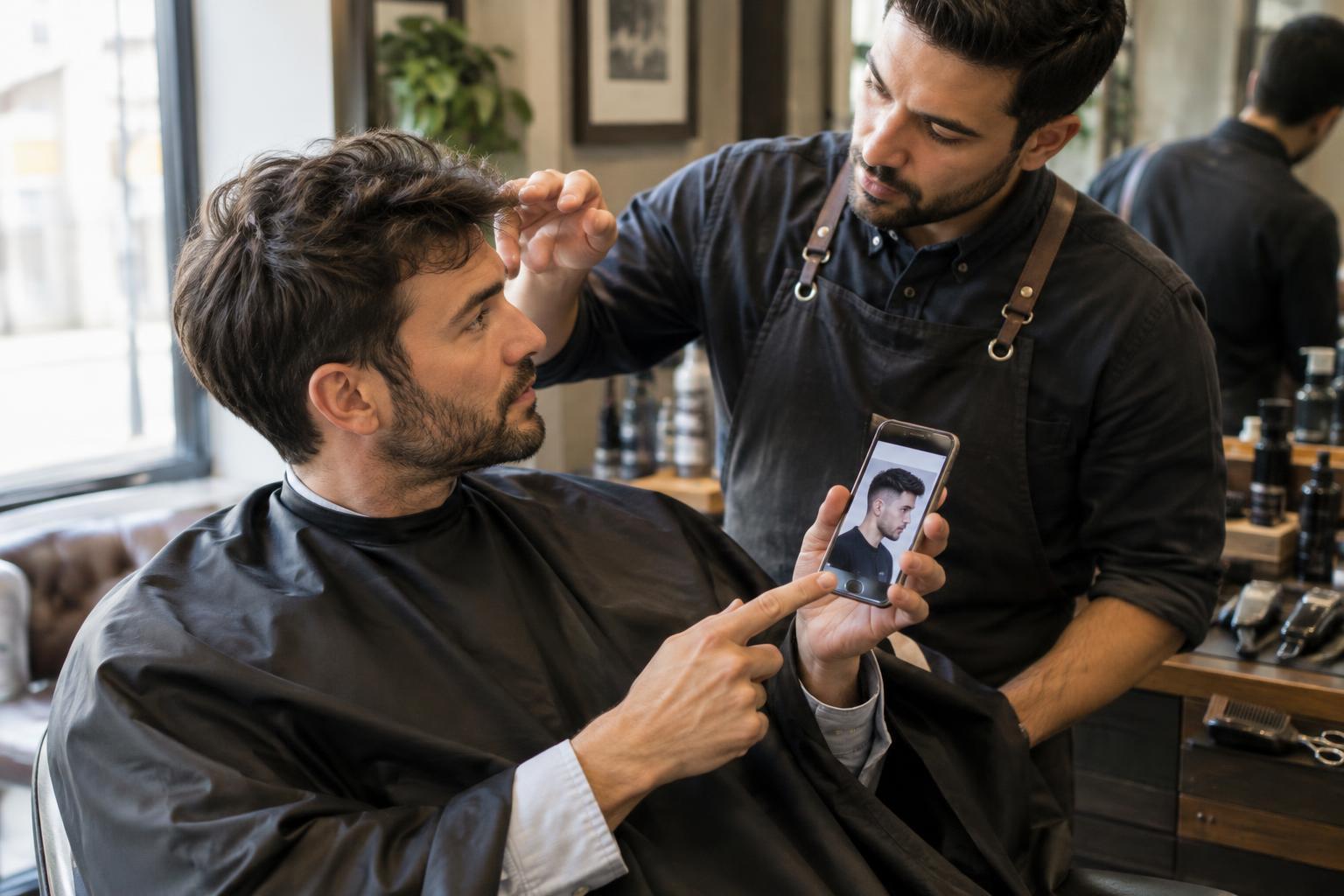
A reference photo can show the shape you mean more quickly than a long description. Bring a few views of the same cut if you can: the front, sides, and back may tell different stories. Choose photos for specific features, such as the outline around the ears or the way the top falls, rather than expecting an exact copy. Hair texture, growth patterns, and density can affect how a cut looks on you.
Tell your barber what you want to borrow from each image. For example: “I like the soft taper in this photo, but I want less height on top.” It also helps to show an image of what you do not want, provided you can identify the detail that bothers you. A brief explanation prevents the barber from having to guess whether you mean the length, the styling, or the overall shape.
Be specific about length, edges, and contrast
Words like “short,” “clean,” and “just a trim” leave plenty of room for interpretation. Before the cut begins, discuss how much you want taken off the top and how much length you want to keep at the fringe. You can use your fingers to show an approximate amount. For the sides, ask whether the barber plans to use scissors or clippers and, if clippers are involved, how close the shortest area will be. You do not need to choose a guard number yourself.
Then talk about the transition between the sides and top. Do you want a noticeable contrast or a gradual blend? Should the hairline at the neck look sharply defined or more natural? If you wear facial hair, mention whether you want the sideburns to connect with it. These small choices have a strong effect on the finished look, even when the overall haircut is simple.
Describe how you actually style your hair
A haircut should suit your usual morning, not an imaginary routine. Tell your barber whether you air-dry your hair, use a dryer, apply product, or prefer to do almost nothing. Say which direction you normally part or brush it, especially if it tends to settle a certain way. If you wear a hat often or need a tidy look for work, mention that too. Your barber can then suggest a shape and length that better fit those habits.
Be honest about how often you expect to return. A very close, defined cut may look different as it grows out than a softer, longer one. If you prefer more time between appointments, say so and ask what will be easiest to maintain. This is also a good moment to ask what the barber is using to style the finished cut and how you could get a similar result at home.
Confirm the plan and speak up during the cut
Before the first cut, repeat the main points in one sentence: “So we’re keeping the top long enough to part, tapering the sides without going to skin, and leaving the neckline natural?” This gives both of you a chance to catch a misunderstanding. If you are unsure about a shorter length, ask to start conservatively. Hair can be cut shorter during the appointment, but it cannot be put back.
You can check in politely as the cut takes shape. Ask to see the sides or back with a mirror, and say something if an area looks shorter or heavier than you expected. At the end, ask the barber to show you how they styled it. Save a photo of the finished cut if you like it, along with a note about what worked. Next time, you will have a clear reference based on your own hair.