Know what you are cleaning
Suede and nubuck have a soft, textured surface called a nap. Suede is generally made from the underside of leather, while nubuck is made by lightly buffing the outer surface. Both can show marks where the fibers have been pressed down, and both need a gentler approach than smooth leather. Shoe polish, vigorous scrubbing and a soaking wet cloth can leave the surface looking patchy.
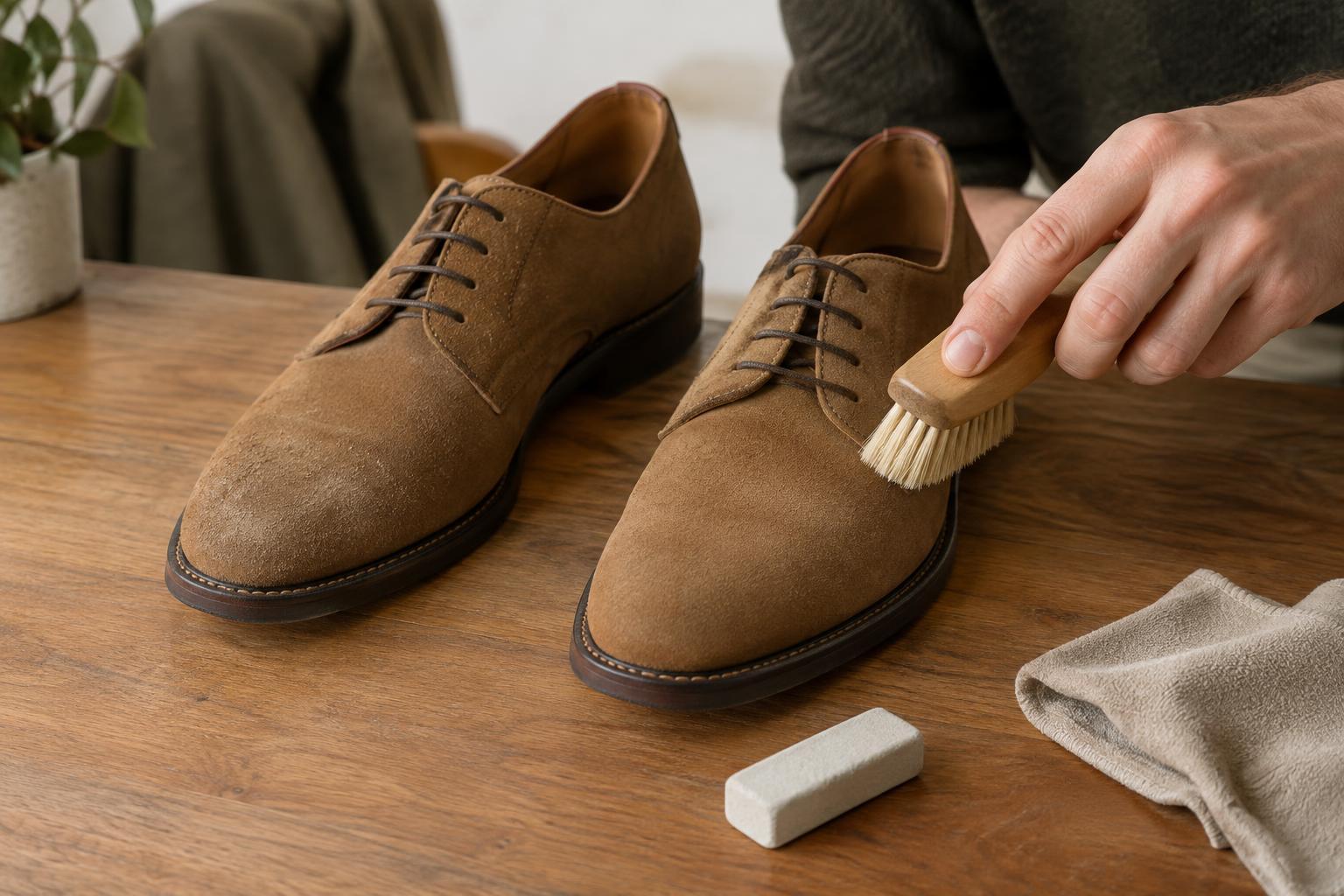
Before you begin, check any care instructions supplied with the shoes, particularly if they have dyed panels, glued trim or a mixed-material upper. Work on one shoe at a time in good light. A dedicated suede or nubuck brush, a suede eraser and a clean, dry cloth will handle many everyday marks. Test any new tool or product on a discreet area first.
Let the shoes dry, then brush
If the shoes are wet or muddy, resist the urge to wipe them immediately. Blot excess moisture gently with a clean cloth, without rubbing, and let the shoes dry naturally. Stuff them loosely with plain paper or use suitable shoe trees to help them hold their shape. Keep them away from radiators, hair dryers and direct heat, which can stiffen or distort leather.
Once dry, knock off loose dirt and brush the upper with light, short strokes. Start in a consistent direction, then adjust your strokes where needed to lift flattened fibers. Use less pressure than you think you need, especially on nubuck or a thin, delicate suede. Clean the brush before moving to a lighter-colored shoe so you do not transfer dirt or dye.
Treat marks without scrubbing
For a small scuff or dry mark, try a suede eraser on the affected area. Rub lightly, pause to brush away the crumbs and check your progress. Repeating a gentle pass is safer than pressing hard once. If a mark is simply a patch of flattened nap, brushing may be enough to make it less noticeable.
Oil and grease need a different response. Blot a fresh spot carefully rather than spreading it. A small amount of plain, dry cornstarch may help absorb surface oil: test it first, leave it undisturbed, then brush it away gently. It may not remove a stain that has already set. For persistent stains, valuable shoes or uncertainty about a cleaner, a specialist shoe-care service is a safer choice than escalating to household solvents.
Water marks can be especially frustrating because cleaning only the dark spot may create a visible edge. Avoid pouring water onto the shoe to even it out. If a product specifically made for suede or nubuck is needed, follow its directions, test it discreetly and allow the shoe to dry fully before judging the result.
Restore the finish and protect it
After cleaning, give the shoes a final gentle brush to lift the nap and bring its texture back into balance. Look at them from a few angles: suede and nubuck can appear lighter or darker simply because the fibers lie in different directions. The goal is an even-looking surface, not an aggressively brushed one.
A protector labeled for suede and nubuck can help make future splashes and dirt easier to manage, though it will not make shoes waterproof or stain-proof. Apply it only to clean, completely dry shoes, following the label’s distance and drying instructions. Test it first, since some products may slightly change the color or feel. Do not substitute a wax or cream intended for smooth leather; those can flatten the nap.
Make upkeep part of wearing them
A quick brush after wear often prevents dust from becoming embedded. Let damp shoes dry before putting them away, and avoid wearing the same pair day after day when possible. Store them in a breathable space, away from prolonged direct sunlight, with enough room that other shoes do not crush the uppers.
For travel, carry suede or nubuck shoes in separate soft bags so they do not rub against buckles, soles or other rough items. Regular light care is usually easier on the nap than an occasional intensive clean. If a mark remains after a careful attempt, it is often better to live with a little character than to damage the leather trying to make it disappear.