Know the leather before you begin
This routine is for smooth, finished leather shoes, such as many dress shoes, loafers, and leather boots. It is not the right approach for suede, nubuck, patent leather, or heavily coated materials. If you are unsure what the upper is made of, check the maker’s care guidance before applying a product. Always test a new cleaner, conditioner, or polish on a small, less visible area first: even products intended for leather can change its color or sheen.
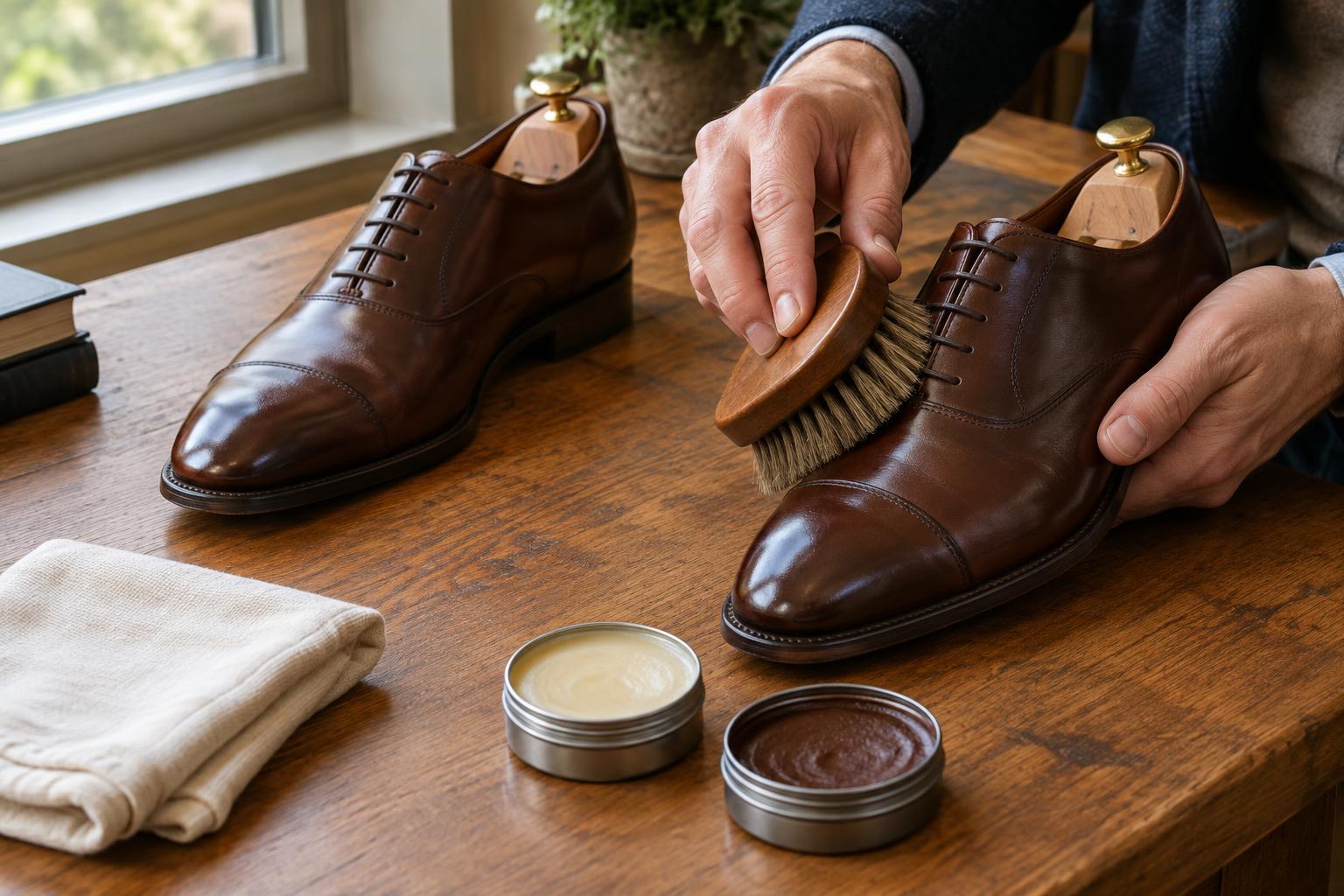
You need little equipment: a soft shoe brush, a couple of clean cloths, a leather cleaner if brushing will not remove the dirt, a conditioner suitable for smooth leather, and a matching or neutral shoe polish. A separate brush or cloth for each polish color helps prevent transfer. Set the shoes on a protected surface, remove the laces if they are in the way, and insert shoe trees if you have them. Trees support the shape and make the leather easier to work on.
Clean gently and let the shoes dry
Start by brushing the whole shoe, paying attention to the welt, seams, and creases where dust collects. Dirt left on the surface can be rubbed into the finish during later steps. For light marks, a cloth barely dampened with water may be enough. For more stubborn grime, follow the directions on a cleaner made for smooth leather rather than reaching for household detergent.
Use modest amounts of moisture. A soaking-wet cloth can leave water marks or make the leather take longer to dry. Wipe away any cleaner residue as its instructions require, then allow the shoes to dry naturally before conditioning. Keep them away from radiators, hair dryers, and strong direct heat, which can dry the leather unevenly. If the shoes are wet from rain, let them dry first; cleaning and polishing a damp upper makes it harder to judge the result.
Condition the leather without overdoing it
Conditioner helps replenish the feel of smooth leather after wear and cleaning, but more is not automatically better. Apply a small amount to a cloth and work it across the upper in a thin, even layer. Pay attention to areas that flex, while avoiding a heavy buildup around seams and decorative details. Give the product time to absorb according to its directions, then buff away anything left on the surface with a clean cloth.
Condition based on the shoes’ condition rather than on a rigid calendar. Leather that looks dull or feels dry may benefit from treatment; shoes that still feel supple may need only brushing and an occasional polish. Some conditioners darken leather, particularly lighter shades, so a discreet test matters. If the surface feels tacky after treatment, you have likely applied too much. Gently buff off the excess and let the shoes rest before adding another product.
Choose and apply polish for the finish you want
Shoe cream is useful when you want to refresh color and give the upper a soft shine. Wax polish can add more shine and a degree of surface protection, especially on the toe and heel. Neither replaces cleaning or conditioning. A close color match is helpful for scuffs, while neutral polish can be convenient if you own several colors; neutral products may still affect the appearance of some leathers, so test first.
Apply polish sparingly with a cloth or applicator, using small motions to spread a thin layer. Keep it off the sole edges and other materials unless the product is intended for them. Let it set as directed, then brush briskly or buff with a clean cloth to bring up the shine. If you want a stronger finish, build it with another thin coat rather than one thick one. Thick polish can collect in creases and leave the shoe looking cloudy.
Make care part of wearing your shoes
You do not need to repeat the full routine after every outing. A quick brush after wear removes dust before it settles into creases; a more thorough clean is useful when visible dirt has accumulated. Condition when the leather calls for it, and polish when scuffs or a fading shine make it worthwhile. This lighter approach saves time and reduces product buildup.
Before putting shoes away, let any moisture from wear dissipate. Shoe trees can help maintain shape between wears, and a dry, ventilated storage spot is preferable to leaving shoes near a heat source. Check laces and soles while you care for the uppers: clean leather looks better when the rest of the shoe is tidy, too. With gentle cleaning, restrained product use, and patient drying, a small kit can handle most everyday smooth-leather shoe care.