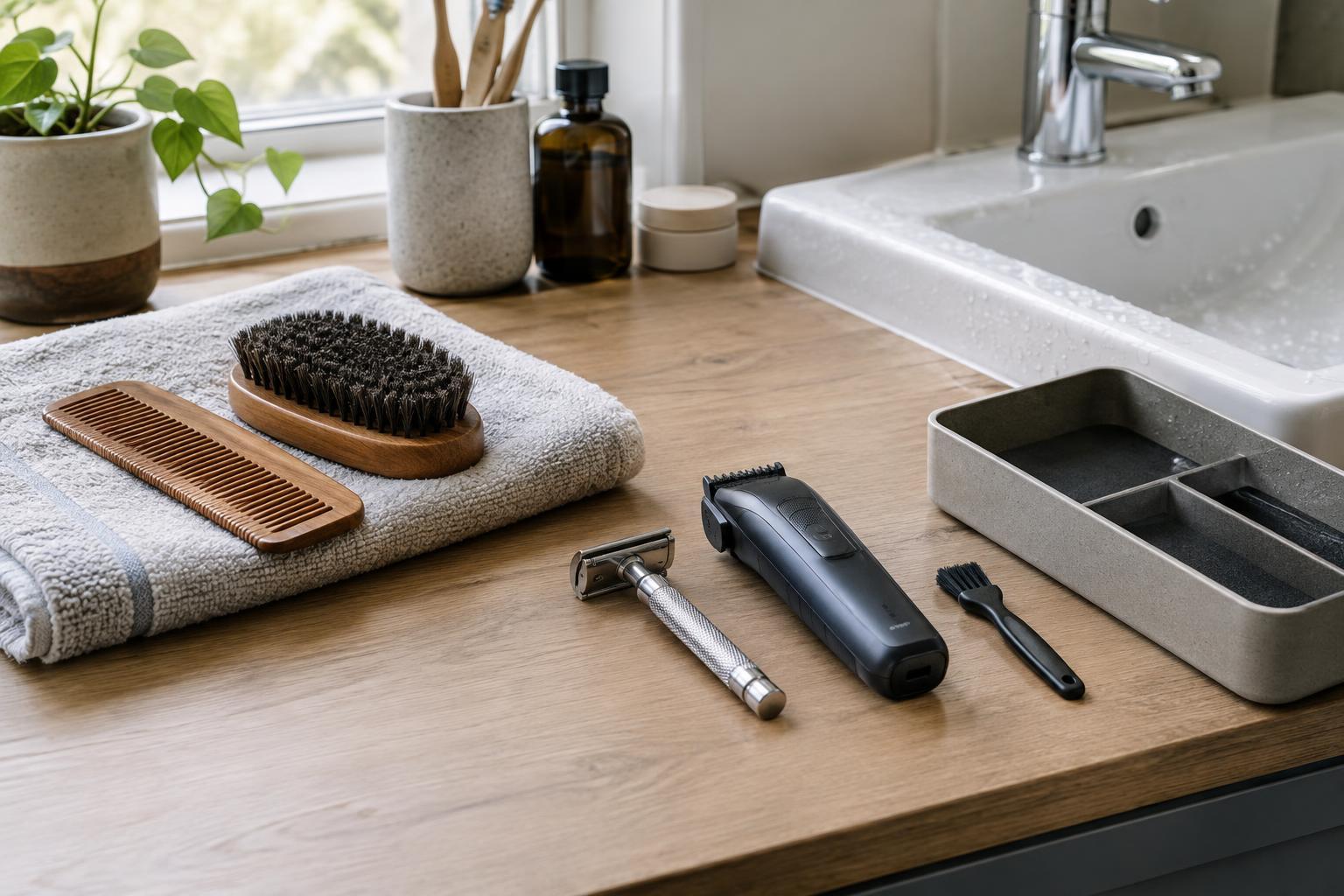
Start with a kit you can actually maintain
Grooming tools collect hair, product, skin oils, and moisture through ordinary use. You do not need an elaborate cleaning setup to keep them in good condition. A small brush for clearing hair, a soft cloth, mild soap, and a place to let washable items dry will cover many routine jobs. Keep the instructions for powered tools handy, since cleaning methods vary by model.
Before cleaning, sort your kit into washable items, wipe-clean items, and electrical devices. A plastic comb may tolerate a wash in soapy water; a wooden comb may not. A trimmer head may be removable and washable even when the handle must stay dry. Checking that distinction first is easier than trying to repair water damage later.
Clear buildup from combs and brushes
Pull loose hair from a comb or brush after use, or whenever it begins to collect. For a plastic comb, wash away styling-product residue with lukewarm water and a little mild soap, then rinse and dry it. Pay attention to the spaces between the teeth, where product can linger. Avoid very hot water, which may not suit every material.
For a hairbrush, lift out trapped hair with your fingers or a small cleaning brush. If the brush is made entirely of washable materials, clean the bristles gently and allow it to dry thoroughly before putting it away. Do not soak a brush with a wooden base, padded cushion, or uncertain construction. Wiping the accessible parts is a more cautious option when you do not know how it was made.
Look after razors and trimmers
A manual razor benefits from having hair and shaving product rinsed away according to its maker’s directions. Shake off excess water carefully, without striking the blade against the sink, and leave it somewhere it can dry. Replace a blade when it pulls, feels uncomfortable, or no longer gives you the shave you expect. There is no need to force extra uses from one that has become unpleasant.
For an electric shaver or beard trimmer, switch it off and unplug it before cleaning. Remove loose hair from the cutting area with the supplied brush or another tool recommended by the manufacturer. Some heads can be rinsed; others cannot. Let washed parts dry fully before reassembly, and follow the product instructions if its blades require occasional oil. A quick clear-out after a trim usually takes less effort than removing packed-in hair later.
Give small accessories the same attention
Scissors, tweezers, and clipper attachments are easy to overlook because they take up little space. Brush away hair and wipe off visible residue after use. Clean them in a way that suits their materials and any manufacturer guidance, then dry them before returning them to a case or drawer. Take particular care around sharp edges rather than trying to scrub them with your fingers.
If several people use the same bathroom, separate personal tools so it is clear which belong to whom. Giving each item a designated spot also helps you notice when a blade, attachment, or comb needs attention. The aim is a kit that is ready when you reach for it, not a display of perfectly arranged products.
Store everything dry and make upkeep routine
A damp corner of a shower is rarely the best long-term home for a grooming kit. After cleaning, allow tools to dry in an open, suitable spot before closing them in a drawer or travel case. Keep protective caps where they will not trap moisture against a wet blade. Store sharp items so you can reach them without brushing against their edges.
Build upkeep around the way you already groom: clear hair after a trim, rinse a suitable razor after shaving, and check brushes and combs when product buildup becomes noticeable. Before travel, pack only clean, dry tools and protect delicate or sharp parts. These small habits make the next grooming session simpler and help you get useful life from the tools you already own.