Start with the label and the garment
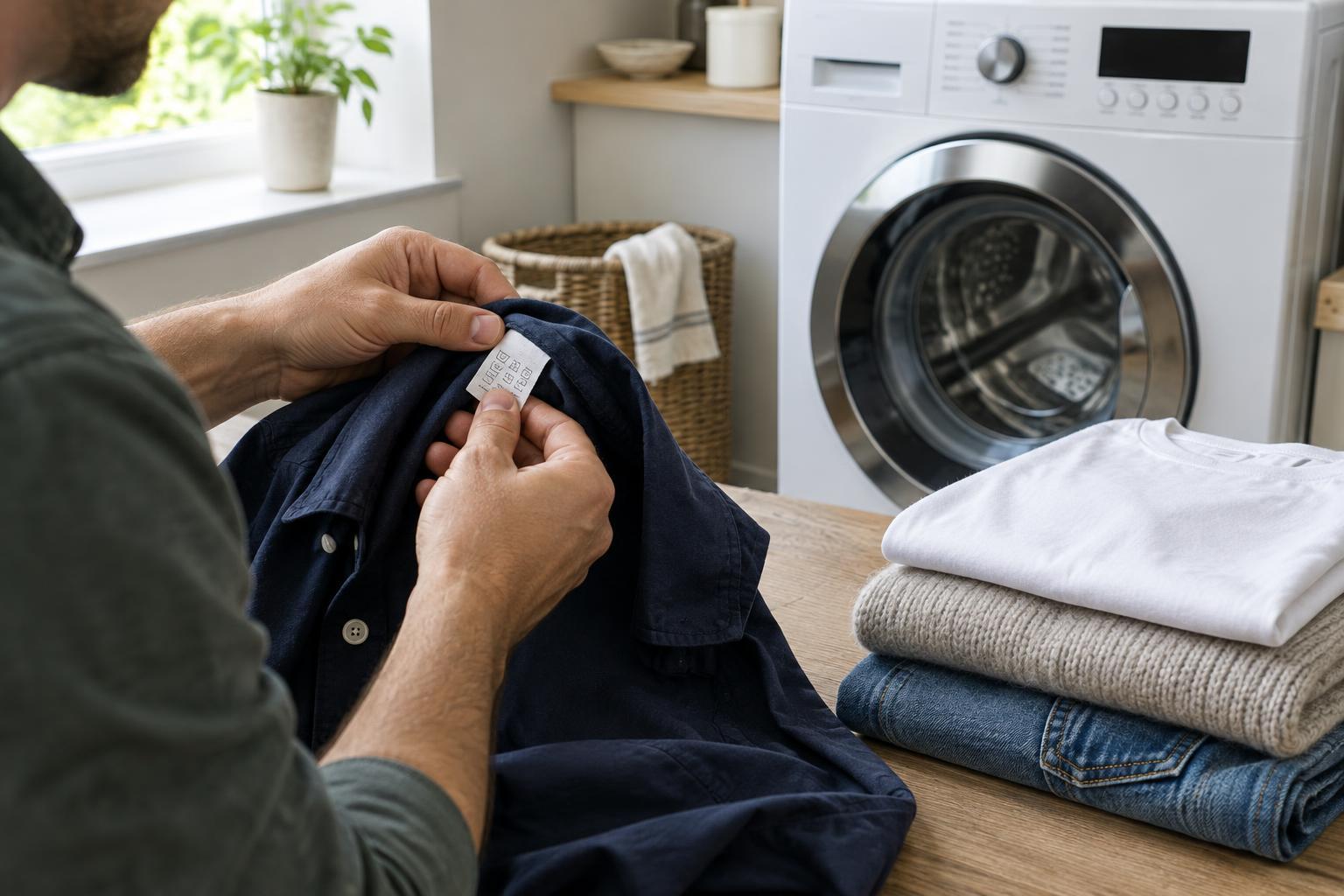
A good wash setting does two jobs: it removes soil and limits unnecessary wear. Before sorting by color, check each garment’s care label. It tells you whether the item can go in a machine and may set a maximum water temperature or call for a gentle cycle. Treat that guidance as the starting point, especially for tailored clothes, wool, and garments with linings or decorative details.
Next, look at what the garment needs today. A lightly worn office shirt is different from a muddy pair of chinos, even if both are cotton. Consider the fabric, how dirty it is, whether its color may run, and how sturdy its construction feels. Washing a small stain by hand or airing a clean-looking layer may sometimes spare it a full machine wash. Empty pockets, close zippers, and turn garments with prints or dark surfaces inside out before loading.
Match the cycle to the fabric, not just the load
A normal or cotton cycle usually uses more agitation and suits sturdy, washable items such as plain cotton T-shirts, socks, and casual chinos. It can be too rough for a fine-knit polo or a dress shirt with delicate detailing. Use a gentler cycle for clothes that might stretch, snag, or lose their shape. A permanent-press or easy-care cycle, where available, can be a useful middle ground for many shirts and synthetic-blend trousers.
A delicate or wool cycle typically uses less agitation, but the name alone does not make every garment machine-washable. Follow the label, put small or snag-prone pieces in a mesh bag, and keep heavy items such as jeans away from lighter knits. Do not pack the drum tightly: clothes need room to move and rinse. If a load contains both tough and fragile pieces, set the fragile ones aside rather than choosing a harsh cycle for everything.
Choose water temperature with care
Cool or cold water is a sensible default for many everyday loads, particularly dark colors, mixed colors, and garments that might shrink or fade. Modern detergents commonly work in cooler water, though results depend on the product, the machine, and the type of soil. If something is heavily stained, pretreating the affected area may help more than simply raising the temperature.
Warm water can help with some oily soil on sturdy, colorfast clothes when the care label permits it. Hot water may be appropriate for certain durable, washable whites or heavily soiled items, but it can increase the risk of shrinkage, color loss, and damage to finishes. Never exceed the label’s limit to chase a deeper clean. When trying a higher temperature on an unfamiliar garment, consider the likely effect on its color, fit, and any elastic parts first.
Use spin speed to balance drying time and wear
A faster spin removes more water, which can shorten drying time. It also puts more stress on clothes and may leave some fabrics more creased. High spin is generally most useful for sturdy items such as towels, socks, and robust cotton basics. For dress shirts, lightweight trousers, knitwear, and garments prone to wrinkles, a lower or medium spin is often a better starting point if the machine allows you to adjust it.
Spin speed cannot fix a poor load mix. A heavy pair of jeans tumbling against a thin shirt can cause friction no matter which setting you choose. Wash similarly weighted pieces together, and take clothes out promptly when the cycle ends. Smooth shirts and trousers into shape before hanging them; dry knits flat when their label or weight suggests hanging could stretch them.
Build a simple routine you can adjust
For a typical mixed wardrobe, sort first by care needs, then by color and fabric weight. One load might contain sturdy casual cottons on a normal cycle with cool water and medium-to-high spin. Another might hold washable shirts and lightweight trousers on an easy-care cycle with cool water and a lower spin. Delicate knits may need their own gentle load—or a different cleaning method if the label rules out machine washing.
Use the recommended amount of detergent for the load and product; more is not automatically cleaner and can be harder to rinse away. After washing, inspect problem spots before drying, since heat can make some stains harder to remove. Over time, notice which settings leave your clothes clean without excess wrinkling, fading, or stretching. That feedback, alongside the care label, is more useful than putting every garment through the same cycle.