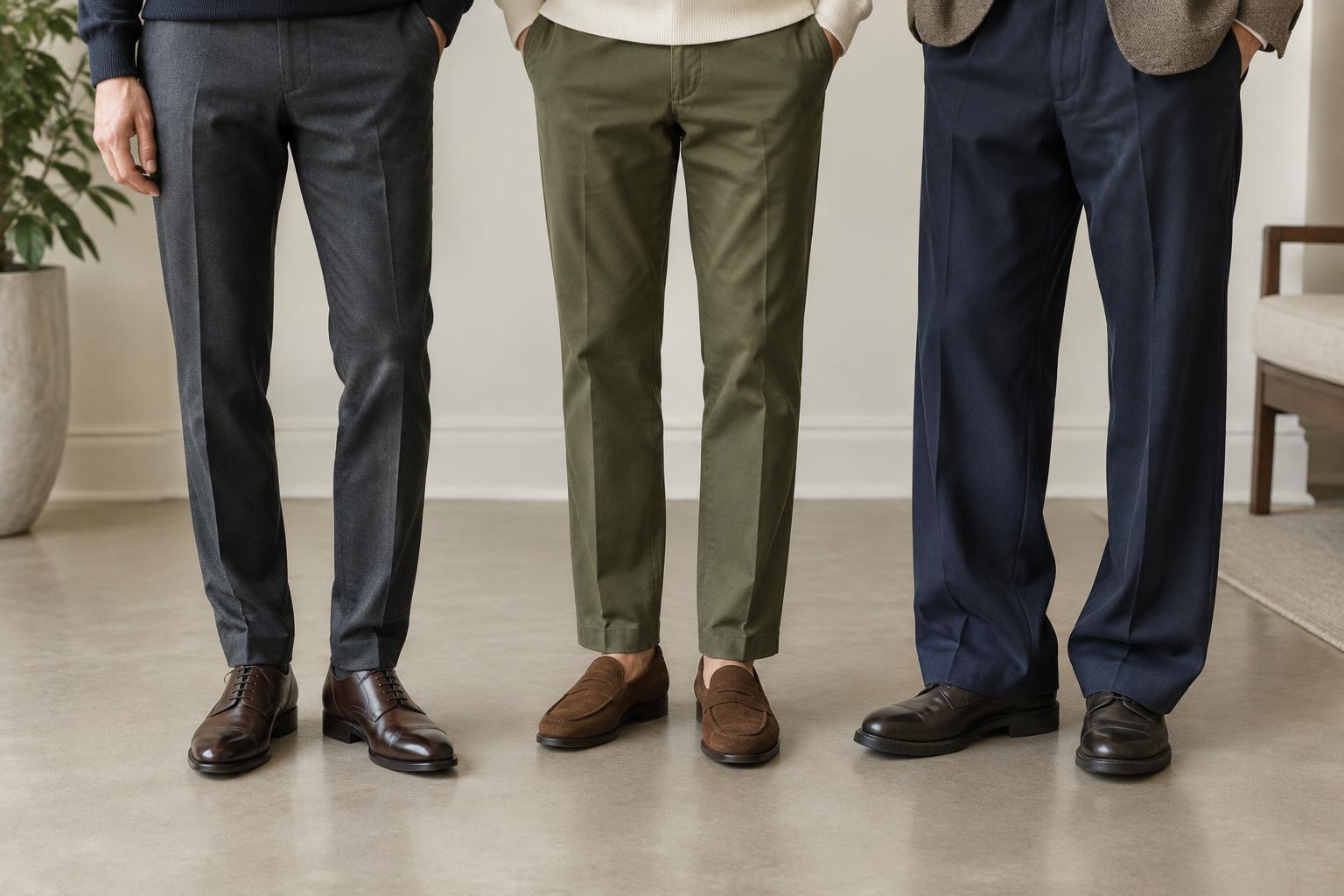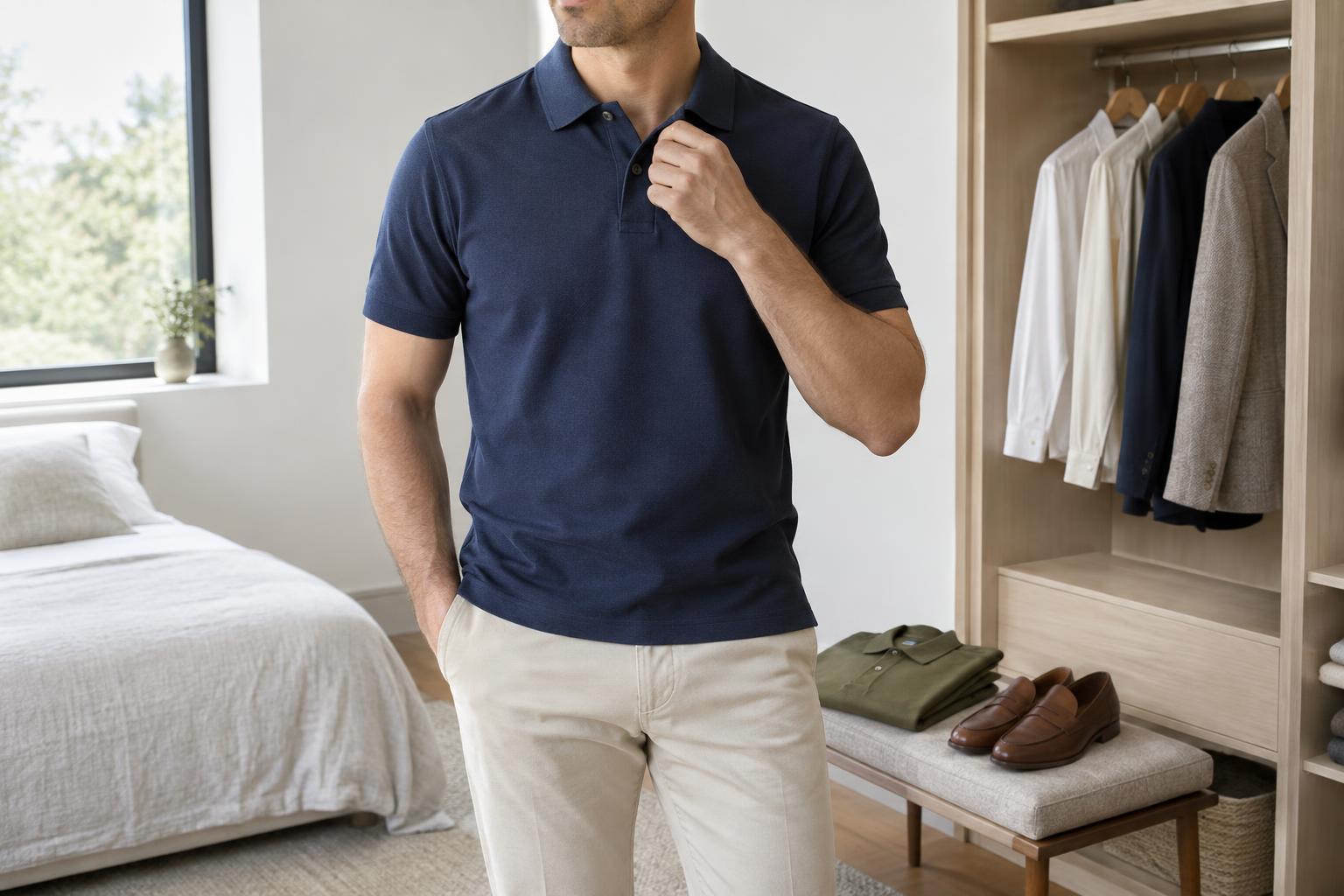
Start with the trousers you plan to wear
A belt does more than hold up trousers: it creates a visible line between your shirt and trousers. The right one sits comfortably at your waist without forcing the fabric to bunch. Before shopping, look at the trousers you wear most often. Their belt loops, waistband height, fabric, and level of formality will tell you more than a general rule about what belt you need.
Try the trousers on at the height where you normally wear them. If the waistband is much too loose, a belt may gather the fabric rather than solve the fit problem. A small amount of extra room is easier to manage; for a larger gap, consider trousers with a better-fitting waist.
Measure the belt, not just your trouser size
Trouser size is a useful starting point, but it is not a reliable belt measurement. Waistbands vary by brand and style, and a belt travels around the outside of your trousers and sometimes over a tucked-in shirt. For the most useful measurement, take a belt that already fits and lay it flat. Measure from the point where the buckle pin meets the belt to the hole you normally use. Compare that distance with the seller’s sizing guide, since brands may label belts differently.
If you do not have a well-fitting belt, thread a flexible tape measure through the loops of the trousers you intend to wear. Keep it comfortably snug rather than pulling it tight. When trying on a new belt, aim to fasten it near a middle hole. That leaves room to adjust when you change trousers or tuck in a thicker shirt. The remaining tail should pass neatly through the first loop without hanging far beyond it.
Choose a width that fits the loops and the outfit
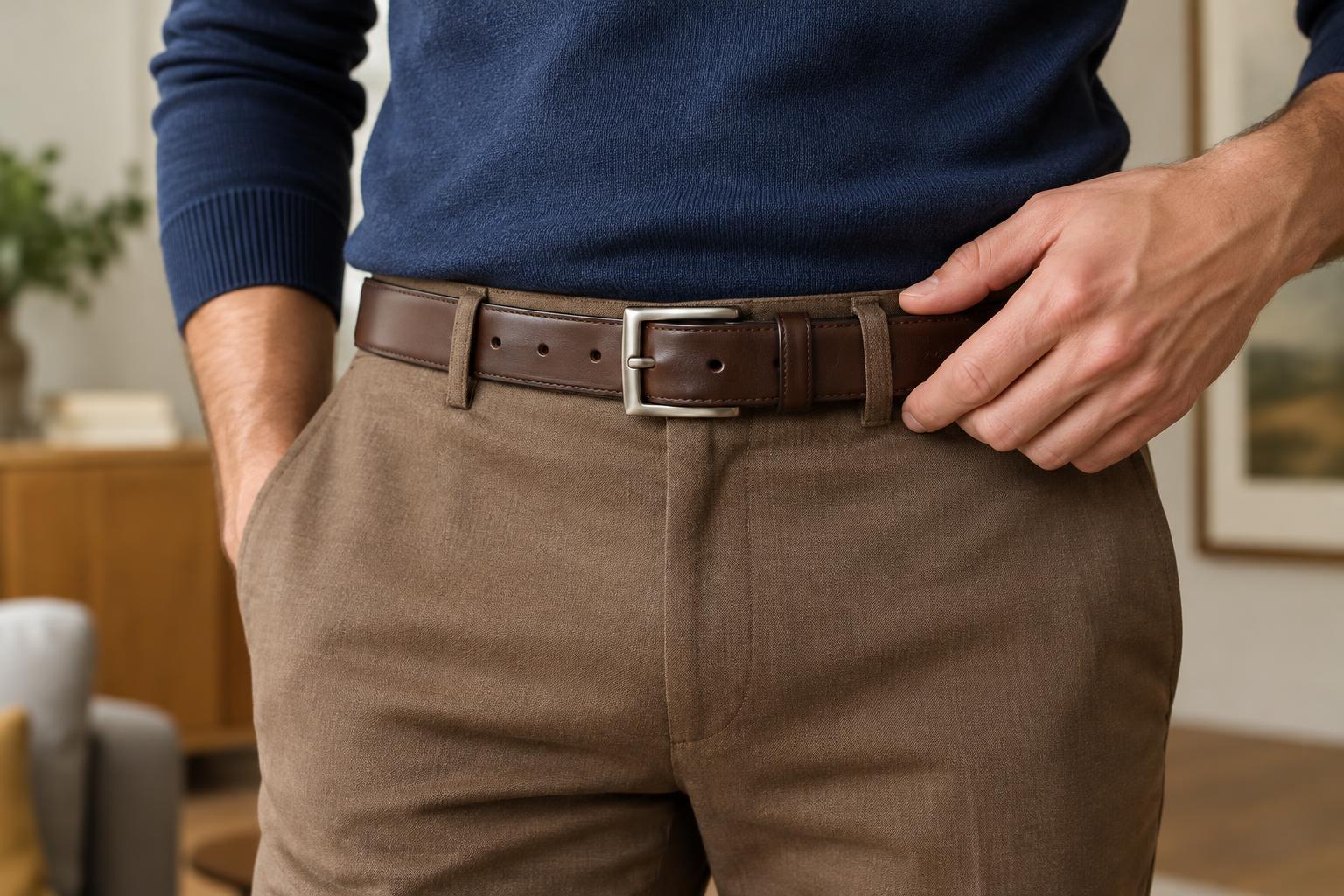
Check the belt loops before choosing a width. A belt must pass through them easily, but one that looks noticeably narrow inside large loops may feel out of proportion. For many dress trousers, a relatively slim belt of about 1 to 1¼ inches looks at home. Jeans and sturdier chinos often take a wider belt, around 1¼ to 1½ inches. These are guides, not fixed rules: loop size and the overall look matter more than a number.
A slim, smooth belt generally suits tailored clothing because it keeps the waistline quiet. A wider belt has more presence and can balance denim, heavier cotton, or a casual jacket. If you want one belt to serve several pairs of trousers, check the smallest loops first. A versatile medium width is useful only if it physically fits every pair you intend to wear it with.
Let the buckle match the belt’s purpose
For workwear or dressier outfits, a simple frame buckle is an easy choice. Look for a buckle that is proportionate to the belt: a large, heavy buckle can overwhelm a narrow dress belt, while a tiny one may look lost on a broad casual strap. A modest buckle also tends to sit flatter beneath a jacket or sweater.
Silver-tone and gold-tone finishes can both work. Matching the buckle exactly to a watch or other metal accessories is optional; keeping the finishes broadly harmonious is usually enough. For casual outfits, a more substantial buckle or a different fastening style can add character. Make sure the buckle closes securely and does not dig into your waist when you sit down.
Check the whole belt before you buy
Put the belt through the loops and fasten it while standing, then sit and move around. It should keep your trousers in place without feeling like a tight strap. Check that the holes are evenly spaced, the edges feel comfortable, and the tail lies flat. If you are between sizes, compare how each option fastens with the trousers you will wear most; do not assume the longer one will look neater.
Finally, choose a finish that suits your wardrobe. Smooth leather works well with tailored trousers and leather shoes, while textured leather, suede, or woven styles often feel more relaxed with chinos and jeans. Your belt and shoes do not need to be identical, but similar levels of formality help an outfit feel considered. A belt that fits your actual trousers and feels comfortable will earn more wear than one chosen by a sizing rule alone.