Start with where you will wear them
The best everyday sunglasses are the pair you can put on without thinking twice. Before comparing frame shapes, picture a typical week: walking around town, commuting, sitting outdoors, or spending time near water. Those settings can place different demands on a pair. A compact frame may be convenient for travel, while a larger lens may give you more coverage on bright days.
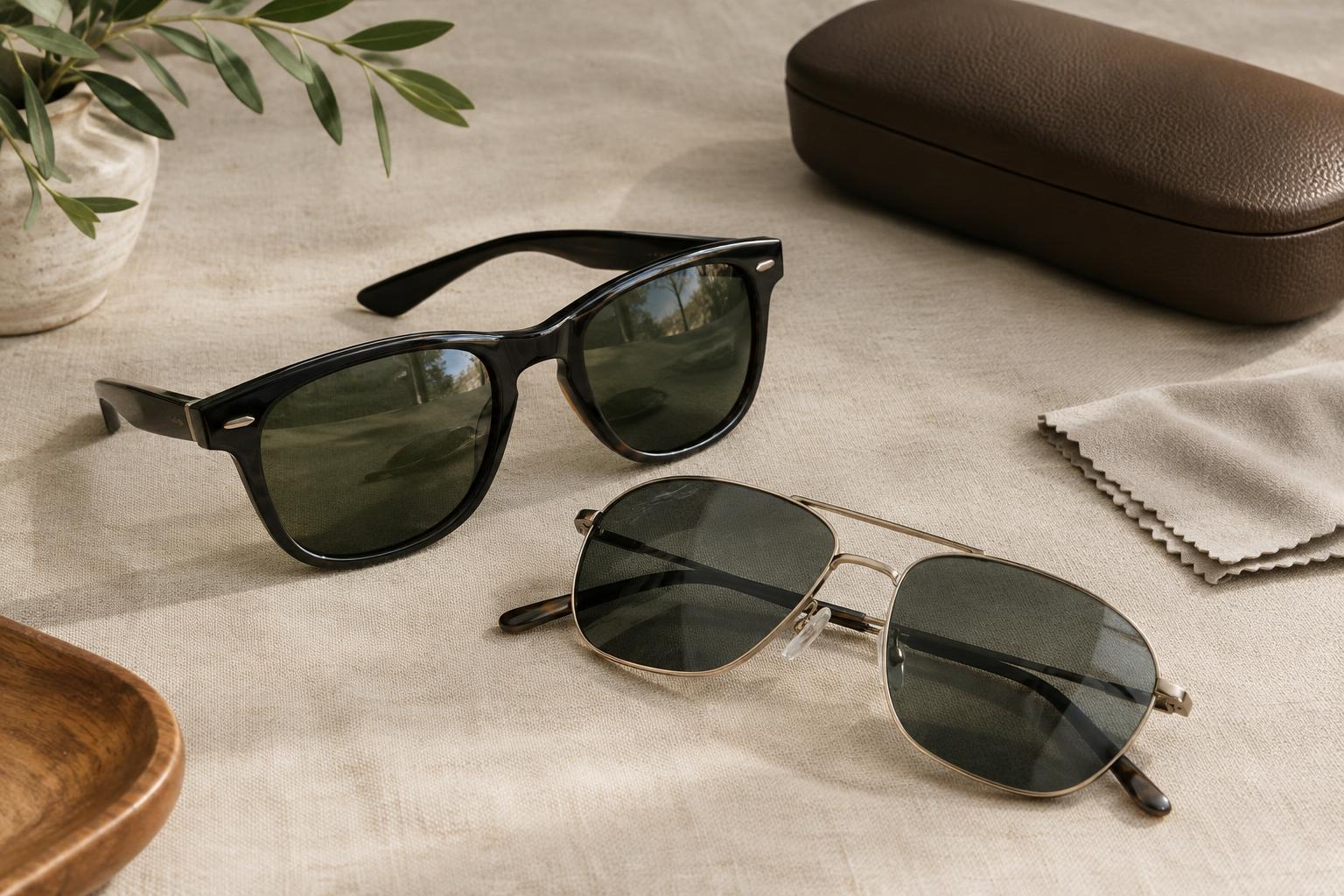
Think about your wardrobe, too. If you want one versatile pair, a simple frame in black, dark brown, or another color you regularly wear is easier to work into outfits than a statement design. Sunglasses do not need to match your shoes or belt exactly. They should look at home alongside the clothes you reach for most often.
Check protection before judging the tint
Look for a clear label stating that the lenses block 100% of UVA and UVB rays, or are marked UV400. Do not use lens darkness as a shortcut: a dark tint does not, by itself, tell you how much UV protection a lens provides. If the labeling is unclear, ask the seller for the lens specifications rather than assuming an expensive or dark pair is protective.
Coverage matters alongside the lens label. Frames that sit reasonably close to your face and cover more of the area around your eyes can help limit light coming in from the sides. You do not need an oversized frame, but very small lenses may be less useful when the sun is low or you are outdoors for a long stretch.
Find a fit that stays comfortable
Try sunglasses on for more than a few seconds if you can. The frame should sit level, without sliding down when you look toward the floor or pinching your temples. Its weight should feel supported at the bridge of your nose and around your ears, not concentrated at one sore spot. Check the fit with your usual hairstyle or hat, since either can change how the arms sit.
Frame proportions are more useful than rigid face-shape rules. A frame that is much wider than your face can look and feel loose; one that is too narrow may press at the sides. Notice where the bottom of the lenses falls relative to your cheeks, especially when you smile. If you wear prescription glasses, ask about prescription sunglass options and whether the frame can accommodate the lenses you need.
Choose lens features for your routine
A neutral gray tint tends to keep colors looking familiar, while brown and other warmer tints can make your view feel different. The choice is partly personal, so try looking through the lenses in conditions similar to those in which you will wear them. Mirrored finishes change the appearance of a pair, but their look alone does not establish its UV protection.
Polarized lenses can reduce reflected glare, which may be helpful around roads, water, or other bright surfaces. Polarization is separate from UV protection, so check for both if you want both. It can also make some phone, dashboard, or other screens harder to read from certain angles. If those displays are part of your routine, test a polarized pair with them before buying.
Buy for longevity and take care of the lenses
Before purchasing, open and close the arms and look for a frame that feels steady rather than twisted or flimsy. Check that it sits straight and that the lenses give you a clear view without distracting distortion. A comfortable, well-fitting pair you will actually wear may be a better purchase than a more elaborate one that spends most of its time in a drawer.
Keep sunglasses in a case when you are not wearing them, rather than dropping them loose into a bag. To clean the lenses, rinse away grit when possible, then use a lens-safe cleaner and a clean microfiber cloth. Wiping dusty lenses with a shirt can drag particles across the surface. With protection, fit, and daily use settled first, the final style choice becomes much easier.