Start with the gap between shoe and trouser
Sock length is easiest to choose when you look at the space your outfit leaves between shoe and trouser. Put on the shoes and trousers, then sit down. A hem that covers your ankle while standing may rise several inches when seated. Decide whether you want that space to show a sock, a bare-looking ankle, or neither.
For most outfits with full-length trousers, crew socks are a useful starting point. They generally reach high enough to cover the ankle when you walk, though the exact coverage depends on your height and the trouser hem. If you want to avoid exposed calf skin when seated in a suit or tailored trousers, choose socks that stay up to the mid-calf or over the calf. A sock that slides down defeats the point, so check its fit as well as its label.
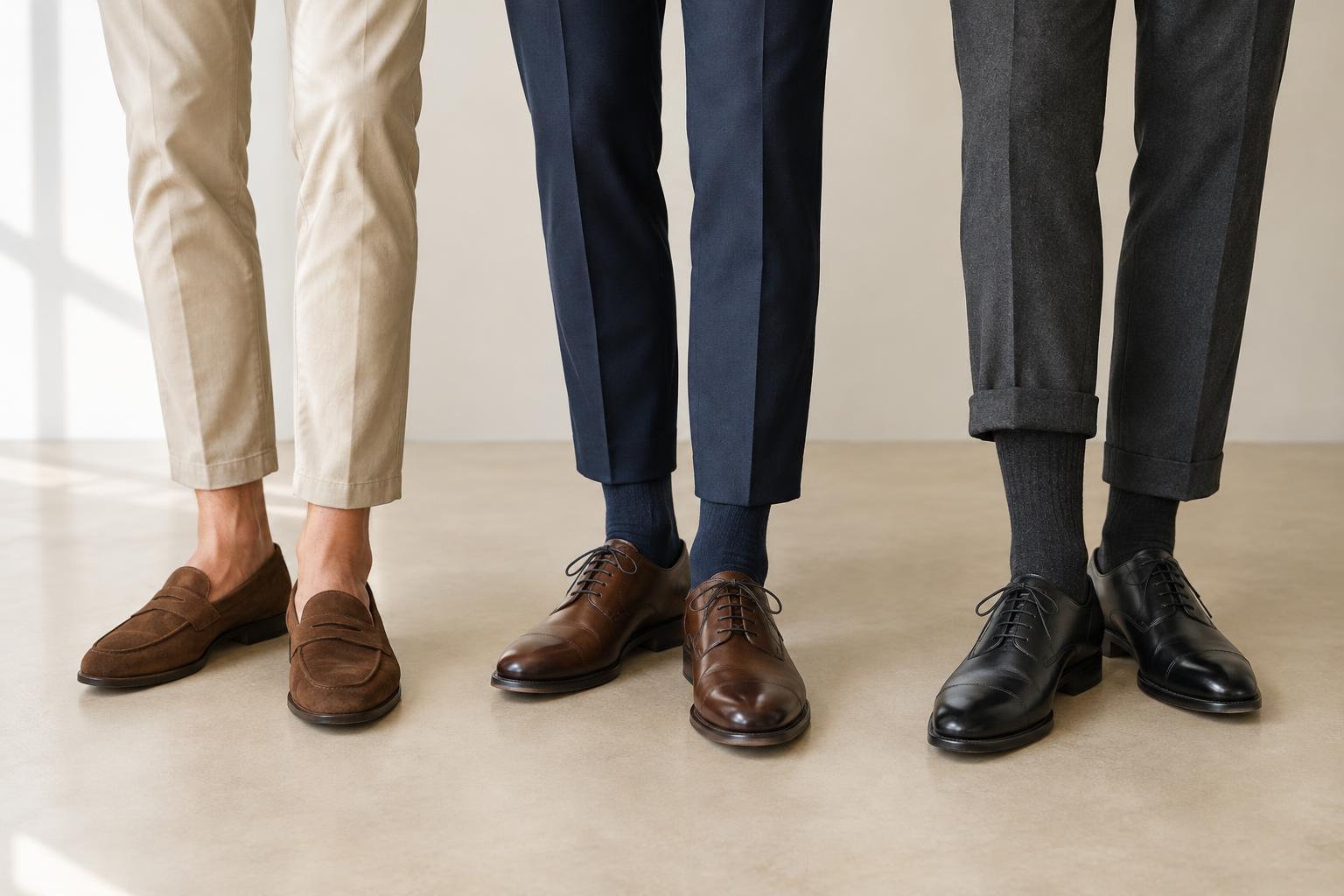
Cropped trousers create a different choice: make the sock visible on purpose, or use a no-show sock for a bare-ankle effect. Socks that end just above the shoe can look accidental if only a narrow strip appears. A full crew sock or a reliably hidden liner usually gives a clearer result.
Match the length to the shoe
With dress shoes and tailored trousers, longer socks are the dependable option. They cover the leg when the hem moves and sit comfortably within a more polished outfit. Dark leather shoes do not require dark socks in every case, but a visible ankle between a formal shoe and trouser often looks less deliberate than a continuous line of fabric.
Loafers can go either way. With a suit or full-length smart trousers, wear socks long enough to cover the leg. With lightweight chinos or cropped trousers in a relaxed outfit, no-show socks can create the appearance of a bare ankle while putting a layer between your foot and the shoe. Choose a pair cut low enough to stay hidden but secure enough not to bunch under your heel.
Casual sneakers work with no-show, ankle, or crew socks. Low-profile sneakers and shorts often pair neatly with no-show or ankle socks; crew socks can become a visible part of a sportier outfit. With boots, wear socks that rise above the boot opening so the top edge does not rub against your leg. A boot’s roomier fit may also accommodate a thicker sock, but thickness should not make the shoe feel tight.
Use trouser color as your default
When you are unsure about color, choose socks close to the color of your trousers. Navy socks with navy trousers, for example, make the transition at the hem feel smooth even if the shoes are a different color. An exact match is rarely necessary. Similar depth often matters more: charcoal socks can sit comfortably with dark gray trousers, while pale gray socks may stand out.
Matching socks to shoes is another option, especially when the trousers and shoes are already close in tone. The difference is most noticeable when the colors contrast. Black socks with light chinos and black shoes may visually separate the trousers from the footwear; socks closer to the chinos can make the leg line look less interrupted. Neither approach is a strict rule. Choose according to which part of the outfit you want to emphasize.
With jeans and casual trousers, there is more room to experiment. Dark blue, gray, brown, and cream socks are versatile because they connect easily to common denim and shoe colors. White socks are a natural choice with many casual sneakers, but can look stark beside dark tailored trousers and dress shoes.
Make contrast look intentional
A visible sock can add color without taking over an outfit. The simplest approach is to repeat a color already present elsewhere, such as a muted green from an overshirt or a burgundy tone from a sweater. If the rest of the outfit is restrained, the socks can be the only accent. Keeping that accent relatively muted makes it easier to wear across work and casual settings.
Patterns are easiest to handle when their background color works with the trousers. Small stripes, dots, or textured knits read as a subtle detail from a distance. For dressier occasions, a solid or quiet pattern is generally the safer choice; for casual outfits, a stronger pattern can be fun. Check how much sock actually shows before choosing one. A bright pattern that appears only when seated has a different effect from one fully exposed by cropped trousers.
Let comfort and fabric finish the decision
Color and length will not help much if the sock feels wrong inside the shoe. Thin, smooth socks usually fit more easily in close-fitting dress shoes and loafers. A heavier knit can work well with boots or substantial sneakers, provided the shoes have room. In warm weather, look for a comfortable, breathable blend; in colder weather, a warmer knit may be worth the extra bulk.
Build a small rotation around the shoes and trousers you wear most: a few long socks in your main trouser colors, no-show pairs if you like the bare-ankle look, and practical socks for boots or casual sneakers. Replace pairs that have stretched cuffs, worn heels, or slipping liners. The best sock choice is one that supports the outfit and stays comfortable after you leave the mirror.