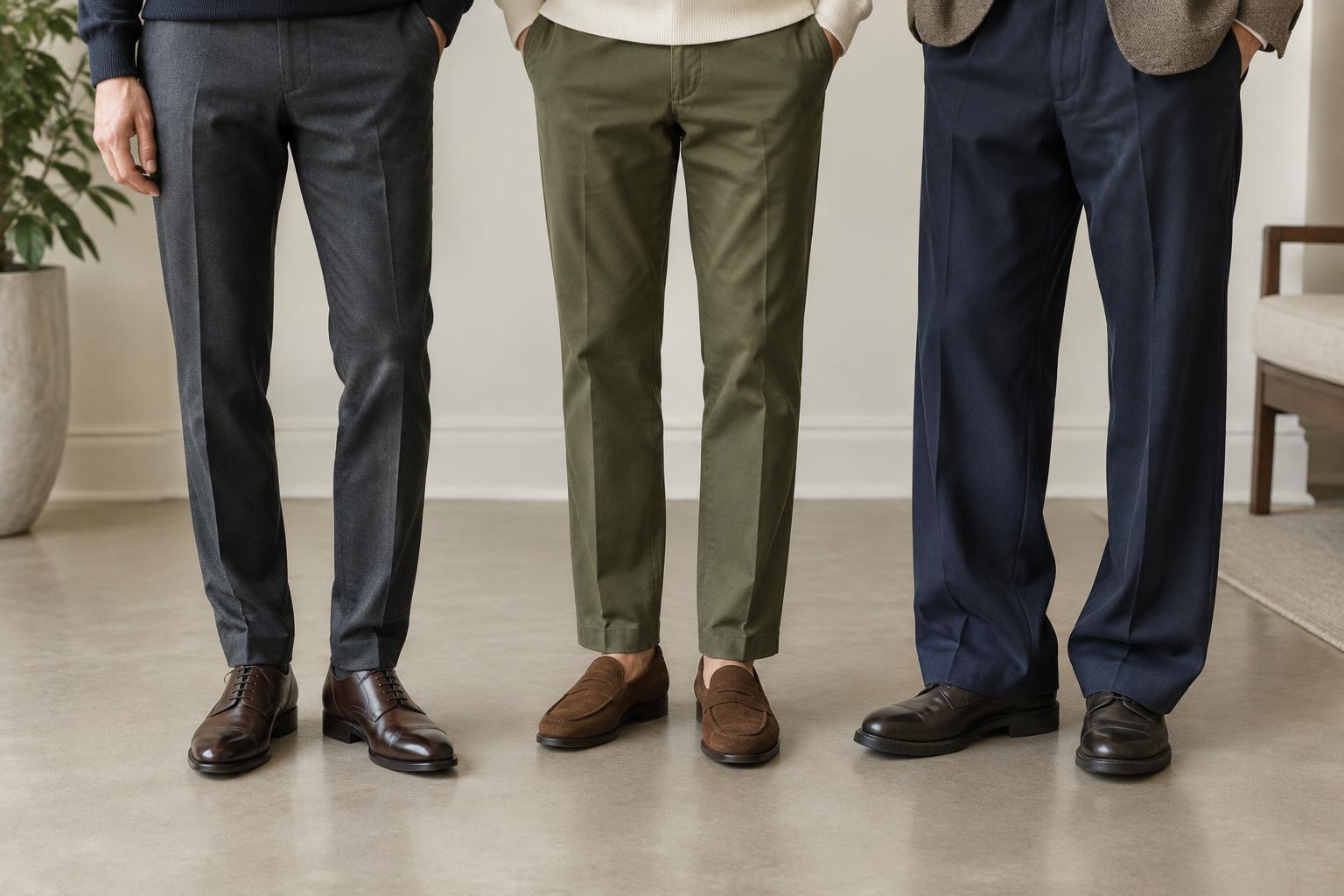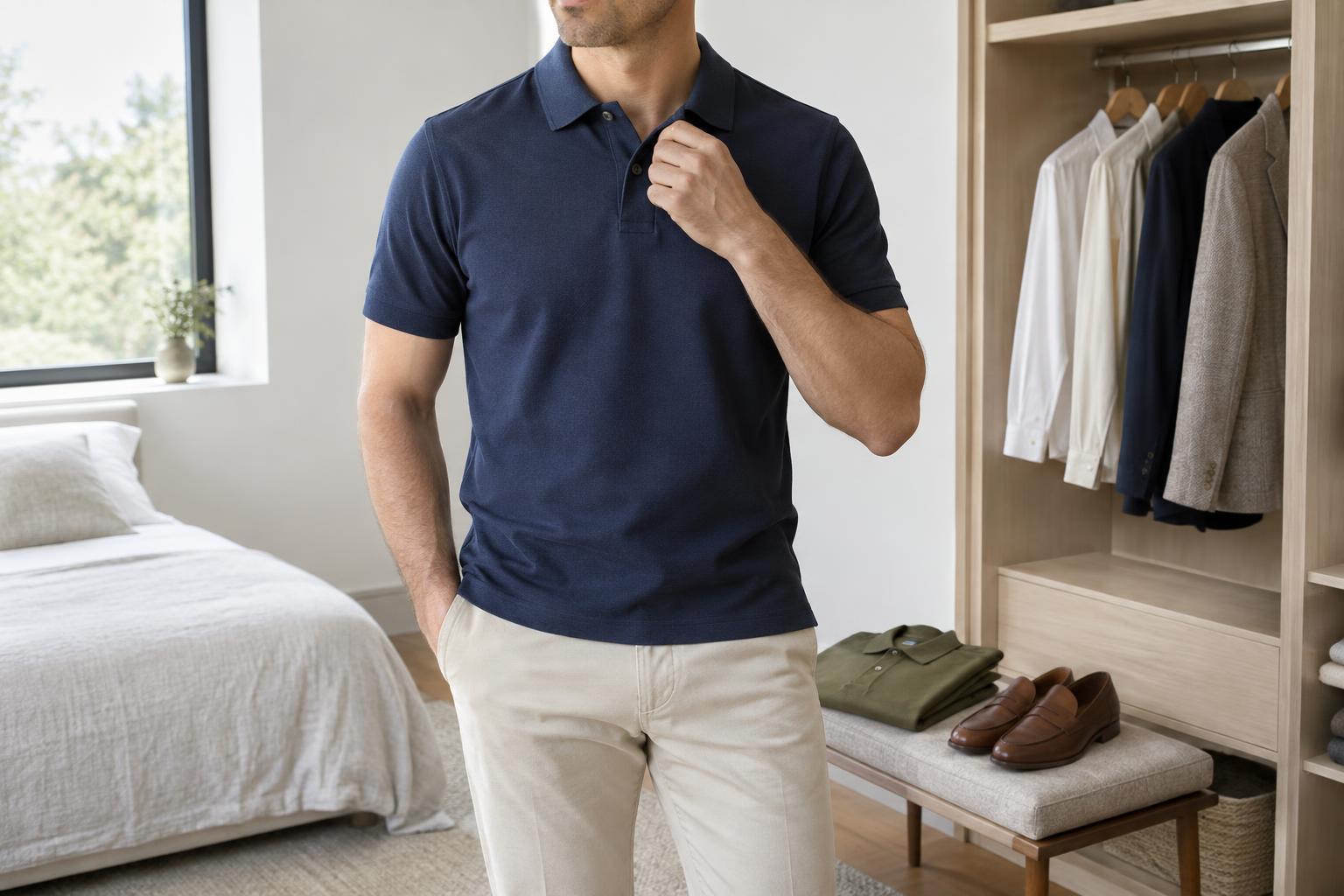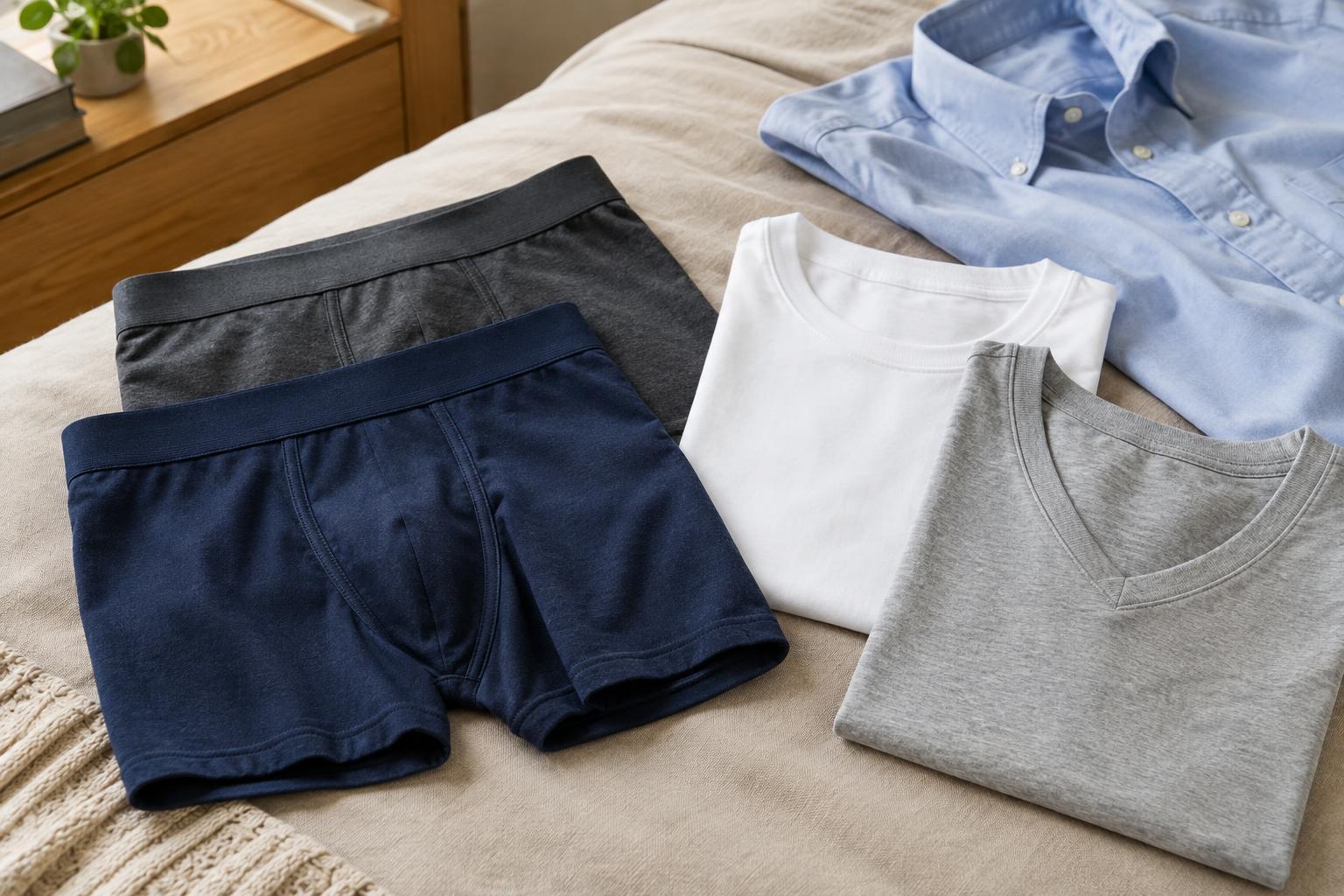
Start with the fit you can feel
Well-fitting underwear and undershirts should move with you without needing frequent adjustment. Check them while standing, sitting and walking: a garment that feels fine in front of a mirror may bunch or pull once you move. Use a brand’s size chart as a starting point, but pay attention to how the garment feels on your body rather than relying on the size printed on the label.
Snug is useful; tight is not. An underwear waistband should stay in place without digging in or folding over. An undershirt should lie close enough to avoid bulky folds beneath a shirt, while leaving room to raise your arms and take a full breath. If seams leave pronounced marks, fabric pulls across your chest, or you keep tugging a hem back into place, try a different size or cut.
Choose an underwear cut for your body and clothes
Briefs offer support without fabric down the thigh, which can make them useful under slimmer trousers. Boxer briefs add leg coverage and often feel secure beneath jeans or workwear. Loose boxers provide an airier feel but may gather under close-fitting trousers. Trunks have shorter legs than many boxer briefs; their compact shape can work well if longer legs tend to ride up. None is universally best, so start with the trousers you wear most often.
Beyond the basic cut, check the rise, leg opening and front shape. A low waistband may slip when you sit, while a high one may show above your trousers. Leg openings should stay put without gripping tightly. The front should have enough room without excess fabric bunching. If a pair rolls, twists or shifts throughout the day, its proportions may be wrong for you even if the waist size is correct.
Match undershirts to the shirts you wear
An undershirt can add a layer between your skin and an outer shirt, but it should not create a visible outline you did not intend. A crew neck suits an open-collar look only if you want the neckline to show. A V-neck is less likely to be visible with the top button undone, though the depth of the V matters. Sleeveless styles avoid sleeve lines but provide no fabric beneath the underarms. For a dress shirt or fine knit, try the full combination on in good light before deciding.
Look for a body length that stays tucked when you sit and reach, without leaving a thick roll of fabric at the waist. Sleeves should fit beneath your outer shirt without peeking out or gathering. If you wear a light-colored shirt, compare undershirt colors under that specific fabric: a shade closer to your skin tone may be less noticeable than bright white, but the result depends on the shirt’s weave and opacity.
Let fabric and construction guide comfort
Cotton often feels familiar and breathable, though a thick cotton layer can feel damp or bulky if you get warm. Cotton blends with a little stretch may hold their shape more closely. Modal and similar soft cellulosic fabrics can feel smooth and drape lightly; performance synthetics may dry more quickly but can feel different against the skin. Lightweight merino is another option for some people, though its feel and care requirements vary. If your skin is easily bothered, pay particular attention to fabric texture, seams and labels.
Construction can matter as much as fiber. Feel the waistband elastic, check whether seams sit where they might rub, and notice whether the fabric becomes see-through when stretched. A smooth undershirt can disappear beneath a shirt more easily than one with heavy ribs or thick seams. When trying a new brand, buying one pair or shirt first is a practical way to test it through an ordinary day before stocking up.
Keep the basics comfortable over time
Even a good fit changes as fabric and elastic wear. Follow the care label, avoid overheating garments that contain stretch fibers, and let them dry thoroughly before storing them. If an undershirt has permanently twisted seams or an underwear waistband no longer stays put, washing is unlikely to restore its original fit. Replace pieces when they stop doing their job, rather than waiting for obvious holes.
A small rotation of basics that work with your usual trousers and shirts is more useful than a drawer full of uncertain purchases. Once you find a cut, fabric and size you like, note the exact details: brands sometimes sell several styles with similar names. Comfort is the clearest test. The right base layers let you get dressed and then forget about them.