Start with the clothes you already wear
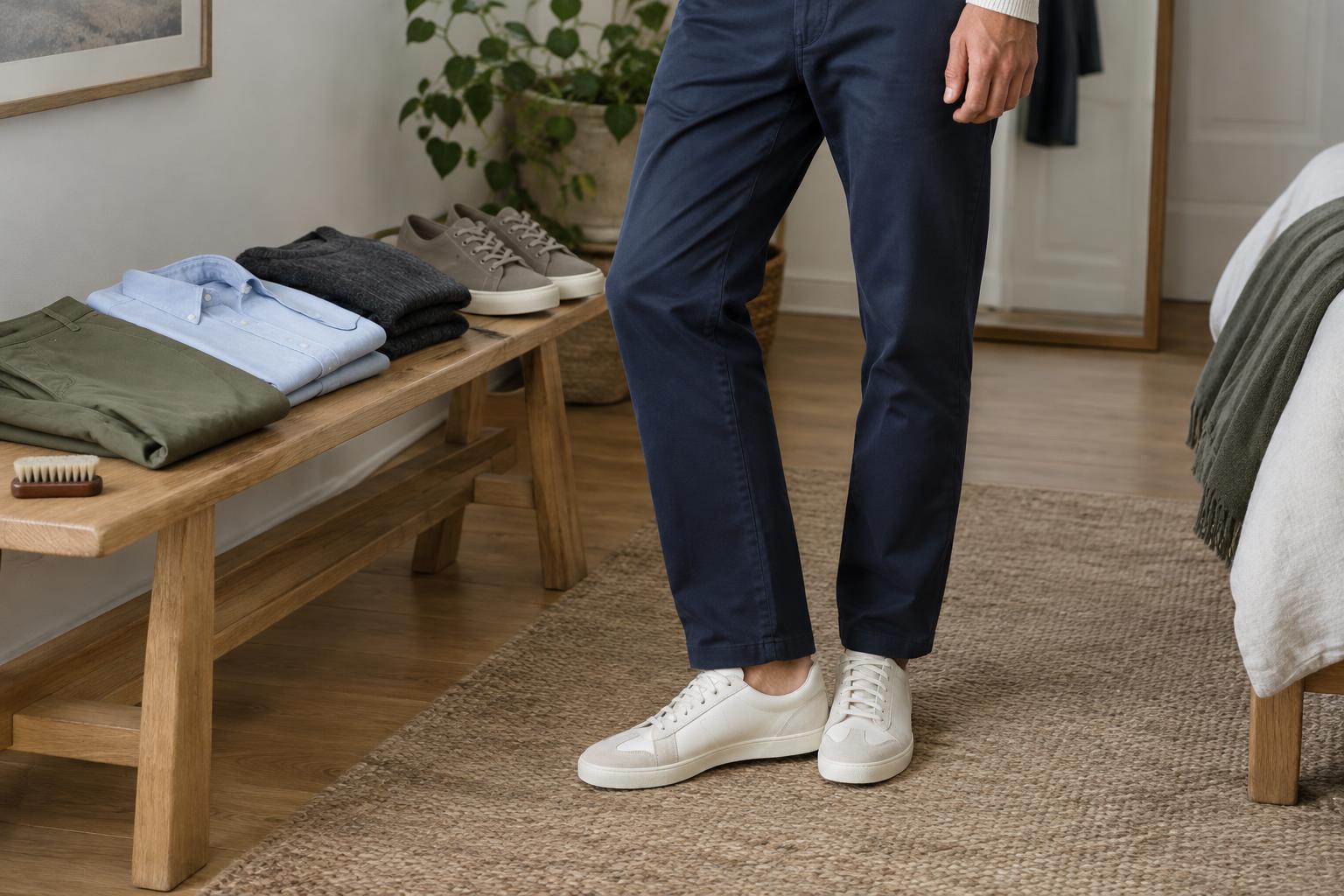
Before looking at sneakers, think about the outfits they will need to finish. If you usually wear straight-leg jeans, chinos and casual trousers, a clean low-top is an easy starting point. If your wardrobe leans toward wider trousers or relaxed layers, a slightly fuller shoe may feel more balanced. The goal is not to match every garment perfectly. It is to choose a pair you can reach for on an ordinary day without rebuilding the outfit around it.
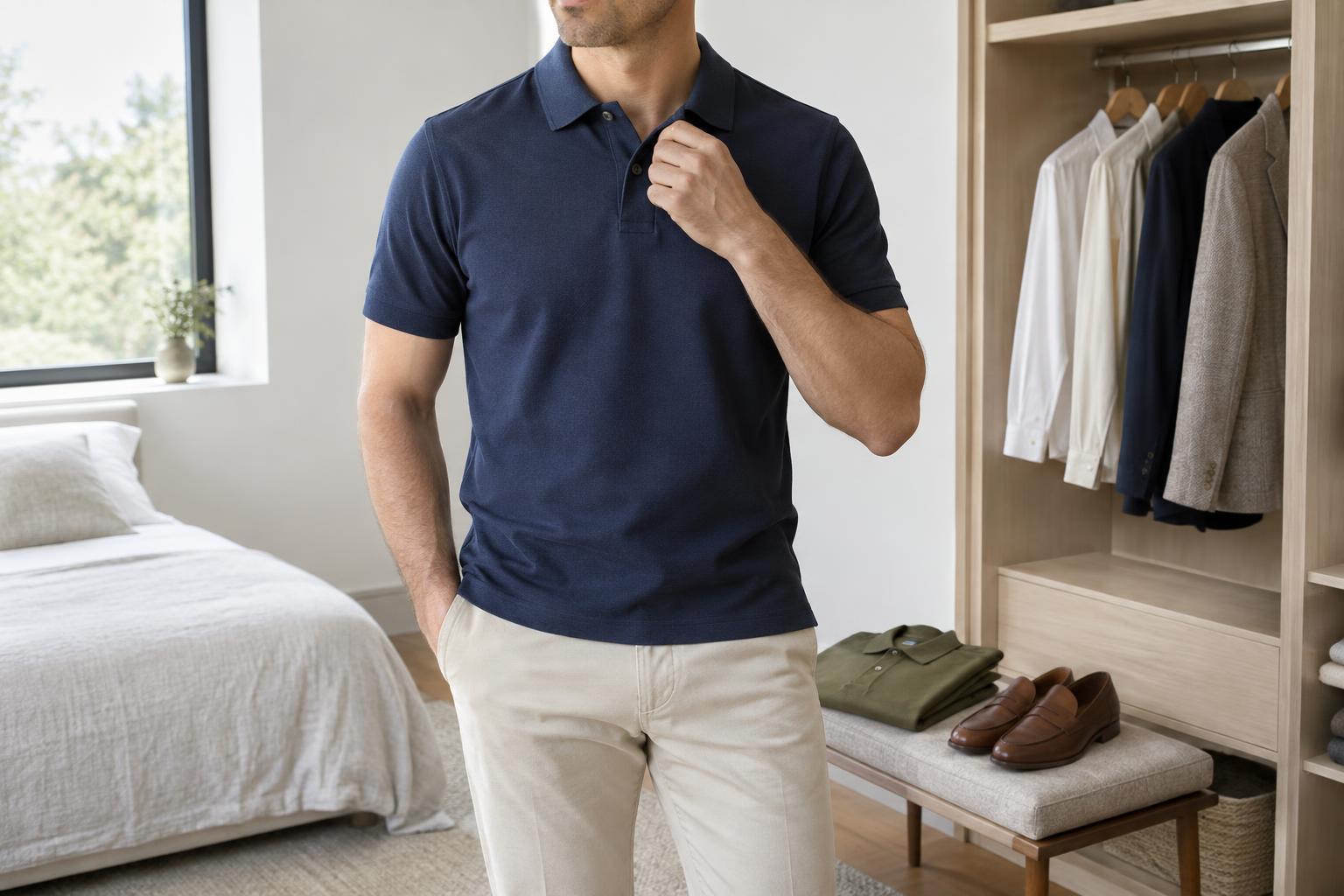
Notice where your shoes are likely to go. A simple leather sneaker can look tidy with a knit polo, overshirt or unstructured jacket, while a canvas or suede pair often feels more relaxed. Some workplaces welcome understated sneakers; others expect dress shoes. Choose for the settings you actually encounter rather than assuming one pair can cover every occasion.
It helps to name three outfits you would wear with the pair before buying it. If you can picture the sneakers with your most-used trousers and outerwear, they are more likely to earn their space. If they only work with one planned outfit, they may be a fun addition, but they are not your most versatile option.
Choose a shape that suits your trousers
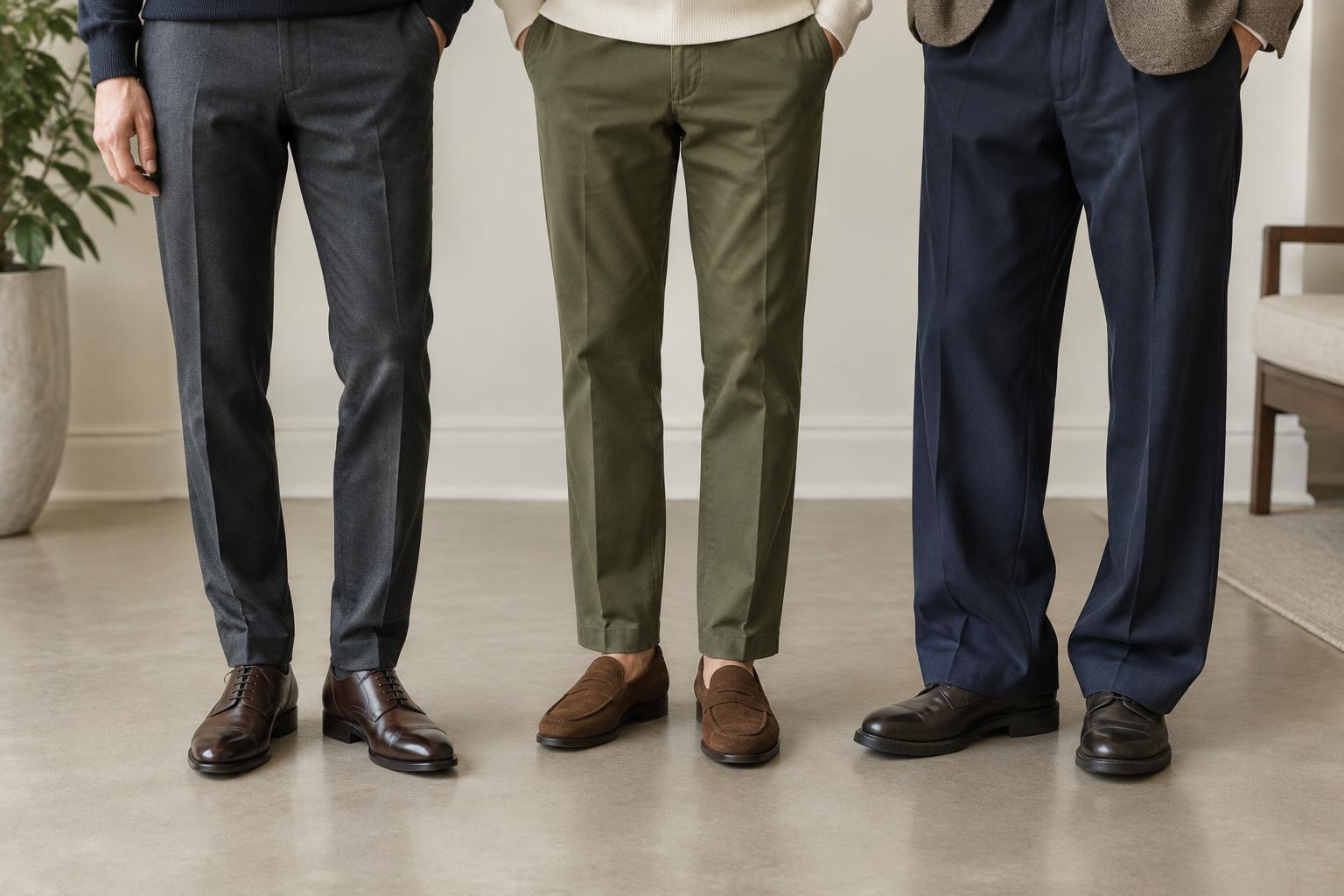
Sneaker shape affects an outfit as much as color does. Slim, low-profile styles sit neatly under tapered trousers and can keep a casual outfit looking restrained. Bulkier styles give wider trousers a stronger visual base, but they may look out of place beneath a narrow hem. Neither shape is universally better; look at the whole silhouette when deciding.
Pay attention to the sole, toe and visible details. A moderate sole and simple upper tend to be easier to combine with different clothes than an extreme platform, exaggerated toe or cluster of contrasting panels. That does not mean versatile sneakers must be featureless. A textured upper, distinctive stitching or a restrained accent color can add interest without dominating every outfit.
Try sneakers on with trousers similar to the ones you wear most. Look at where the hem falls and whether the shoe appears too narrow or heavy underneath it. A pair can look appealing on a shelf yet feel awkward with your usual clothes.
Get the fit right before settling on a color
A sneaker is not a good wardrobe investment if you avoid wearing it because it pinches or slips. Try on both shoes with the type of socks you expect to use. Your toes should have room to move without your foot sliding forward, and your heel should feel reasonably secure when you walk. If a shoe presses sharply across your forefoot or rubs your heel in the shop, do not count on regular wear to solve the problem.
Sizes and shapes vary between brands and models, so use the number on the box as a starting point rather than a verdict. Walk around, turn and check how the shoes feel when your feet flex. Also consider when you will wear them: a sneaker that feels fine for a short errand may not be the pair you want for a day spent on your feet. Comfort and versatility go together because the easiest shoe to style is only useful if you want to put it on.
Pick a color and material you can live with
White and off-white sneakers are popular for a reason: they can brighten denim, chinos and darker outfits. They also show dirt readily. If you prefer a quieter look or do not want frequent cleaning, consider cream, gray, navy, brown or black. A useful test is to compare a candidate with the colors you repeat most often. Shoes do not need to match your trousers, but they should feel at home beside them.
Materials change both appearance and upkeep. Smooth leather or leather-like uppers often wipe down more easily than absorbent fabrics, though care instructions depend on the specific shoe. Canvas has a lighter, casual character but can show stains. Suede brings texture and depth, yet it generally asks for more careful brushing and attention to wet conditions. Mixed-material sneakers can be appealing; check whether you are willing to care for each part.
Small details matter over time. Look at the stitching, how securely the sole joins the upper and whether the laces and lining feel suitable for regular use. Price alone cannot tell you how long a sneaker will last. A less expensive pair you wear often and maintain may serve you better than a costly pair whose color or fit makes it hard to use.
Keep them ready for the next outfit
Simple care makes casual sneakers easier to wear repeatedly. Brush off loose dirt after use, wipe marks before they settle and let damp shoes dry away from direct heat. Follow the maker’s instructions before applying cleaners or protective products, especially on suede or mixed materials. Clean laces can make a well-worn pair look noticeably tidier.
If sneakers are part of your daily uniform, giving a pair time to dry between wears can help keep them comfortable. You do not need a large collection to build useful outfits. One well-fitting, easy-to-style pair is a strong foundation; add another shape or color only when you know what the first pair cannot do. That approach keeps your choices practical and your wardrobe easier to use.