Start with the garment and the machine
Detergent residue can show up as pale streaks on dark trousers, a stiff feel in a cotton shirt, or a slippery coating on workout clothes. Too much detergent is a common cause, but it is not the only one. An overloaded drum, a cool cycle that does not dissolve a product well, or detergent placed in the wrong compartment can also leave traces behind.
Before choosing a detergent, check the garment’s care label and your washing machine’s instructions. A general-purpose detergent suits many everyday washable garments, while a product labeled for delicate fabrics may be a better choice for items whose labels call for gentle washing. If you have a high-efficiency machine, use a detergent labeled for it. Whatever the product, avoid treating a “more powerful” label as a reason to use more than directed.
Choose a form you can use accurately
Liquid detergent is easy to measure in small amounts and can be convenient for pretreating a washable garment. Powder can also work well, but it needs enough water and movement to dissolve; if you often wash on cool, short cycles, watch for undissolved grains. Detergent sheets and pods are convenient, though their fixed doses offer less flexibility for a small or lightly soiled load. Follow the package and machine directions for where each form goes rather than assuming they all belong in the drawer.
Concentration matters more than the size of the bottle or the cap. Two liquids may recommend very different amounts for the same load. Read the dose chart on the product you actually use, including any separate guidance for load size, soil level, or water hardness. If fragrance tends to linger on your clothes, consider an unscented option; scent is not a reliable sign that a garment is clean.
Measure for the load, not by habit
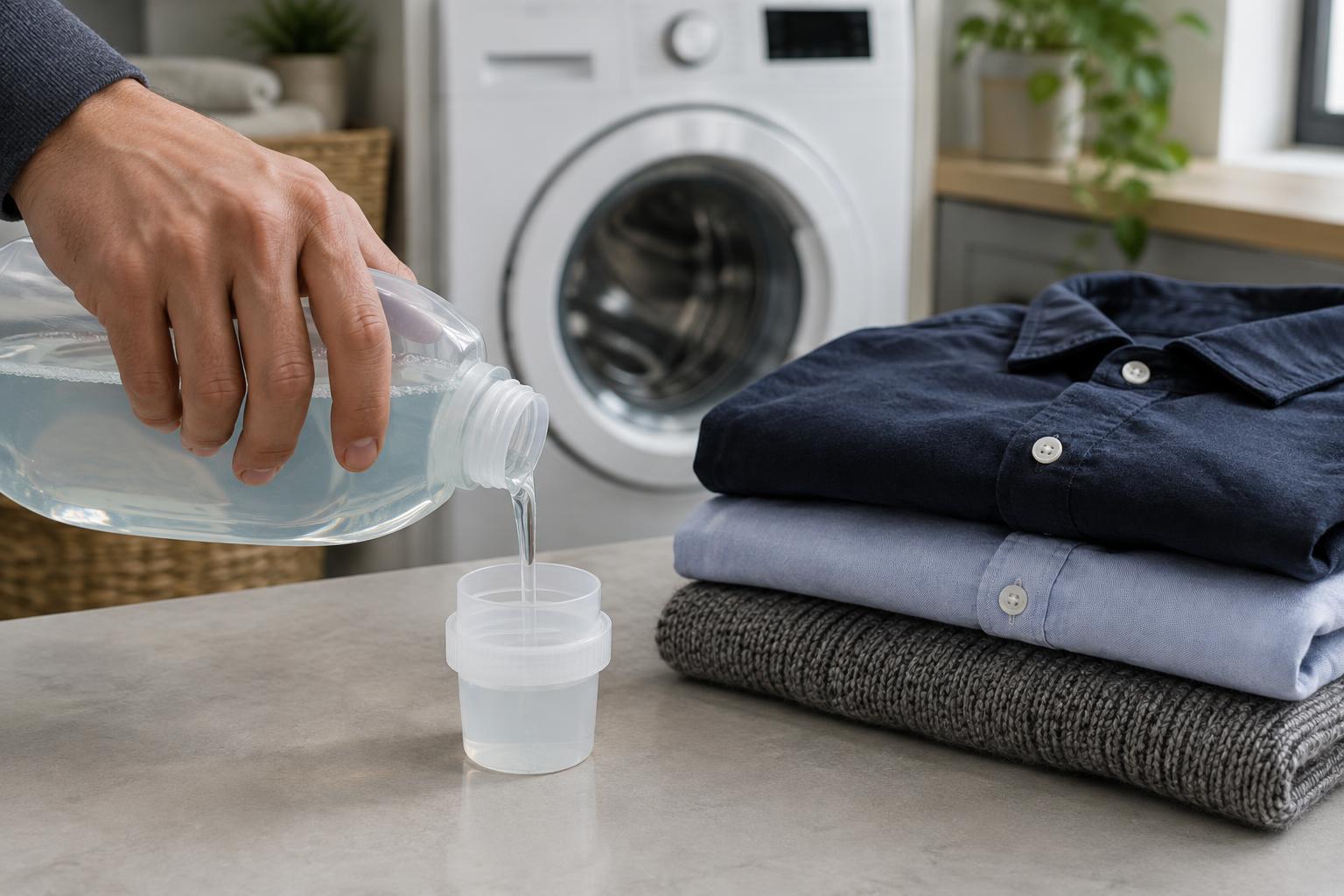
Use the detergent label’s recommended amount as your starting point, then match it to the load in front of you. A few lightly worn shirts usually need less than a full drum of muddy clothes. Check the markings on the measuring cap or scoop at eye level, and keep it with the product so you are not estimating from memory. If the markings are hard to see, a dedicated measuring spoon or cup can make repeatable doses easier. Do not use that utensil for food afterward.
Load size refers to the amount of laundry, not how tightly you can pack the machine. Clothes need room to move so water can carry detergent through the fabric and rinse it away. If the drum is crowded, split the wash rather than adding detergent to compensate. Where your machine offers a suitable extra-rinse setting, it may help with persistent traces, but correct dosing and an uncrowded load are better first steps.
Adjust carefully when water or soil changes
Hard water can affect how well some detergents work, and very dirty clothing may need more cleaning than lightly worn clothing. Use the product’s guidance for these conditions instead of making a large guess. If you are unsure about your water, begin with the standard dose and observe the results over a few washes. Adjust in small steps only when there is a clear reason, such as soil that remains after an otherwise appropriate cycle.
For a localized mark on a washable shirt or pair of chinos, pretreating according to the garment and product directions can be more useful than increasing detergent for the entire load. Test any treatment on a discreet area when colorfastness is uncertain. Keep fabric conditioner separate from detergent decisions, too: using more products at once can make it harder to identify what is leaving a coating.
Troubleshoot residue before the next wash
If clothes come out streaked or stiff, first check whether the mark is loose powder, a smeared product, or a stain that did not wash out. For a washable garment, try rinsing and rewashing it without adding more detergent, following its care label. Then inspect the detergent drawer or dispenser for buildup and clean it as your machine manual recommends. A product that collects in a clogged dispenser may not reach the wash at the intended time.
On the next load, measure a modest dose according to the label, leave space in the drum, and select a cycle appropriate for both the garments and the detergent. Change one thing at a time so you can tell what helped. A consistent measuring routine is less glamorous than a new laundry product, but it protects the feel and appearance of the clothes you reach for most.