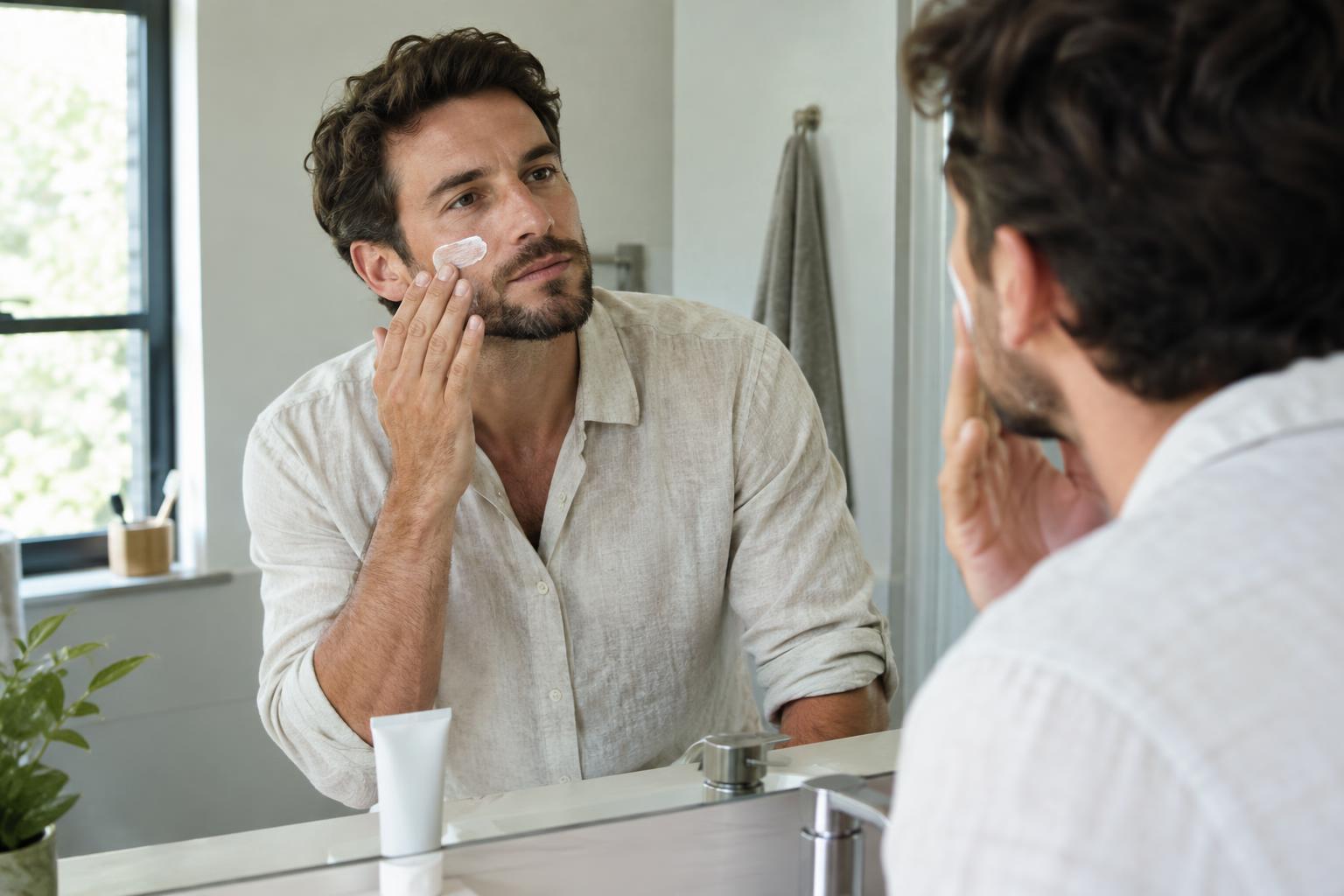
Choose a sunscreen you will actually wear
The best everyday facial sunscreen is one you find comfortable enough to use regularly. Start with a product labeled broad spectrum, which means it is intended to protect against both UVA and UVB rays. SPF 30 or higher is a practical starting point for daily wear. Beyond the label, pay attention to how the product feels after a few hours: a sunscreen that leaves you greasy, stings your eyes or clashes with your clothes may be hard to keep in your routine.
Facial sunscreens come in lotions, creams, fluids, gels and sticks. A cream may feel comfortable on dry skin, while a lighter fluid or gel may appeal if you dislike a heavy finish. These are preferences, not rules; the same format can feel different from one formula to another. If your skin is easily irritated, consider trying a small amount of a new product first and look for a formula that suits your sensitivities. Persistent irritation is a good reason to ask a dermatologist for guidance.
Consider finish, skin tone and facial hair
For an everyday grooming routine, the finish matters almost as much as the texture. Some sunscreens dry down with a noticeable sheen, while others look more matte. Neither is inherently better: choose the effect you like under normal indoor light, not just in a mirror immediately after applying. If you wear a collared shirt or tie, check whether the product transfers onto the collar after it has settled.
Some formulas leave a visible pale cast, especially on deeper skin tones or around a dark beard. Tinted options can help, provided the shade blends naturally with your complexion. If you have facial hair, work sunscreen onto the skin beneath short stubble and cover exposed areas around the beard line, upper cheeks and neck. A dense beard can make even application difficult, so a hat or other shade may be useful when you expect extended time outdoors.
Give application its own step
Apply sunscreen to clean, dry skin as part of your morning routine, following the product’s directions for the amount and timing. Use enough to form an even layer rather than stretching a small dab across your whole face. Work it over the forehead, nose, cheeks and chin, then include the ears, hairline, jaw and any exposed part of the neck. These edges are easy to miss when you are getting ready in a hurry.
If you use a moisturizer, beard product or makeup, check how the layers sit together. Let each product settle before adding the next if they tend to pill or slide. An SPF in a moisturizer can be convenient, but it only helps where you apply enough of that product; do not assume a thin layer provides the coverage stated on the label. You can keep the routine simple by choosing a sunscreen that also feels comfortable as your daytime moisturizer.
Adjust for your day, not just the season
A short commute, a long walk and an afternoon outdoors place different demands on your routine. Check the sunscreen label for reapplication directions, and pay particular attention after sweating, swimming or wiping your face. If you expect those conditions, a water-resistant formula may be more practical, though water resistant does not mean it stays on indefinitely. A spare sunscreen in your bag can make reapplication easier when plans change.
Sunscreen is one part of dressing for the day. A brimmed hat, sunglasses, shade and clothing that covers exposed skin can all make time outdoors more comfortable. In cooler months, it is easy to forget the face and neck because the weather does not feel sunny; keeping sunscreen near your toothbrush or other morning essentials can make it a routine step rather than a seasonal afterthought.
Build a routine that stays manageable
You do not need a shelf of products to get started. Pick one facial sunscreen with a finish you like, use it according to the label, and notice where the routine breaks down. If you avoid applying it because it feels sticky, try a different texture. If you regularly miss your ears or neck, make those areas part of the same pass as your face. Small adjustments are often more useful than an elaborate routine you cannot maintain.
Keep the container closed and store it according to its label, rather than leaving it in excessive heat. Check its expiration information, especially if you use the same bottle over several seasons. The goal is straightforward: a product that sits comfortably alongside your grooming and wardrobe choices, applied thoroughly enough that wearing it becomes an ordinary part of getting dressed.