Start with the overall shape
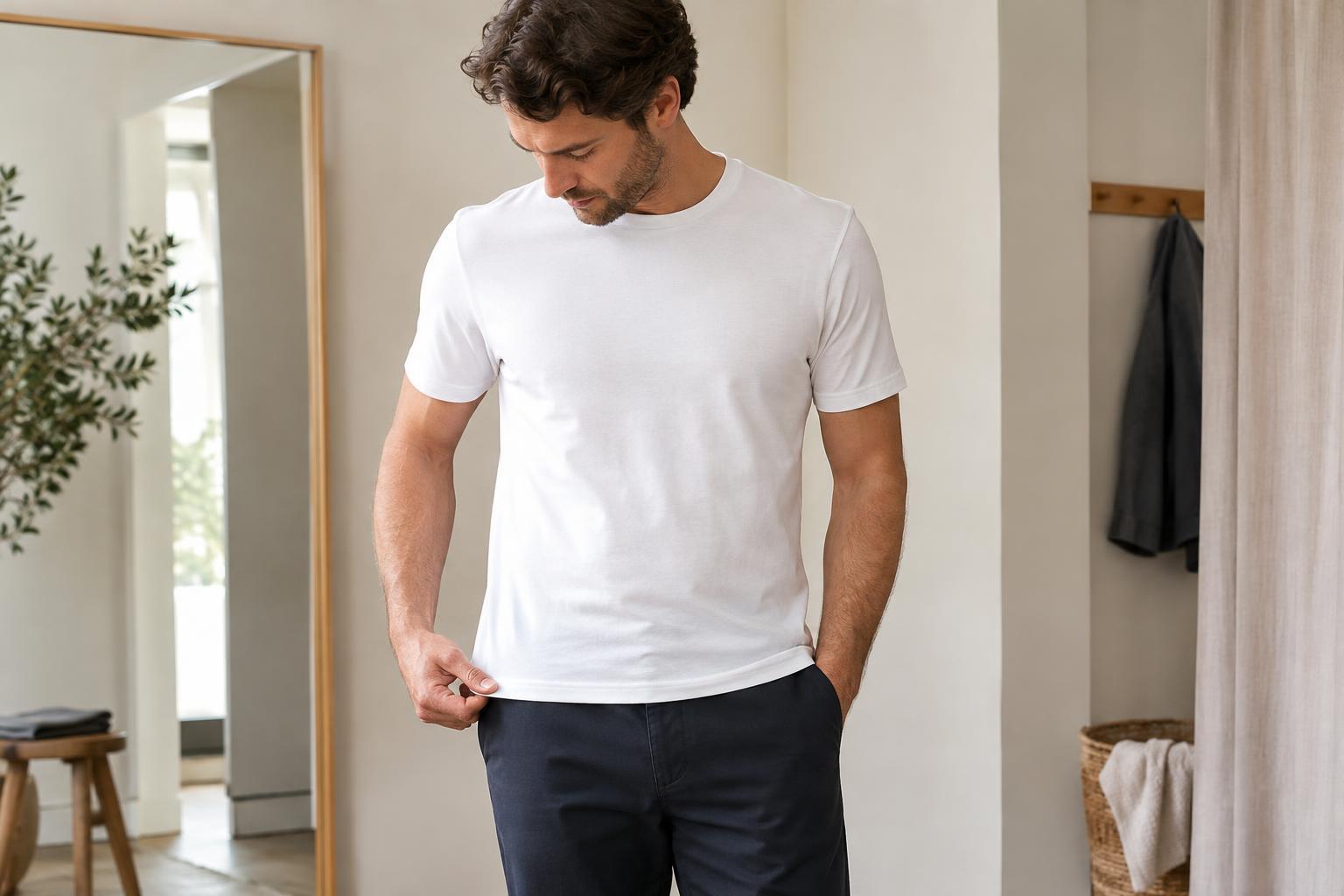
A well-fitting T-shirt follows your body without clinging to it or hanging like a box. The shoulder seams are a useful starting point: on a standard-cut tee, they should sit close to the ends of your shoulders. Seams that pull inward can make the shirt feel tight across the upper body; seams that fall far down your arms create a looser look. Neither is automatically wrong, but knowing which effect you want makes shopping easier.
Check the chest and waist while standing naturally. You should be able to move your arms and breathe comfortably without the fabric stretching across your chest. At the same time, excess fabric should not billow around your midsection unless you are choosing an intentionally relaxed fit. Use these checks before focusing on the details: the right sleeve or neckline cannot rescue a shirt that feels uncomfortable through the body.
Choose a length that stays balanced
For an untucked T-shirt, look at where the hem falls relative to your waistband and hips. A versatile length usually covers the waistband and ends around the upper-to-middle hip area. If the hem barely reaches your waistband, it may rise too high when you reach overhead. If it extends well below your hips, it can make your torso appear longer and may bunch beneath a jacket.
Try the shirt with the trousers you wear most often. A T-shirt that looks balanced with jeans may feel too long over higher-rise trousers, while a shorter one may work well under an open overshirt. Raise your arms, sit down, and bend slightly. The hem does not need to stay perfectly still, but it should settle back into place without constant adjustment. If you plan to tuck the shirt in, allow enough length to keep it tucked during normal movement.
Pay attention to sleeves
Sleeve length changes the impression of a T-shirt more than it might seem. On a conventional short-sleeve tee, a hem somewhere around the middle of the upper arm is an adaptable choice. Shorter sleeves can look sharper or sportier, while longer sleeves lend themselves to a relaxed outfit. Compare the sleeves with your other clothes rather than treating one measurement as a rule for every body.
The opening matters as much as the length. It should sit comfortably around your arm without pinching or sticking out stiffly. If fabric gathers heavily under the arm, try a different cut or size. If the sleeve grips your arm and pulls when you move, sizing up may help, though a different pattern may be the better answer. Check both arms in a mirror with your hands at your sides; a sleeve can look fine when posed but behave differently in everyday wear.
Pick a neckline you will enjoy wearing
A crew neck is an easy starting point for a versatile wardrobe. Look for a collar that lies flat against the base of your neck without pressing uncomfortably or gaping. A tight opening can feel restrictive, particularly under another layer. A stretched or overly wide one may look untidy on its own and show more than you intend beneath a shirt or sweater.
A V-neck creates a more open line, but its depth makes a difference. A shallow V is generally easier to wear with casual layers; a deep V becomes a more noticeable feature of the outfit. Whatever shape you prefer, inspect the collar after trying the shirt on. It should return to its shape rather than twisting or rippling. If you often wear a T-shirt under an open button-down, check how the two necklines look together.
Make a final check before buying
Fit can vary between T-shirts marked with the same size. Fabric weight, stretch, and cut all affect how a shirt hangs, so try more than one size when possible. A heavier knit may hold a straighter shape, while a softer, lighter fabric may drape closer to the body. Neither is inherently better: choose the feel and appearance that suit how you plan to wear it.
Before deciding, look at the T-shirt from the front, side, and back, then move as you normally would. Check whether the hem, sleeves, and collar still look comfortable together. Read the care label, too. Washing and drying methods can affect a shirt’s fit over time, so care for it as directed and avoid relying on a hoped-for change in size. The best choice is one that fits well now and works with clothes you already own.