Start with the clothes you actually wear
A versatile color palette is a group of colors that lets you combine more of your clothes with less effort. It is not a rule that every item must match every other item. Your goal is to make the pieces you reach for most often—trousers, shirts, knitwear, jackets and shoes—work together in several useful outfits.
Before choosing colors, look at your routine. Someone who wears tailoring during the week may need a different balance from someone who lives in denim and casual layers. Lay out the clothes you wear regularly and notice which colors already cooperate. Also identify the items you like but rarely wear because they seem to require a specific shirt, pair of trousers or shoes. That gap tells you more than an idealized list of wardrobe staples.
Choose a small set of core neutrals
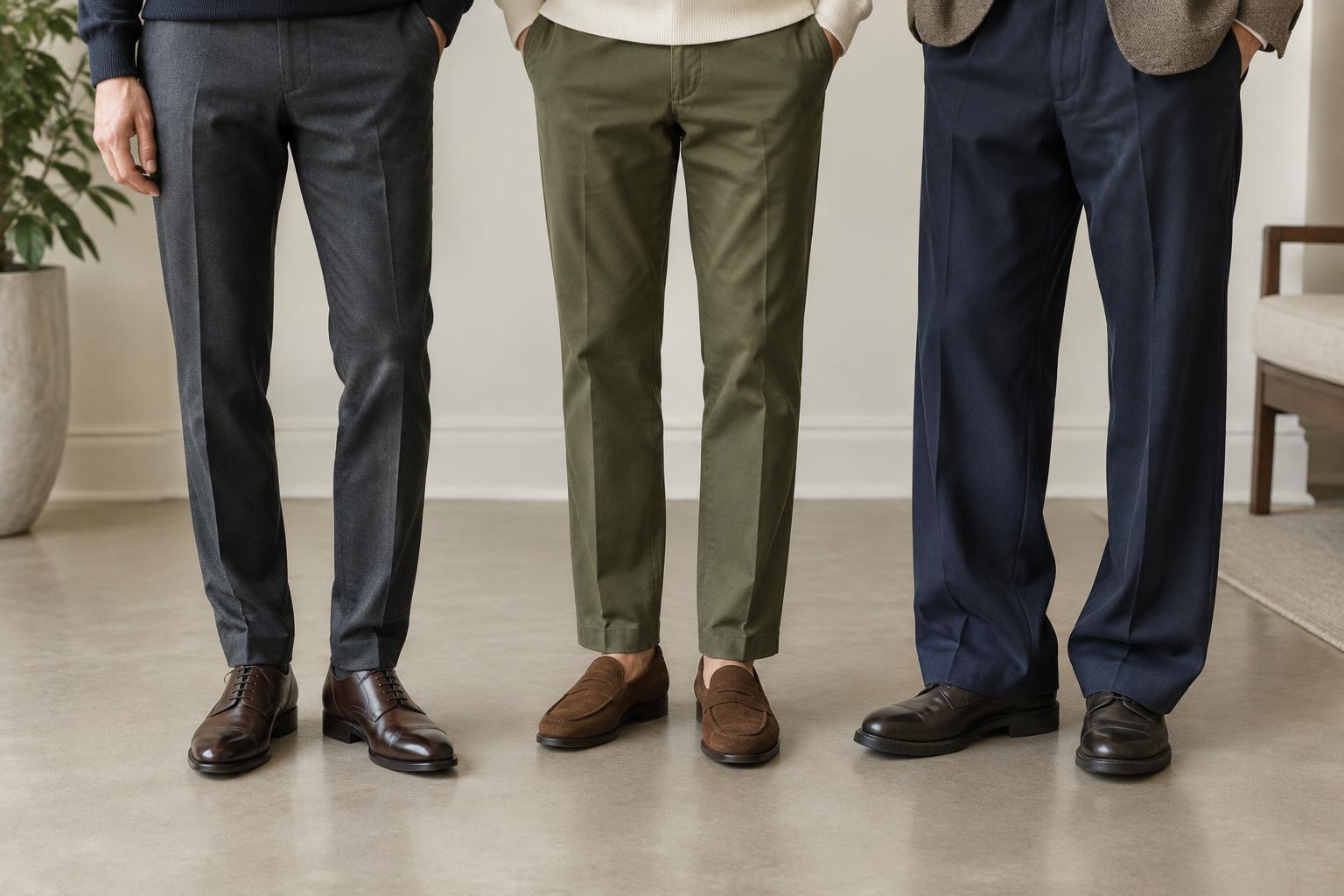
Begin with two or three neutrals for your most frequently worn pieces. Navy, charcoal, grey, brown, olive, cream and white can all play useful roles; black can too, especially if it already suits your clothes and preferences. You do not need to own every neutral. For example, navy and grey might anchor a work wardrobe, while olive, cream and brown could support a more relaxed one.
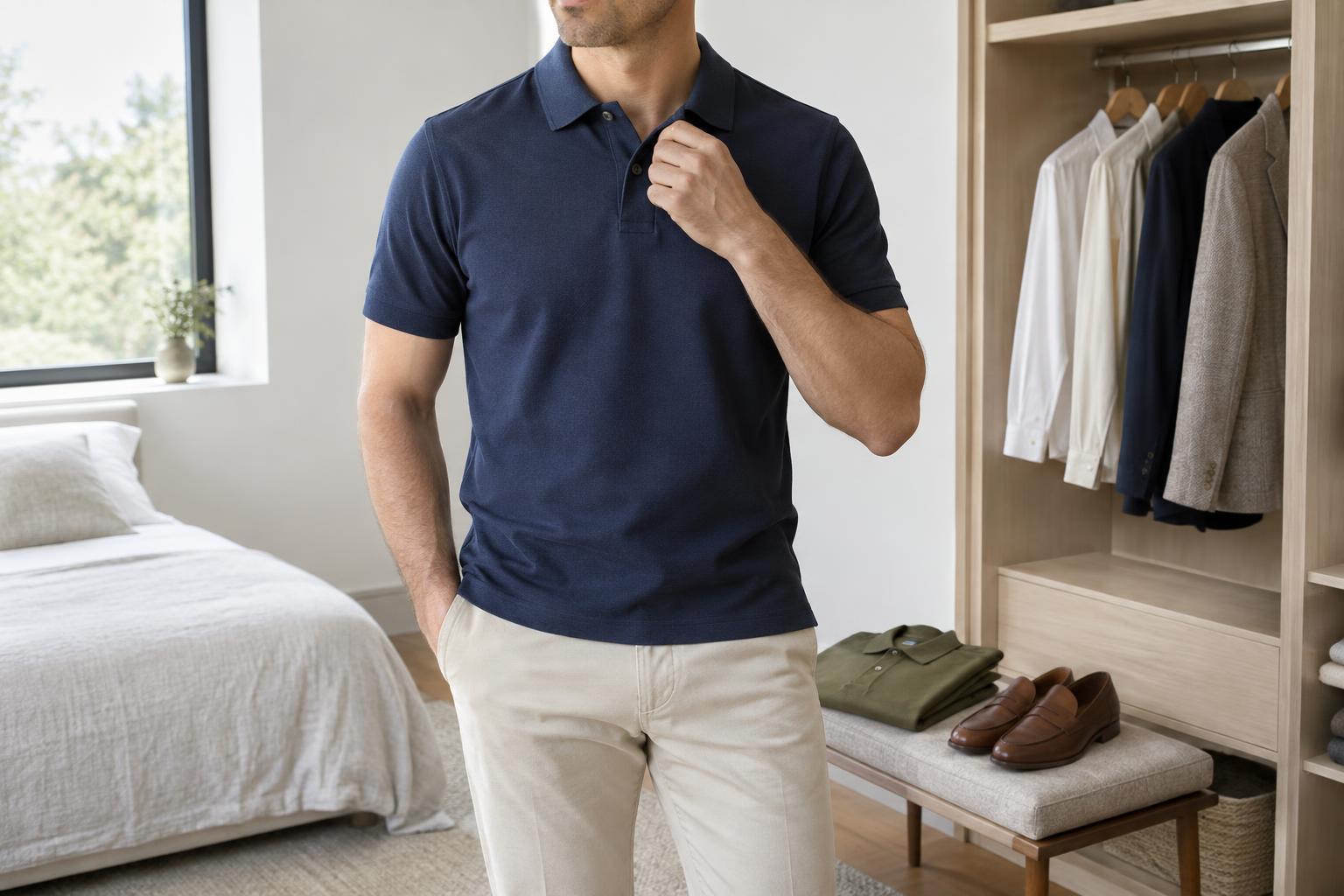
Give each color a job. One might be your usual choice for jackets, another for trousers, and a lighter shade for shirts or T-shirts. Consider your footwear as part of the plan: brown shoes often sit comfortably with navy, grey and earthy colors, while black footwear can provide a sharper finish with black, charcoal and many tailored outfits. These are starting points, not restrictions. Texture, formality and the rest of an outfit matter as much as the color names.
Add accents without making outfits difficult
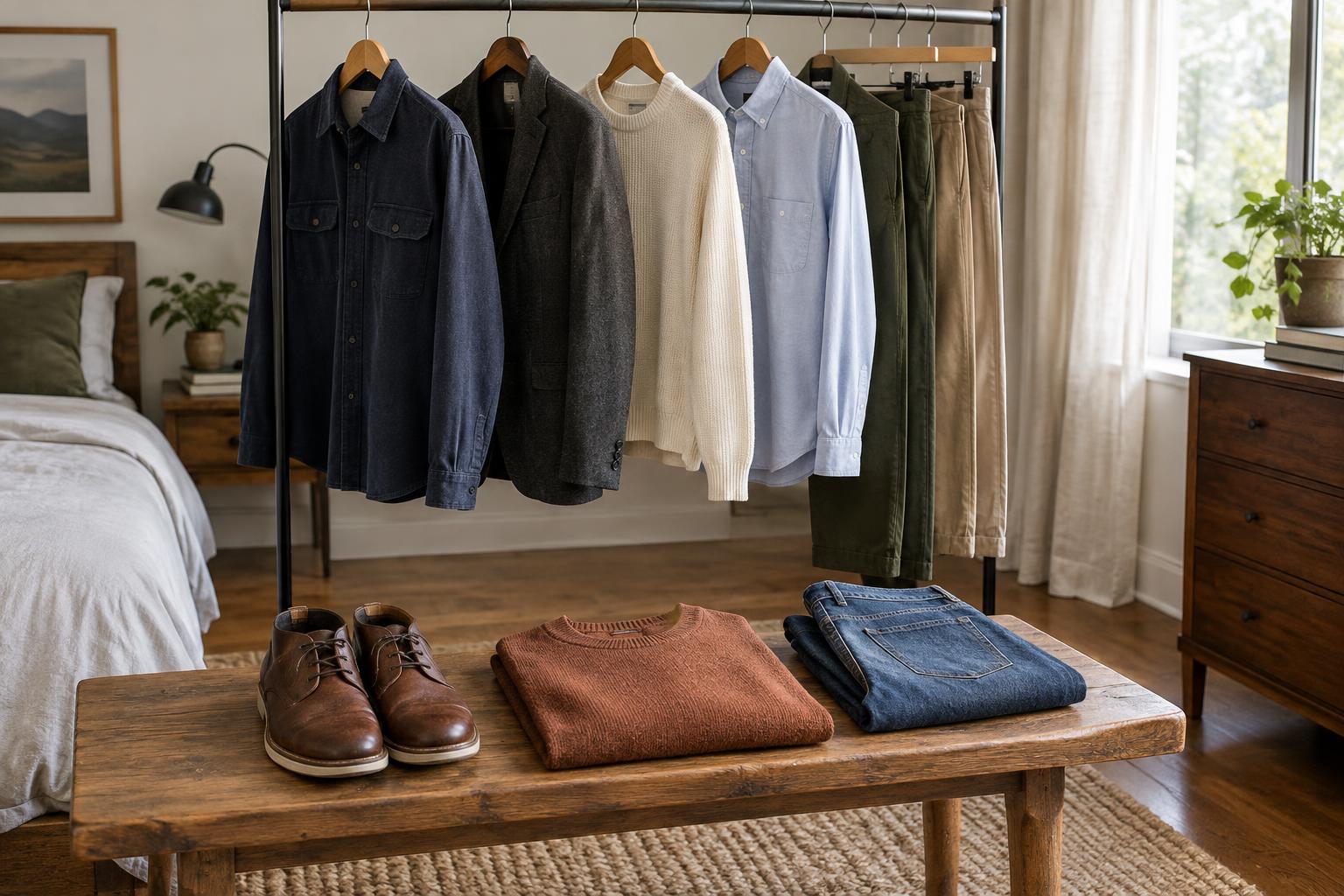
Once your core colors are clear, choose one or two accent colors you genuinely enjoy wearing. Burgundy, forest green, rust, pale blue and muted pink are possibilities, but there is no universal best choice. An accent is easiest to use when it appears in pieces you can change often, such as shirts, knitwear, scarves or casual overshirts. You can then wear it with familiar trousers and outerwear rather than building a separate outfit around it.
Pay attention to intensity as well as hue. A vivid green shirt and a subdued green sweater may behave very differently next to the same navy jacket. If you prefer quiet outfits, try softer or deeper versions of your chosen colors. If you enjoy stronger contrast, a brighter accent can work well against restrained neutrals. The aim is to repeat a color when you want to, not to feel obliged to wear it in every outfit.
Test combinations in real outfits
A palette becomes useful when it survives an ordinary morning. Put together a few complete outfits for situations you face: a workday, a casual weekend, a dinner out and a change in weather. Include shoes and outerwear in each test. A shirt that works with your trousers but clashes with your only jacket may be less versatile than it first appears. Photograph combinations you like so you can refer to them later.
Do not judge combinations by color alone. Two similar shades can look intentional when their textures differ, as with a smooth cotton shirt under a textured knit. Conversely, a collection of perfectly coordinated colors may still feel flat if every garment has the same weight and finish. Check the overall balance in natural light when possible, and decide whether you feel comfortable wearing the result.
Use your palette as a shopping filter, not a uniform
Before buying a new item, picture it with at least two or three pieces you already own and for occasions you actually have. Ask whether you have the shoes and layers to complete those outfits. If an appealing color needs several more purchases before you can wear it regularly, it may be better as a small accent—or a purchase to postpone.
Leave room for change. Light cotton and linen often invite different color choices from heavy wool and outerwear, and your preferences may shift over time. You can adjust an accent or add a seasonal shade without replacing your foundation. A good palette gives your wardrobe some consistency while still letting individual garments, textures and personal taste keep it interesting.