Start with how your hair behaves
The best haircut is not necessarily the one that looks sharpest in a photo. It is the one that looks good on your head after an ordinary morning. Before choosing a style, notice what your hair does when it is clean, dry, and free of product. Does it fall forward, stand up, curl tightly, or lie flat? Check for a crown that swirls, a fringe that separates, or sides that stick out as they grow. These growth patterns affect where a barber can place weight and how much daily styling a cut will need.
Be clear about your routine, too. A cut that needs a blow-dryer, brush, and product may be worth it if you enjoy using them. If you prefer to towel-dry and leave, ask for a shape that settles naturally. Your usual dress code matters as well: a neat, adaptable cut can move between work clothes and casual outfits without demanding a different styling routine.
Let texture guide the shape
Straight hair often shows the outline of a cut clearly. On finer straight hair, some length and texture on top can create movement, while an overly long top may fall flat. Coarser straight hair may need enough length to bend rather than stand out, particularly at the sides. If your hair is wavy, keeping some length usually lets the wave form; cutting it at an awkward point can make it expand or flip unpredictably.
Curly and coily hair can change shape considerably as it dries. A photo of wet hair may therefore be a poor guide to the finished length. Consider whether you want a defined, rounded shape, a short and even cut, or longer curls with controlled volume. Ask how the proposed cut will sit when dry and how often it will need reshaping. Whatever your texture, choose a reference photo with hair that behaves somewhat like yours rather than expecting styling alone to reproduce a different texture.
Use density to manage volume and coverage
Texture describes the hair’s pattern and feel; density describes how much hair grows across an area. Thick-looking hair is not always dense, and a person can have fine individual strands but plenty of them. Dense hair may benefit from carefully placed layers or weight removal so it does not form a heavy block. Removing too much, however, can leave shorter hairs that puff out. Tell your barber where your hair feels bulky instead of asking them to thin it everywhere.
With lower-density hair, clean lines and a little controlled texture often work better than trying to build a large, unsupported shape. An extreme contrast between very short sides and a long top can emphasize a sparse area for some people; a softer transition may feel more balanced. If a fringe is important to you, check how it looks both styled and unstyled. A haircut can create the impression of fullness, but it cannot change the amount of hair present.
Treat face shape as a guide, not a rule
Face-shape advice can help you think about proportions, but it should not dictate a single approved haircut. Look at the overall effect you want. Height on top can make a face appear longer, while width at the sides can make a narrow face appear broader. A fringe may visually shorten the forehead, and a close fade can draw attention to the jaw and head shape. Small adjustments to these elements are often more useful than trying to label your face as square, round, or oval.
Consider your features from the front and in profile, including your hairline, ears, beard, and glasses if you wear them. A beard can change the visual balance of a haircut, and frames may compete with a heavy fringe. The aim is not to hide features but to choose proportions you like. If you are unsure, start with a moderate version of a style; you can usually take more length off at the appointment, but you cannot put it back.
Give your barber useful information
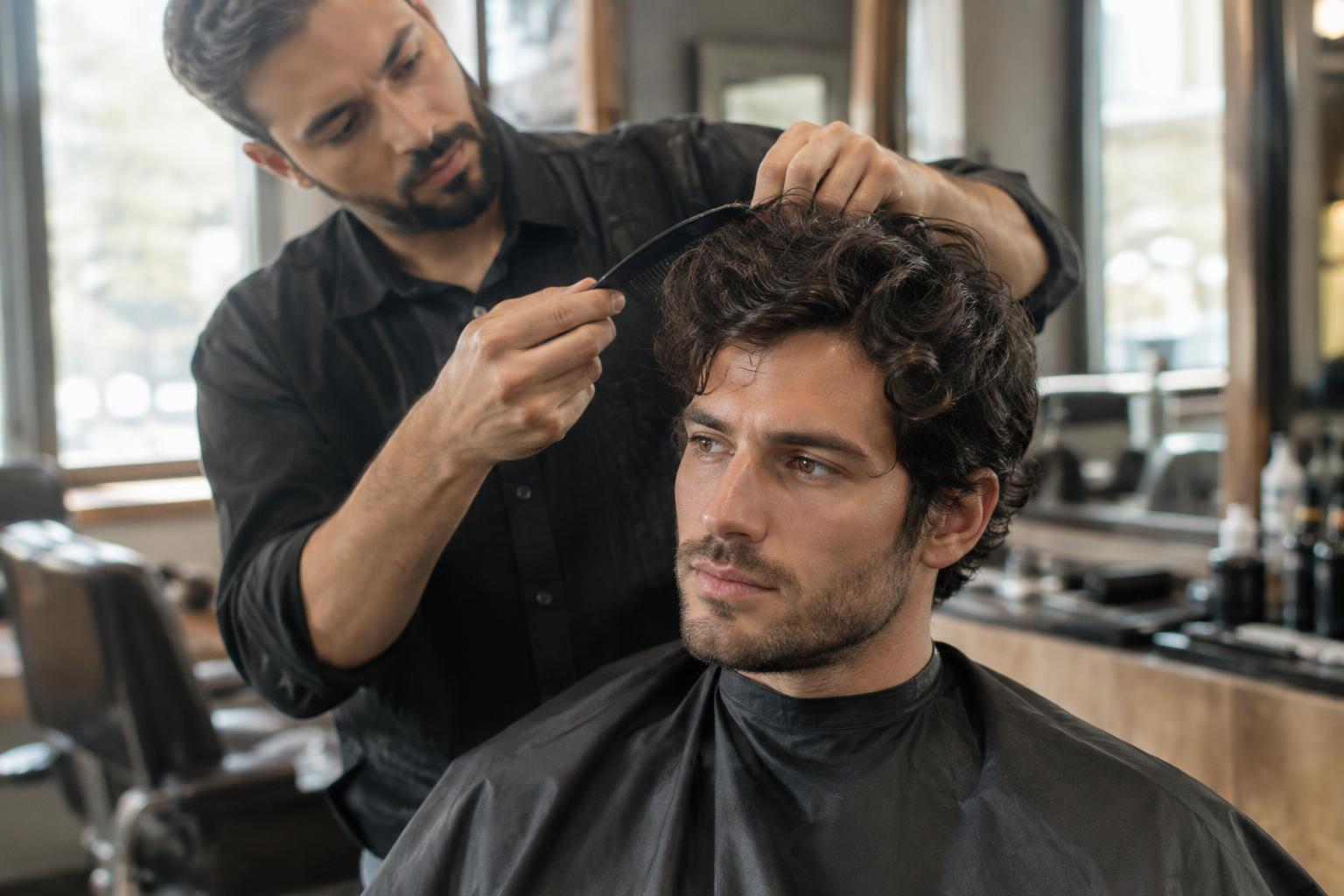
Bring two or three photos that show the length, shape, or finish you like, and say which detail matters in each one. Also explain what you do not want: sides that expose too much scalp, a fringe in your eyes, or a cut that needs daily blow-drying. Mention how long it has been since your last haircut and how you felt about it as it grew out. That helps the barber plan a shape for the weeks between appointments, not just for the moment you leave the chair.
Before the cut begins, agree on the approximate length on top, the degree of taper at the sides and back, and whether you want a sharp or natural neckline. Ask which product, if any, suits the finished style and how to use it sparingly. Then judge the haircut after washing and styling it yourself a few times. A cut that fits your texture, density, features, and routine should be easier to repeat than one chosen from a photo alone.