Start with the clothes you will wear underneath
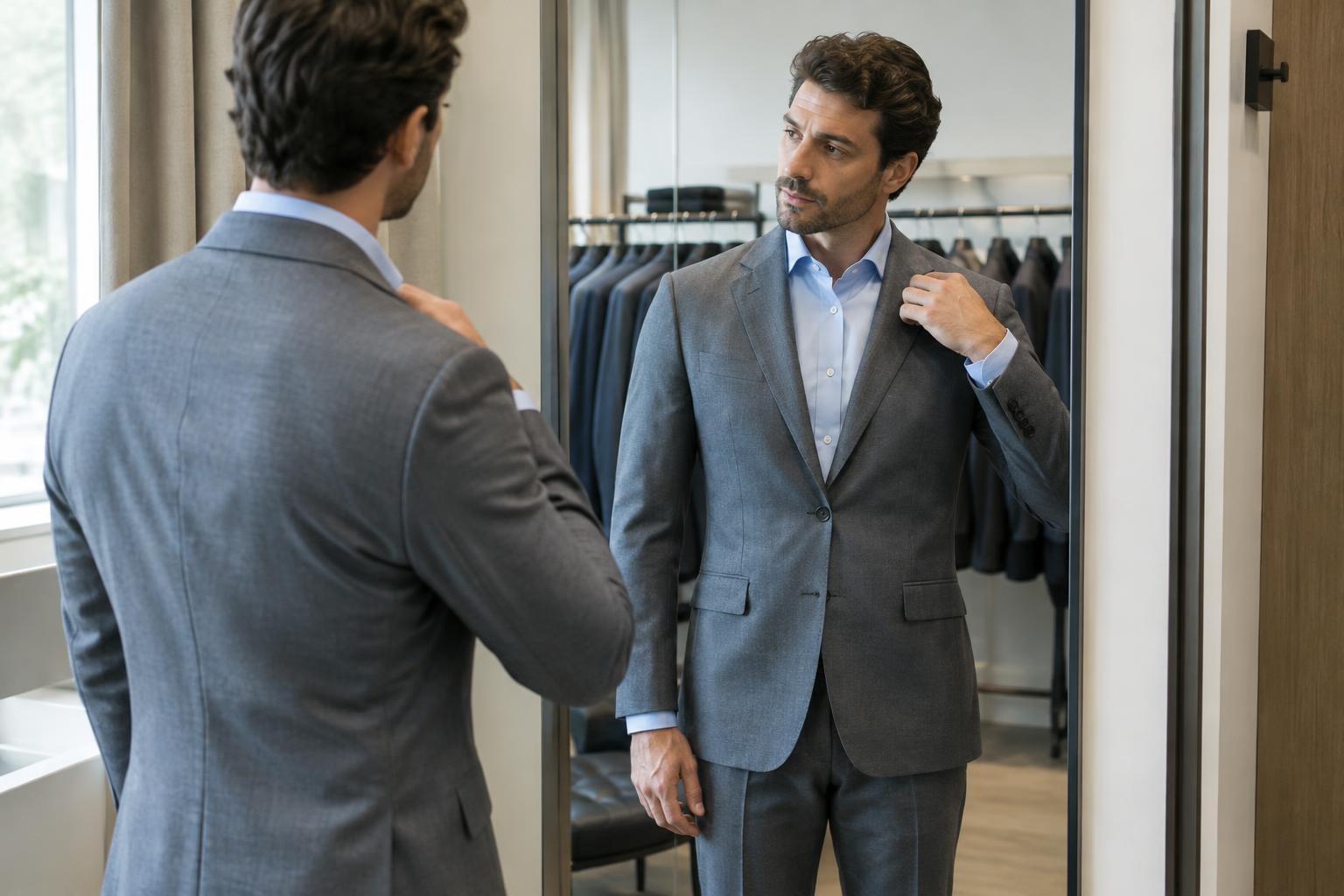
Try the jacket on over a shirt similar to the one you expect to wear with it. A thick sweater can make a well-sized jacket seem tight, while a thin T-shirt can disguise a snug chest. Put on the trousers if they are part of the suit, and wear shoes with a similar profile to your usual dress shoes. Look in a full-length mirror from the front, side and back rather than judging the jacket from one angle.
Button the jacket as you normally would: fasten the top button on a two-button jacket or the middle button on a three-button jacket, and leave the bottom button undone. Then unbutton it and walk, sit and raise your arms enough to reach forward. A tailored jacket is not meant to move like a sweatshirt, but you should be able to stand and sit without feeling squeezed or repeatedly pulling it back into place.
Check the shoulders and collar first
The shoulder seam should meet the outer edge of your shoulder without visibly drooping down your upper arm or cutting inward. Look for pronounced dents, bulges or a sleeve head that collapses near the seam. Some jackets have softer or more structured shoulders by design, so the goal is a clean shape that follows your body, not one specific silhouette. Compare sizes if the shoulder line looks uncertain.
Next, examine the collar at the back of your neck. It should rest close to your shirt collar when you stand naturally. A persistent gap may mean the jacket does not suit your posture or proportions. A little shifting as you move is normal; a collar that floats away from your neck while you are standing still is worth questioning. Major shoulder and collar corrections can be complicated, so do not buy a poor fit there on the assumption that alterations will solve it.
Read the front and back of the jacket
With the jacket buttoned, the lapels should lie reasonably flat against your chest. Severe pulling from the button, an X-shaped set of creases across the front, or lapels that bend outward can indicate that the chest or waist is too tight. On the other hand, excess fabric that hangs in broad folds may mean the jacket is too roomy. You want a defined shape without the fabric being stretched taut.
Turn sideways and check the back. It should follow your outline without gripping across the shoulder blades or pooling heavily above the vents. Make sure the vents hang closed while you stand in a relaxed position; vents that flare open can signal tightness around the hips or seat. Reach forward and sit down to test the fit again. If you need to keep the jacket fastened through those movements, comfort matters as much as its appearance in the mirror.
Judge length and sleeves in proportion
Jacket length depends on the cut and your proportions, but a conventional suit jacket generally covers the seat and gives the upper and lower body a balanced look. Check it from the side and back as well as the front. If it looks noticeably cropped or overly long, try another cut or a different length option rather than relying on an alteration. Shortening a jacket can disturb the relationship between its hem, pockets and buttons.
Let your arms hang naturally when checking the sleeves. The cuffs should end near the wrist and allow a modest amount of shirt cuff to show, depending on your preference and the shirt’s sleeve length. Both sleeves should look even when your arms are relaxed. Sleeve length is often adjustable, but working buttonholes or details near the cuff can limit what a tailor can do. If the sleeves twist or bunch sharply, the issue may be more than length.
Choose the right starting point for alterations
A jacket does not need to fit perfectly off the rack to be worth buying. Modest changes to sleeve length or waist shape are common. Taking in the body may sharpen a jacket that is slightly roomy, while letting it out depends on whether there is enough fabric inside the seams. The amount possible varies by garment, so ask about a specific alteration before treating it as part of the purchase plan.
When choosing between two sizes, prioritize the version with the cleaner shoulders, collar and overall length, then assess whether the remaining issues are small and fixable. Take a few photos at eye level if the fitting-room mirrors make proportions hard to judge. Above all, buy the jacket that fits your body now—not the one that only works if you change your posture, keep your arms still or hope a tailor can rebuild it.