Give the suit time to recover after wearing
The first step in suit care is simple: take it off promptly and let it rest. Empty the pockets so their contents do not pull the jacket or trousers out of shape. Check the collar, cuffs, trouser hems and seat for dirt or marks while you can still remember what happened during the day.
Hang the jacket on a broad, shaped hanger that supports the shoulders. Hang the trousers so they can retain their crease, either folded neatly over a trouser bar or suspended from a suitable clip hanger. Leave both pieces in open air for a few hours before putting them in a wardrobe. This allows ordinary wear moisture and odors to dissipate rather than trapping them in a garment bag.
If you can, avoid wearing the same suit on consecutive days. A day of rest gives the fabric a chance to relax and helps you notice a loose button or emerging stain before you wear it again. Rotation is especially useful for trousers, which often take more friction than the jacket.
Brush away surface dirt
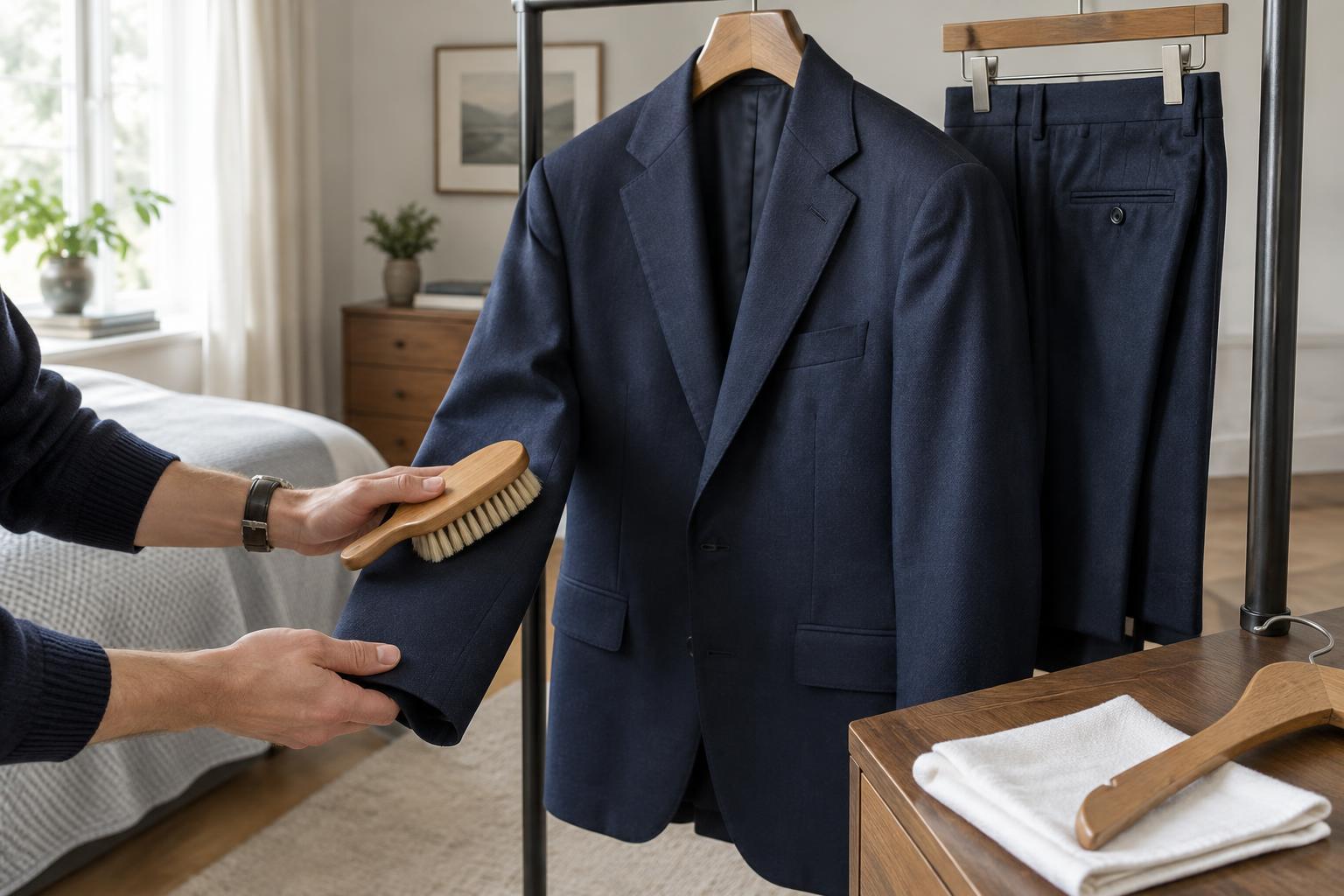
A soft clothes brush is useful for removing dust, lint and dry surface dirt before they settle into the fabric. Brush gently, following the direction of the weave rather than scrubbing one spot. Pay particular attention to the shoulders, lapels, cuffs and trouser hems. If a brush seems to roughen a delicate fabric, stop and use a gentler lint-removal method.
Brushing is not a substitute for cleaning a stain, but it can reduce how often a suit needs a full professional clean. Be cautious with adhesive lint rollers: they are handy for a quick touch-up, yet repeated use may leave residue or tug at some fabrics. A brush is a better everyday starting point for most wool suits.
Handle wrinkles with restraint
Many minor creases soften while a suit hangs between wears. For more stubborn wrinkles, check the care label before applying heat or moisture. A garment steamer can help, but keep the head moving and avoid soaking the cloth. Let the suit dry completely on its hanger before wearing it or storing it in a cover.
Take extra care around the jacket’s lapels, chest and shoulders. These areas have internal structure that can lose its shape if pressed or steamed aggressively. If the jacket looks flattened or the trouser crease needs a crisp reset, a professional press may be a better choice than experimenting with a hot iron. Never assume that the setting suitable for the outer fabric is safe for the suit’s lining and construction.
Respond to spills without spreading them
For a fresh spill, gently blot away excess liquid with a clean, absorbent cloth. Do not rub: friction can drive a mark deeper or change the fabric’s surface. If the substance is dry, lift loose material carefully before deciding whether anything else is needed.
Suit fabrics, linings and dyes do not all react the same way to water or stain removers. Avoid applying a household cleaner without checking the care instructions and testing its effect in an inconspicuous place. For an oily, persistent or uncertain stain, tell a professional cleaner what caused it, if you know. The sooner you address a visible mark, the less likely you are to forget it and put the suit away stained.
Store it so it is ready for the next wear
Give a suit room to hang without being crushed by neighboring clothes. For everyday storage, an open wardrobe with reasonable airflow is usually more useful than leaving it sealed in a plastic dry-cleaning bag. If you need a cover for dust protection, choose a breathable garment bag and make sure the suit is completely dry before closing it.
Before longer storage, inspect the suit for stains and consider professional cleaning if it has been worn heavily. Store it clean, dry and away from direct sunlight, which may fade exposed areas over time. Check it occasionally rather than leaving it untouched for a whole season.
Professional cleaning is most useful when a suit is stained, retains an odor after airing or needs an overall refresh. Cleaning it automatically after every wear is rarely necessary and may be harder on the garment than a steady routine of airing, brushing and careful storage. Let the suit’s condition guide the decision, and follow its care label when in doubt.