Start with your real week, not a shopping list
Before buying anything, think through a typical week. How often do you need clothes for work, relaxed days, exercise, and social plans? Note your climate and whether you walk, commute, or travel often. A wardrobe built for someone else’s routine can look appealing on a hanger while leaving you with nothing useful to wear on Tuesday morning.
Choose enough clothes to get through your usual laundry cycle, rather than aiming for an arbitrary item count. If you already own clothes, set aside the pieces you wear comfortably and often. Those are clues to the fits, fabrics, and colors that suit your life. Make a short list of genuine gaps, and resist replacing serviceable items just to make everything match at once.
Choose a palette and get the fit right
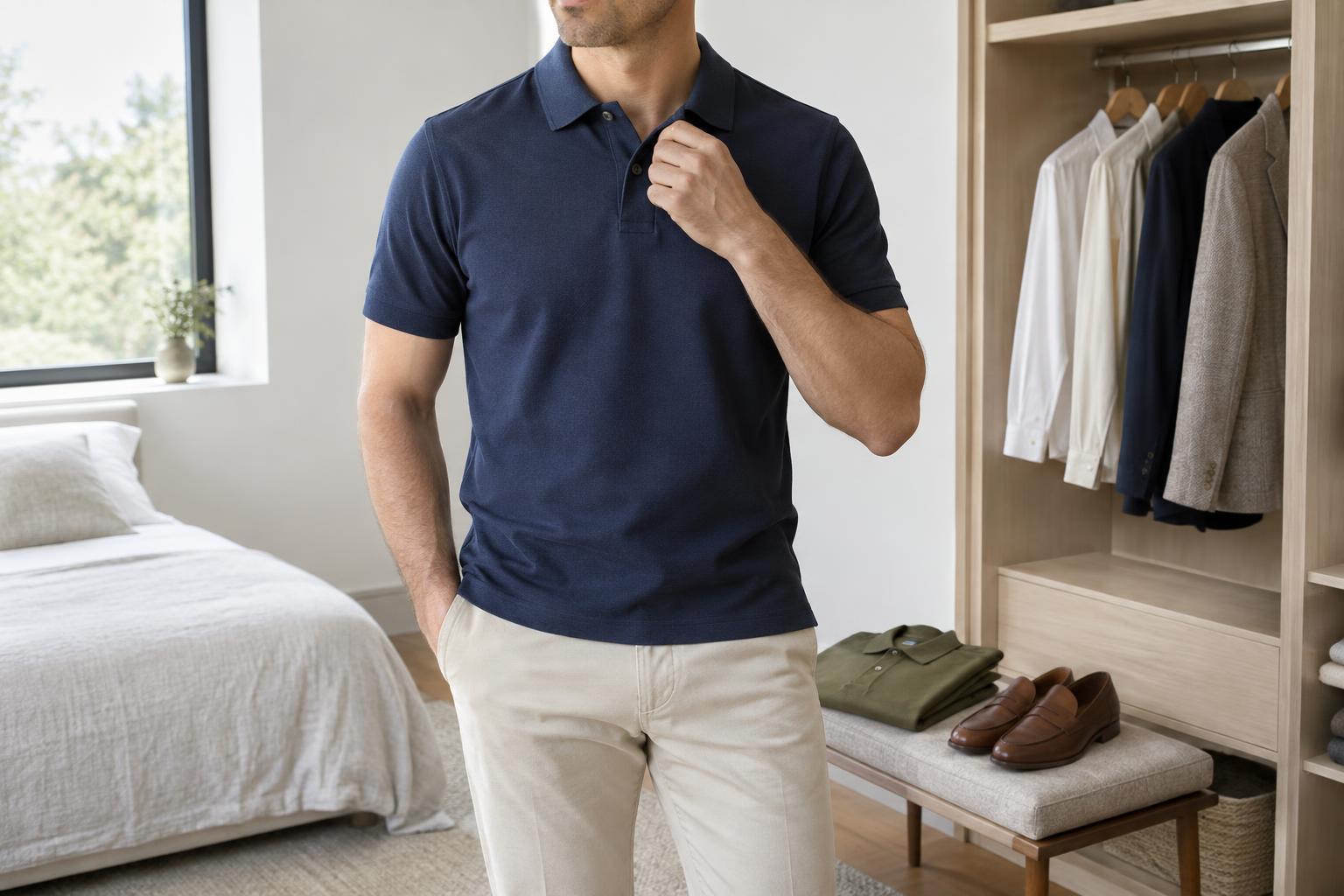
A compact wardrobe works best when most pieces can be worn together. Pick one or two dark neutrals, such as navy, charcoal, or black, and one or two lighter ones, such as white, cream, or light gray. You can then add a few colors you enjoy. You do not need to avoid contrast or personality; the goal is to make getting dressed easier.
Fit matters more than a perfectly coordinated palette. A T-shirt should sit comfortably at the shoulders without pulling across the chest or hanging far past the hips. Trousers should stay up without constant adjustment and allow you to sit and move easily. Try garments on with the shoes and layers you expect to wear. If the shoulders or overall shape feel wrong, a different size or cut is usually a better choice than hoping the garment will change with wear.
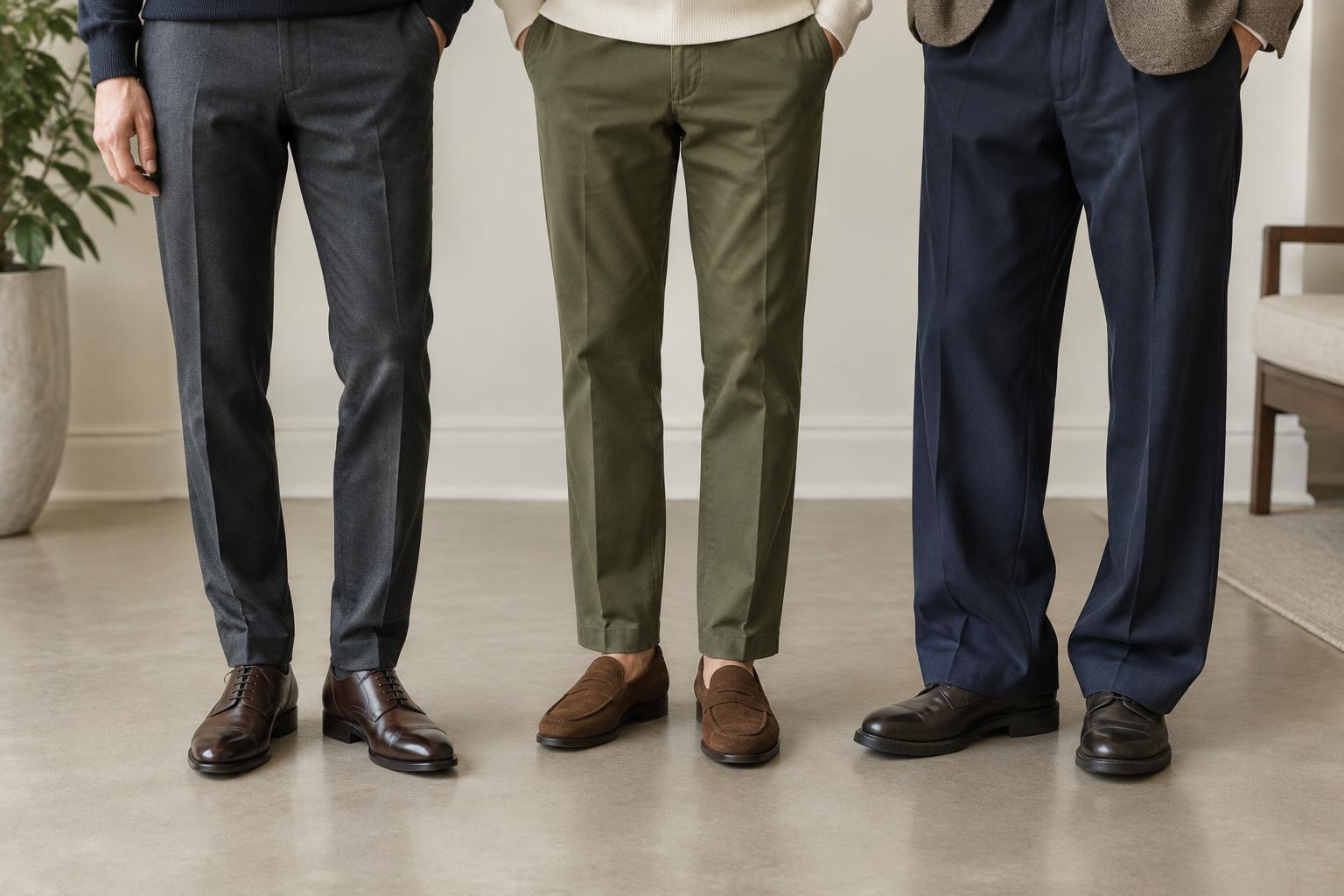
Ignore the idea that every man needs the same silhouette. A straight-leg trouser, relaxed shirt, or trim knit can all work when the proportions feel intentional and comfortable together.
Build a core that covers ordinary days
Begin with tops you can rotate: a few plain T-shirts, one or two casual button-down shirts, and a sweater or sweatshirt suited to your climate. An Oxford-style shirt can bridge casual and smarter outfits, while a simple knit adds warmth without requiring a separate outfit formula. Choose fabrics that feel comfortable against your skin and suit how much care you are willing to give them.
For bottoms, consider a pair of dark, clean-looking jeans and a pair of chinos or other casual trousers. Add a smarter trouser if your workplace or social calendar calls for one. You may need shorts in warm weather, but buy them for the weather you actually have. Starting with a small selection makes it easier to notice whether you need another pair of trousers or simply need to do laundry more often.
Underwear and socks are part of the plan, too. Have enough for your laundry routine, with socks that work with your usual shoes and trousers. These less visible basics often make a smaller wardrobe more comfortable to live with.
Add layers and shoes that earn their space
A versatile outer layer should work over several of your tops. Depending on your climate, that might be an overshirt, a light jacket, or a coat with room for a sweater underneath. If you face both mild and cold weather, a lighter layer plus a warmer coat may be more useful than several jackets that all serve the same season. Check that you can move your arms comfortably when layered.
Start footwear with the pair you will wear most: perhaps simple sneakers, casual leather shoes, or boots. Add a second pair for a different job, such as wetter weather or dressier plans. Neutral colors are easy to repeat across outfits, but comfort and suitability for your day matter more than a strict rule. Keep a belt, bag, or other accessories only if they solve a real need or make outfits feel more like yours.
Test combinations before expanding. Jeans, a T-shirt, and an overshirt might cover a relaxed day; swap the T-shirt for a button-down and the jeans for chinos when you want to look more polished. If a new item works with several pieces you own, it is more likely to earn its place.
Shop slowly and keep what you buy wearable
Buy in order of need, beginning with the items that will let you assemble complete outfits. Set a budget for each gap and compare fit and fabric in person when possible. If you shop online, check measurements against a garment you already like and allow time for returns. Spending more is not automatically the better choice; a reasonably priced piece you wear regularly is more useful than an expensive one left in the closet.
Care extends the value of a small wardrobe. Follow each garment’s care label, wash when needed rather than by habit, and let clothes dry as directed. Brush off dirt, treat small stains promptly, and make simple repairs before damage grows. Give shoes a chance to dry between wears when you can. As seasons and routines change, review what you actually reach for. Add or replace pieces deliberately, and let your wardrobe develop from use rather than from a fixed checklist.