Start with damp hair, not dripping hair
A good blow-dry starts before the dryer turns on. Gently squeeze water from your hair with a towel rather than rubbing it vigorously, which can leave strands tangled and harder to shape. Let your hair air-dry briefly if you have time. The goal is damp hair that still moves easily, not hair that sends water down your face when you comb it.
Work out where you want the finished style to sit. A loose side part needs a different direction from a fringe worn forward or a quiff lifted away from the forehead. Use your fingers or a wide-tooth comb to put damp hair roughly in place. If you use a heat-protectant product, apply it according to its directions, concentrating on the lengths you will dry. It can be a useful addition, but it does not make prolonged high heat harmless.
Use the dryer’s settings and nozzle deliberately
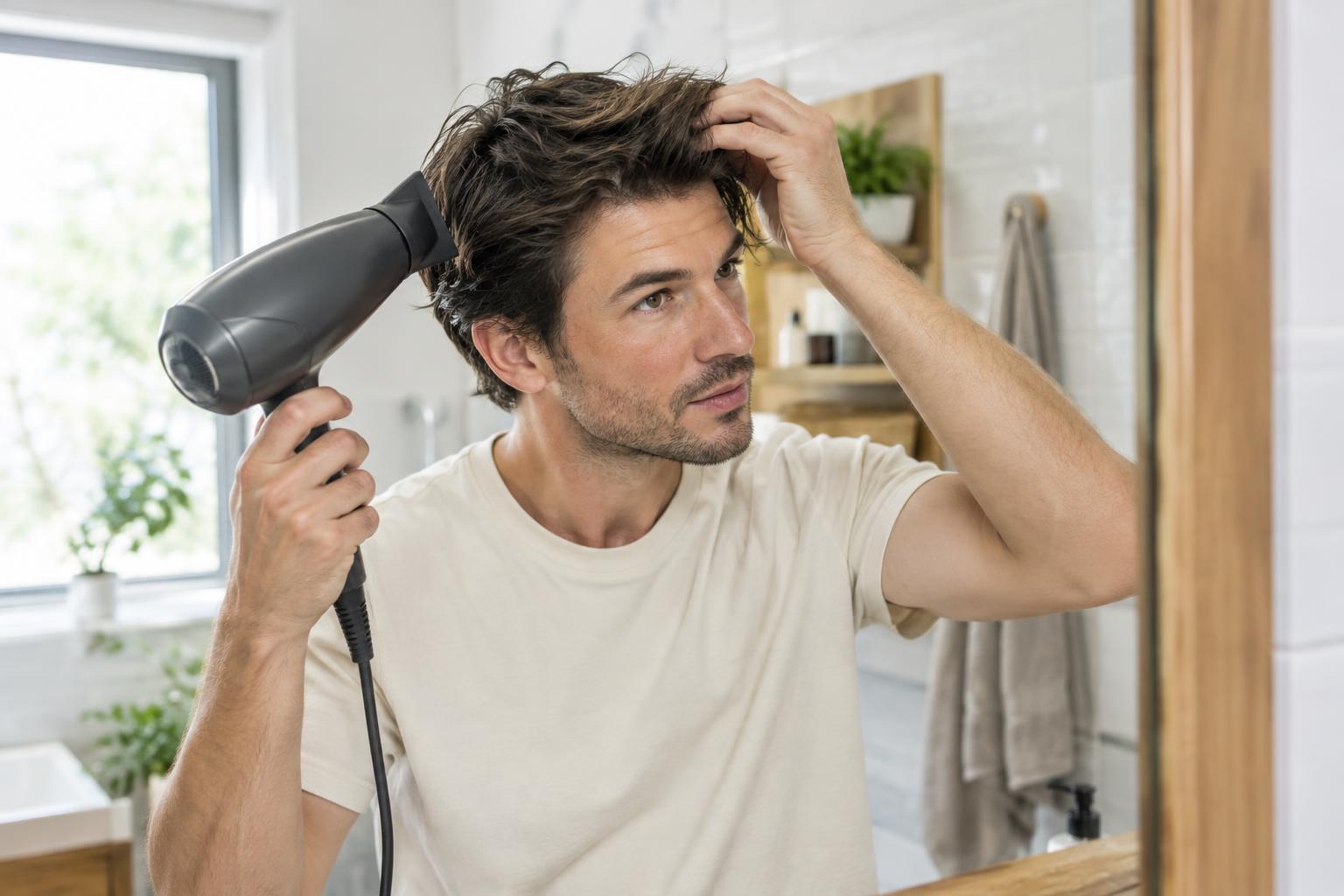
Begin on a medium heat setting with enough airflow to move the hair. Hold the dryer a short distance from your head rather than pressing it against the hair or scalp, and keep it moving. If your scalp feels hot or uncomfortable, lower the heat or move the dryer farther away. You may need to adjust the setting as your hair gets drier; the final few passes usually need less heat than the first ones.
A concentrator nozzle helps point air where you want it. Aim the airflow along a section of hair instead of blowing in every direction. For a smoother finish, direct air from the roots toward the ends while guiding the hair with a comb or brush. For a less polished, textured style, use your fingers to lift and separate sections. Either way, control the direction of the air rather than relying on heat alone to create the shape.
Build lift at the roots
Volume comes largely from how the roots dry. To lift the front, place your fingers or a brush beneath a small section and guide it upward and slightly back while directing air toward the roots. Repeat across the areas where you want height, working in manageable sections. Drying the whole top flat against your head and trying to push it up afterward is usually less effective.
You can briefly guide the hair against its usual direction of growth, then bring it back toward the intended style. This can add lift without needing a very hot setting. If your hair is fine, use light tension and avoid loading it with heavy product before drying. If it is thick or dense, smaller sections can make the process more even. Curly or wavy hair may look fuller when dried with a diffuser on gentle airflow instead of being pulled straight with a brush.
Set the shape, then use product sparingly
Once a section is nearly dry and sitting where you want it, switch to a cool setting for a few seconds if your dryer has one. Cool air gives you a chance to settle the shape without adding more heat. Check the sides and back as well as the front: a little time directing stray sections downward can make an otherwise casual style look intentional.
Add styling product after drying if you want control or texture. Start with a small amount, spread it across your palms and work it through the hair before adding more. A light cream or paste can keep a natural shape flexible, while a firmer product may suit a style that needs to stay upright. The product should support the direction you created with the dryer, not compensate for hair dried the wrong way.
Keep the routine comfortable and repeatable
A useful blow-dry need not last until every strand feels bone-dry. Focus on the sections that determine the style, then stop when the hair is dry enough to hold its shape. Avoid lingering over one spot, especially near the hairline or scalp. Clean lint from the dryer’s filter as its instructions recommend so airflow remains consistent, and use tools that feel comfortable to handle.
On rushed mornings, prioritize the front and top: towel-dry, direct moderate airflow at the roots, guide the hair into place and finish with a little product. If your hair feels overly dry or your scalp feels uncomfortable after styling, try less heat, more distance or a shorter drying time next time. A routine you can adjust to your hair is more useful than one fixed technique for every cut and texture.